


Efficacy of pentavalent antimoniate intralesional infiltration therapy for cutaneous leishmaniasis: A systematic review
- PMID: 28926630
- PMCID: PMC5604971
- DOI: 10.1371/journal.pone.0184777
Efficacy of pentavalent antimoniate intralesional infiltration therapy for cutaneous leishmaniasis: A systematic review
Abstract
Background: The mainstays of cutaneous leishmaniasis (CL) treatment, in several world regions, are pentavalent antimony (Sbv) compounds administered parenterally, despite their recognized toxicity, which requires frequent laboratory monitoring and complicates their use in areas with scarce infrastructure. As result of these drawbacks, the WHO Expert Committee on leishmaniasis has expanded the recommendations for the use of local therapies, including Sbv intralesional infiltration (IL-Sbv), as CL therapy alternatives even in the New World. However, the efficacy of these approaches has never been compiled. The aim of this study was to critically and systematically assess the efficacy of IL-Sbv for CL treatment.
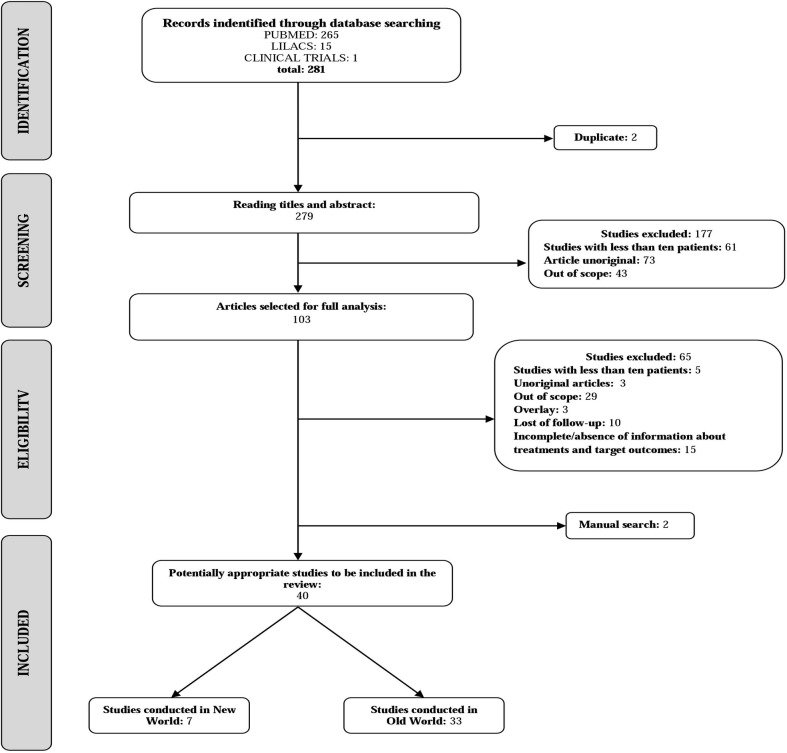
Methodology: The PRISMA guidelines for systematic reviews and the Cochrane manual were followed. The sources used were the MEDLINE and LILACS databases and the International Clinical Trials Registry Platform of the World Health Organization. The outcome of interest was a clinical cure, defined as complete re-epithelialization of all lesions. The IL-Sbv pooled cure rate was estimated for several subgroups and direct comparisons were performed when possible.
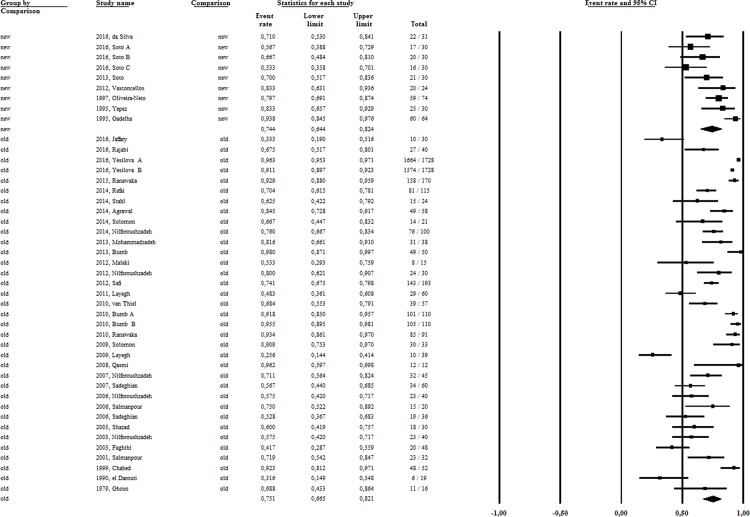
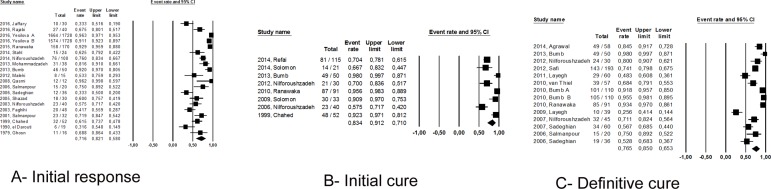
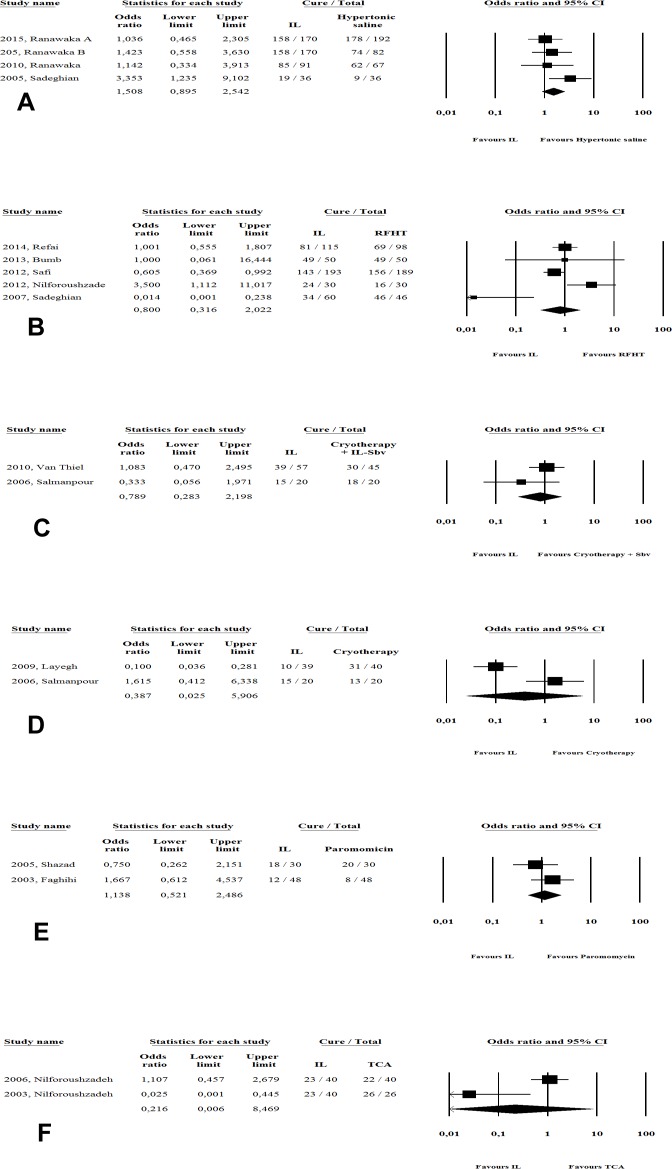
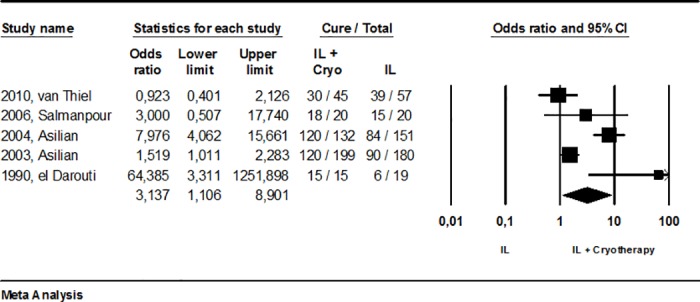
Results: Thirty nine articles (40 studies) involving 5679 patients treated with IL-Sbv infiltration were included. In direct comparison, only three studies involving 229 patients compared IL-Sbv infiltration versus placebo and no difference was observed (OR: 1,9; 95%IC 0,93 to 3,82) based on cure rate 69.6% (95%CI 17.6-96.1%) and 83,2% (95%CI 66-92.7%) for placebo and IL-Sbv, respectively. In an alternative and non-comparative analysis, gathering all study arms using the intervention, the pooled IL-Sbv efficacy rate was 75% (95%CI 68-81%). In the Old World, the observed overall IL-Sbv efficacy rate was 75% (95%CI 66-82%), and the cure rates were significantly higher with sodium stibogluconate (SSG) than with meglumine antimoniate (MA): 83% (95%CI 75-90%) versus 68% (95%CI 54-79%), p = 0.03. Studies directly comparing IL-Sbv with topical 15% paromomycin ointment, IL hypertonic saline, radiofrequency-induced heat therapy, topical trichloroacetic acid and cryotherapy showed no significant difference in efficacy between the interventions. The analyses suggested a higher efficacy of IL-Sbv combined with cryotherapy (81.8%, 95%IC 62.4-92.4%) when compared with IL-Sbv alone (53.3%, 95%IC 46.1-66%), OR: 3.14 (95%CI 1.1-8.9), p = 0.03. In the New World, the global IL-Sbv efficacy was 77%(95%CI 66-85%). In contrast with the Old World, a significant difference favoring MA in relation to SSG was observed: 61% (95%CI 49-73%) versus 82% (95%CI 70-89%).By comparing IL infiltration schedules, it was determined that patients submitted to IL-Sbv treatments longer than 14 days had higher cure rates.
Conclusions: Despite the high heterogeneity and low methodological quality of studies, an indirect comparison shows that the antimony infiltration efficacy rate is similar to that reported for antimony systemic use. The evidence gathered thus far is insufficient to identify the ideal IL therapeutic regime or estimate the rates of adverse events and mucosal late complications.
Conflict of interest statement
Figures

References
-
- WHO. Report of a meeting of the WHO Expert Committee on the Control of Leishmaniases, Geneva, Switzerland, 22–26 March 2010. WHO technical report series. 2010;(949).
-
- WHO. Control of the leishmaniases: report of a meeting of the WHO Expert Committee on the Control of Leishmaniases: World Health Organization; 2010.
-
- PAHO. Leishmaniasis en las Américas: recomendaciones para el tratamiento Catalogación en la Fuente, Organización Panamericana de la Salud. Organización Panamericana de la Salud; Washington DC: O2013.
-
- Blum J, Lockwood DN, Visser L, Harms G, Bailey MS, Caumes E, et al. Local or systemic treatment for New World cutaneous leishmaniasis? Re-evaluating the evidence for the risk of mucosal leishmaniasis. International Health. 2012;4(3):153–63. doi: 10.1016/j.inhe.2012.06.004 - DOI - PubMed
-
- Liberati A, Altman DG, Tetzlaff J, Mulrow C, Gøtzsche PC, Ioannidis JP, et al. The PRISMA statement for reporting systematic reviews and meta-analyses of studies that evaluate health care interventions: explanation and elaboration. Annals of internal medicine. 2009;151(4):W-65–W-94. - PubMed
Publication types
MeSH terms
Substances
LinkOut - more resources
Full Text Sources
Other Literature Sources
