


Analysis of microRNA (miRNA) expression profiles reveals 11 key biomarkers associated with non-small cell lung cancer
- PMID: 28927412
- PMCID: PMC5606074
- DOI: 10.1186/s12957-017-1244-y
Analysis of microRNA (miRNA) expression profiles reveals 11 key biomarkers associated with non-small cell lung cancer
Abstract
Background: Non-small cell lung cancer (NSCLC) accounts for more than 85% of lung cancer cases which cause most of cancer-related deaths globally. However, the results vary largely in different studies due to different platforms and sample sizes. Here, we aim to identify the key miRNAs in the carcinogenesis of NSCLC that might be potential biomarkers for this cancer.
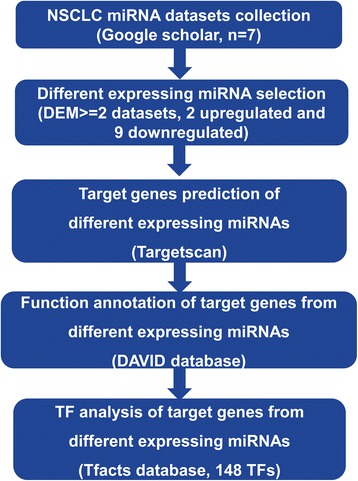
Methods: Meta-analysis was performed on miRNA profile using seven datasets of NSCLC studies. Furthermore, we predicted and investigated the functions of genes regulated by key miRNAs.
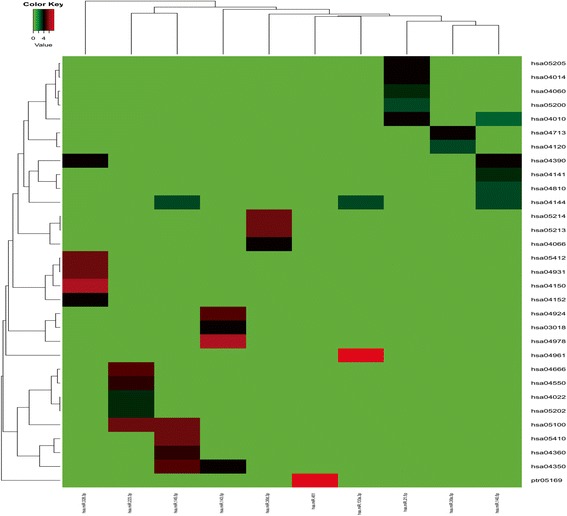
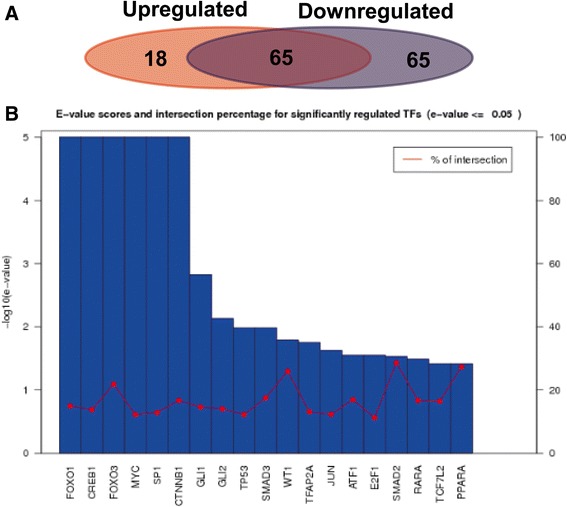
Results: Eleven key miRNAs were identified, including 2 significantly upregulated ones (hsa-miR-21-5p and hsa-miR-233-3p) and 9 downregulated ones (hsa-miR-126-3p, hsa-miR-133a-3p, hsa-miR-140-5p, hsa-miR-143-5p, hsa-miR-145-5p, hsa-miR-30a-5p, hsa-miR-30d-3p, hsa-miR-328-3pn, and hsa-miR-451). The functional enrichment analysis revealed that both up- and downregulated miRNAs were proportionally associated with regulation of transcription from RNA polymerase II promoter. According to transcription factor analysis, there were 65 (43.9%) transcription factors influenced by both up- and downregulated miRNAs.
Conclusions: In this study, 11 meta-signature miRNAs, as well as their target genes and transcription factors, were found to play significant role in carcinogenesis of NSCLC. These target genes identified in our study may be profitable to diagnosis and prognostic prediction of NSCLC as biomarkers.
Keywords: Biomarker; Meta-analysis; Non-small cell lung cancer; miRNAs.
Conflict of interest statement
Ethics approval and consent to participate
Not applicable
Consent for publication
Not applicable
Competing interests
The authors declare that they have no competing interests.
Publisher’s Note
Springer Nature remains neutral with regard to jurisdictional claims in published maps and institutional affiliations.
Figures

References
-
- Jemal A, Thun M, Yu XQ, Hartman AM, Cokkinides V, Center MM, Ross H, Ward EM. Changes in smoking prevalence among U.S. adults by state and region: estimates from the tobacco use supplement to the current population survey, 1992-2007. BMC Public Health. 2011;11:512. doi: 10.1186/1471-2458-11-512. - DOI - PMC - PubMed
Publication types
MeSH terms
Substances
LinkOut - more resources
Full Text Sources
Other Literature Sources
Medical
