


Dynamics of the IFT machinery at the ciliary tip
- PMID: 28930071
- PMCID: PMC5662288
- DOI: 10.7554/eLife.28606
Dynamics of the IFT machinery at the ciliary tip
Abstract
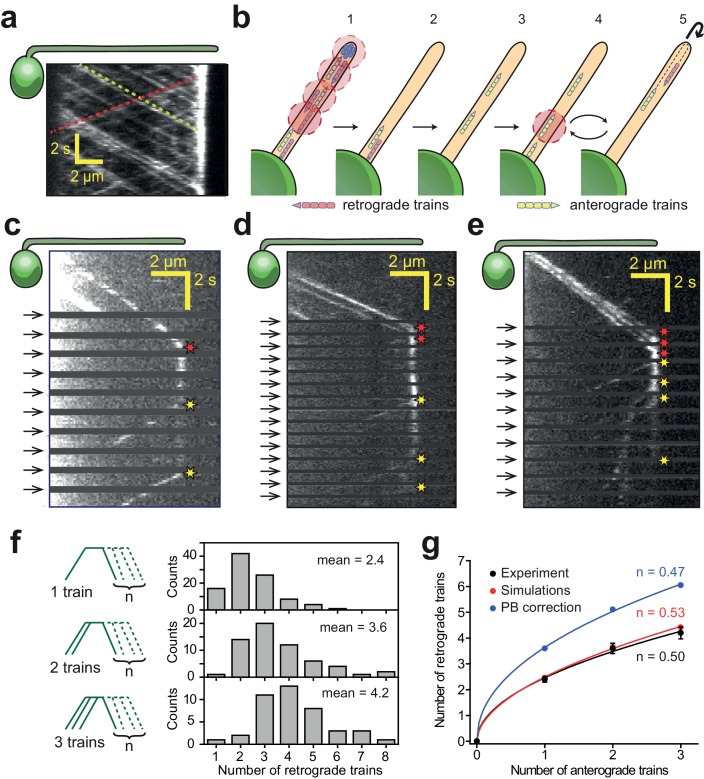
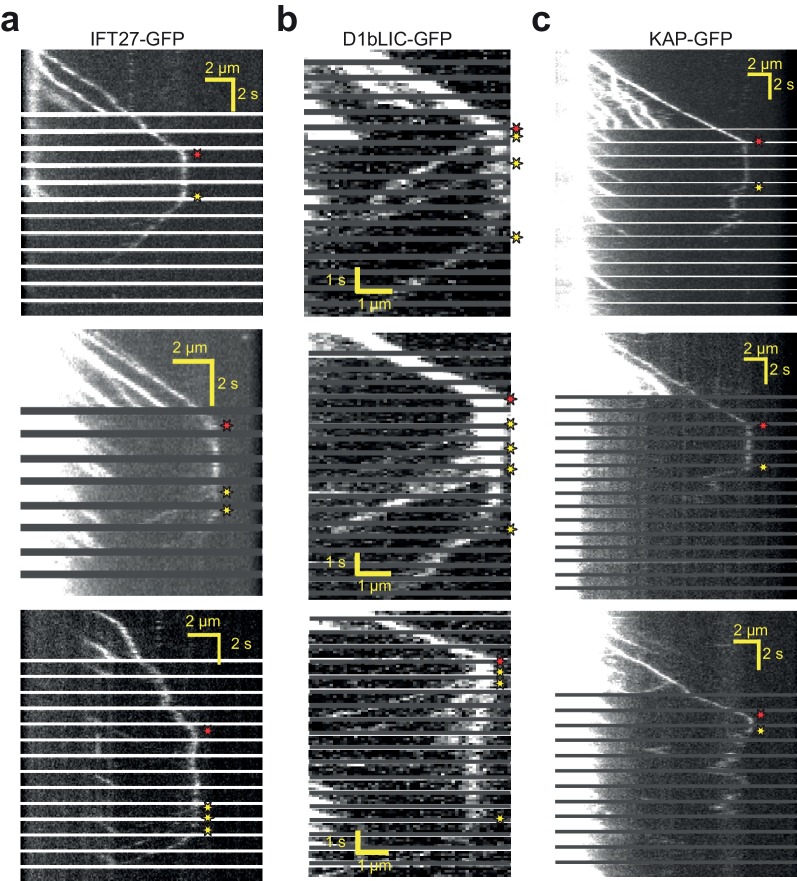
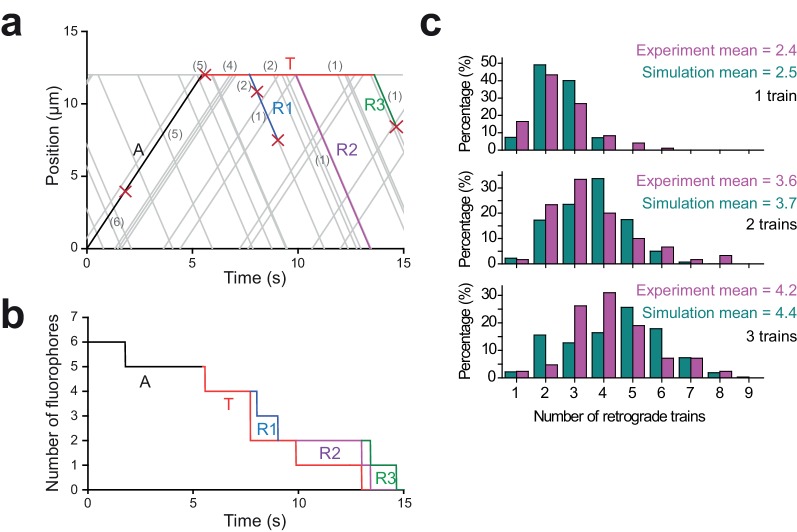
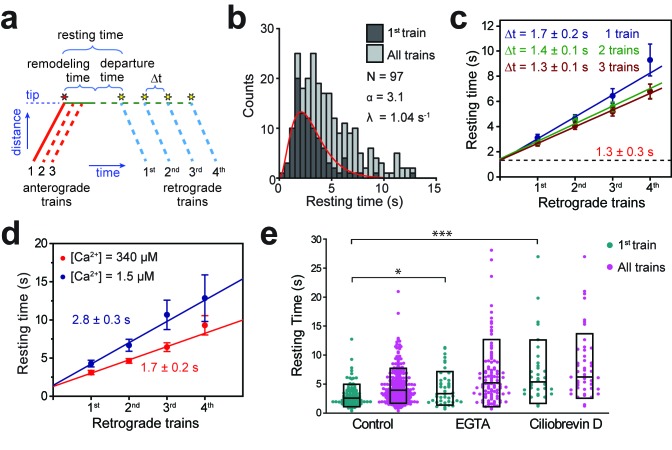
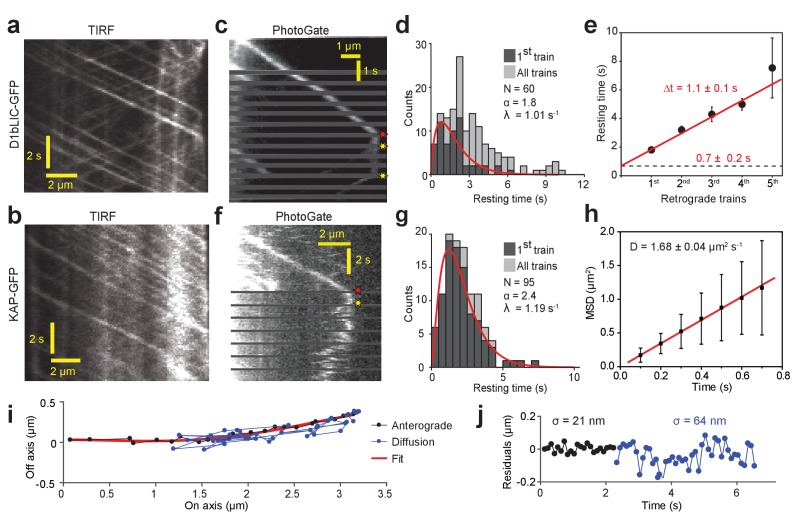
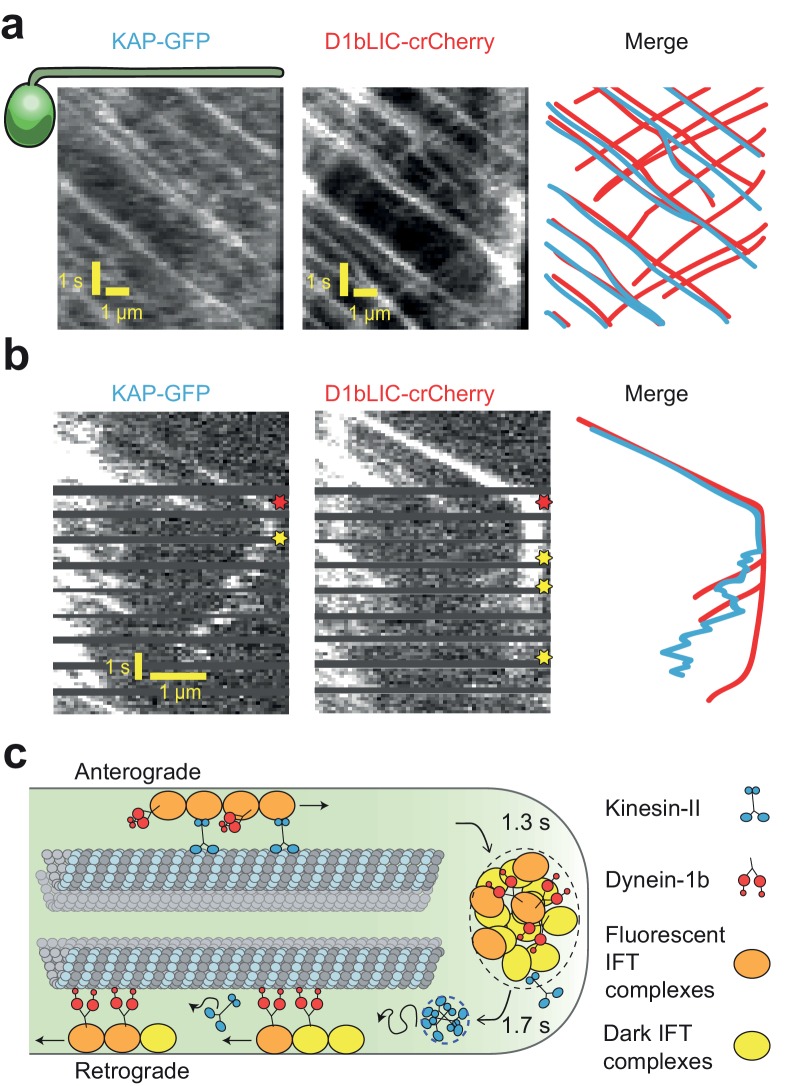
Intraflagellar transport (IFT) is essential for the elongation and maintenance of eukaryotic cilia and flagella. Due to the traffic jam of multiple trains at the ciliary tip, how IFT trains are remodeled in these turnaround zones cannot be determined by conventional imaging. Using PhotoGate, we visualized the full range of movement of single IFT trains and motors in Chlamydomonas flagella. Anterograde trains split apart and IFT complexes mix with each other at the tip to assemble retrograde trains. Dynein-1b is carried to the tip by kinesin-II as inactive cargo on anterograde trains. Unlike dynein-1b, kinesin-II detaches from IFT trains at the tip and diffuses in flagella. As the flagellum grows longer, diffusion delays return of kinesin-II to the basal body, depleting kinesin-II available for anterograde transport. Our results suggest that dissociation of kinesin-II from IFT trains serves as a negative feedback mechanism that facilitates flagellar length control in Chlamydomonas.
Keywords: biophysics; cell biology; ciliary length control; dynein; intraflagellar transport; kinesin; none; photogate; single molecule imaging; structural biology.
Conflict of interest statement
No competing interests declared.
Figures






Comment in
-
Trainspotting in a cilium.Elife. 2017 Oct 30;6:e32473. doi: 10.7554/eLife.32473. Elife. 2017. PMID: 29083302 Free PMC article.
References
MeSH terms
Substances
Grants and funding
LinkOut - more resources
Full Text Sources
Other Literature Sources
Research Materials
