


Comparison of iron chelation effects of deferoxamine, deferasirox, and combination of deferoxamine and deferiprone on liver and cardiac T2* MRI in thalassemia maior
- PMID: 28932366
- PMCID: PMC5596185
- DOI: 10.22088/cjim.8.3.159
Comparison of iron chelation effects of deferoxamine, deferasirox, and combination of deferoxamine and deferiprone on liver and cardiac T2* MRI in thalassemia maior
Abstract
Background: Cardiac complications due to iron overload are the most common cause of death in patients with thalassemia major. The aim of this study was to compare iron chelation effects of deferoxamine, deferasirox, and combination of deferoxamine and deferiprone on cardiac and liver iron load measured by T2* MRI.
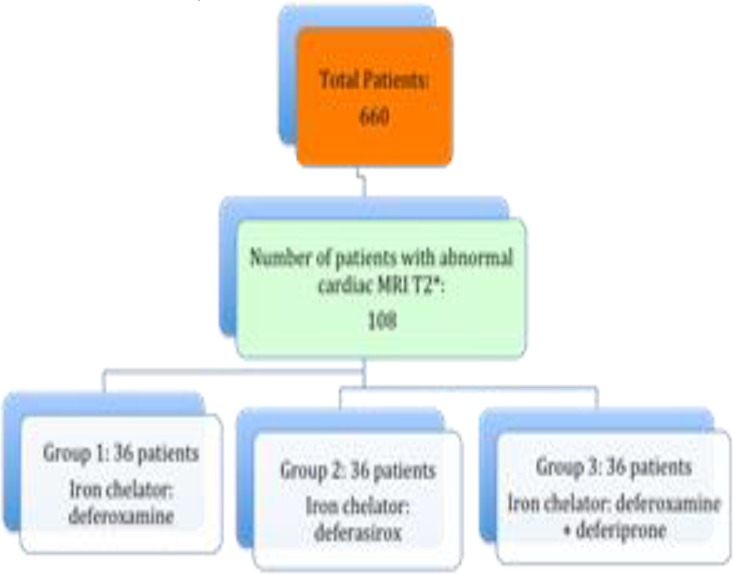
Methods: In this study, 108 patients with thalassemia major aged over 10 years who had iron overload in cardiac T2* MRI were studied in terms of iron chelators efficacy on the reduction of myocardial siderosis. The first group received deferoxamine, the second group only deferasirox, and the third group, a combination of deferoxamine and deferiprone. Myocardial iron was measured at baseline and 12 months later through T2* MRI technique.
Results: The three groups were similar in terms of age, gender, ferritin level, and mean myocardial T2* at baseline. In the deferoxamine group, myocardial T2* was increased from 12.0±4.1 ms at baseline to 13.5±8.4 ms at 12 months (p=0.10). Significant improvement was observed in myocardial T2* of the deferasirox group (p<0.001). In the combined treatment group, myocardial T2* was significantly increased (p<0.001). These differences among the three groups were not significant at the 12 months. A significant improvement was observed in liver T2* at 12 months compared to baseline in the deferasirox and the combination group.
Conclusion: In comparison to deferoxamine monotherapy, combination therapy and deferasirox monotherapy have a significant impact on reducing iron overload and improvement of myocardial and liver T2* MRI.
Keywords: Deferasirox; Deferiprone; Deferoxamine; Thalassemia major.
Conflict of interest statement
The authors have no conflict of interest.
Figures
References
-
- Cunningham MJ. Update on thalassemia: clinical care and complications. Hematol Oncol Clin North Am. 2010;24:215–27. - PubMed
-
- Telfer P, Coen PG, Christou S, et al. Survival of medically treated thalassemia patients in Cyprus Trends and risk factors over the period 1980-2004. Hematologica. 2006;91:1187–92. - PubMed
-
- Borgna-Pignatti C, Rugolotto S, De Stefano P, et al. Survival and complications in patients with thalassemia major treated with transfusions and deferoxamine. Hematologica. 2004;89:1187–93. - PubMed
-
- Roghi A, Cappellini MD, Wood JC, et al. Absence of cardiac siderosis despite hepatic iron overload in Italian patients with thalassemia intermedia: an MRI T2* study. Ann Hematol. 2010;89:585–9. - PubMed
LinkOut - more resources
Full Text Sources