


Perioperative administration of buffered versus non-buffered crystalloid intravenous fluid to improve outcomes following adult surgical procedures
- PMID: 28933805
- PMCID: PMC6483610
- DOI: 10.1002/14651858.CD004089.pub3
Perioperative administration of buffered versus non-buffered crystalloid intravenous fluid to improve outcomes following adult surgical procedures
Abstract
Background: Perioperative fluid strategies influence clinical outcomes following major surgery. Many intravenous fluid preparations are based on simple solutions, such as normal saline, that feature an electrolyte composition that differs from that of physiological plasma. Buffered fluids have a theoretical advantage of containing a substrate that acts to maintain the body's acid-base status - typically a bicarbonate or a bicarbonate precursor such as maleate, gluconate, lactate, or acetate. Buffered fluids also provide additional electrolytes, including potassium, magnesium, and calcium, more closely matching the electrolyte balance of plasma. The putative benefits of buffered fluids have been compared with those of non-buffered fluids in the context of clinical studies conducted during the perioperative period. This review was published in 2012, and was updated in 2017.
Objectives: To review effects of perioperative intravenous administration of buffered versus non-buffered fluids for plasma volume expansion or maintenance, or both, on clinical outcomes in adults undergoing all types of surgery.
Search methods: We electronically searched the Clinicaltrials.gov major trials registry, the Cochrane Central Register of Controlled Trials (CENTRAL; 2016, Issue 6) in the Cochrane Library, MEDLINE (1966 to June 2016), Embase (1980 to June 2016), and the Cumulative Index to Nursing and Allied Health Literature (CINAHL; 1982 to June 2016). We handsearched conference abstracts and, when possible, contacted leaders in the field. We reran the search in May 2017. We added one potential new study of interest to the list of 'Studies awaiting classification' and will incorporate this trial into formal review findings when we prepare the review update.
Selection criteria: Only randomized controlled trials that compared buffered versus non-buffered intravenous fluids for surgical patients were eligible for inclusion. We excluded other forms of comparison such as crystalloids versus colloids and colloids versus different colloids.
Data collection and analysis: Two review authors screened references for eligibility, extracted data, and assessed risks of bias. We resolved disagreements by discussion and consensus, in collaboration with a third review author. We contacted trial authors to request additional information when appropriate. We presented pooled estimates for dichotomous outcomes as odds ratios (ORs) and for continuous outcomes as mean differences (MDs), with 95% confidence intervals (CIs). We analysed data via Review Manager 5.3 using fixed-effect models, and when heterogeneity was high (I² > 40%), we used random-effects models.
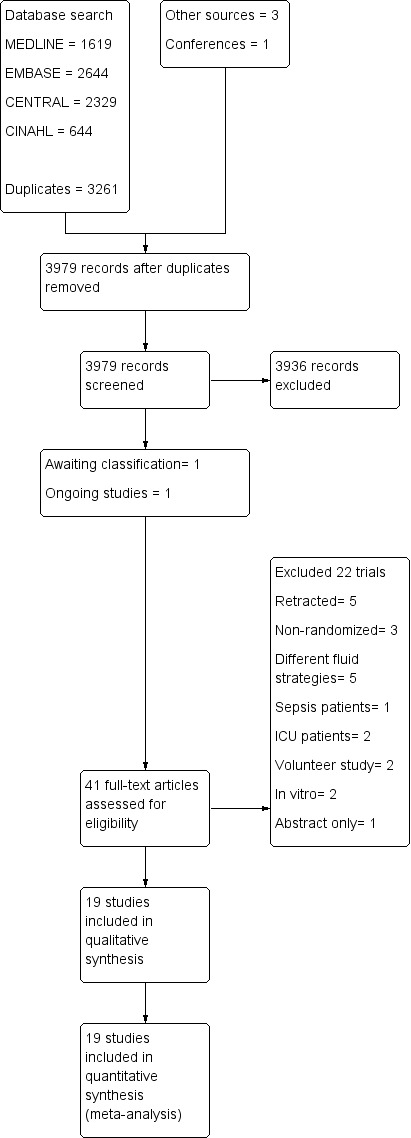
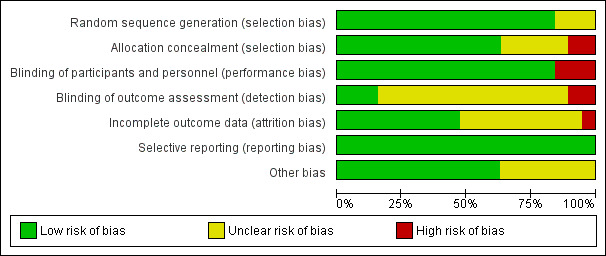
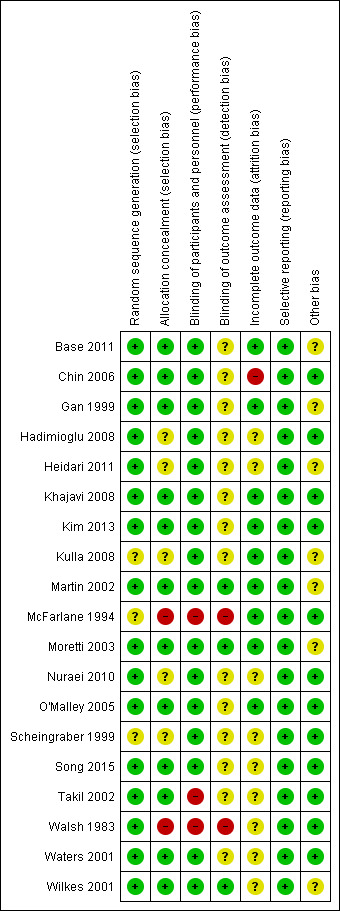
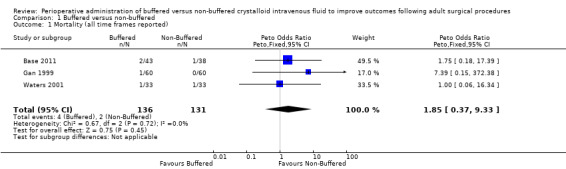
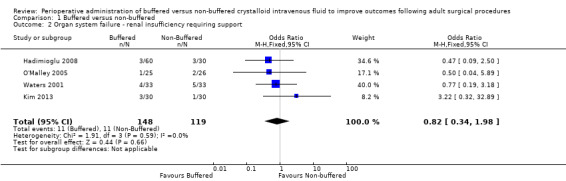
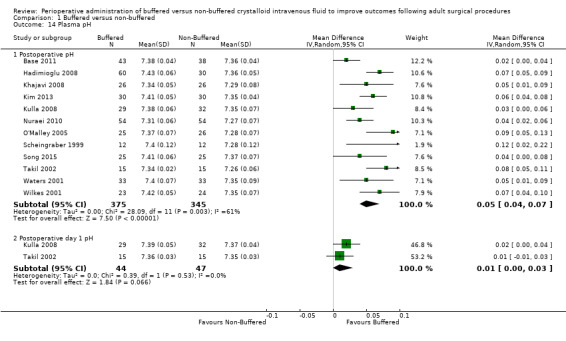
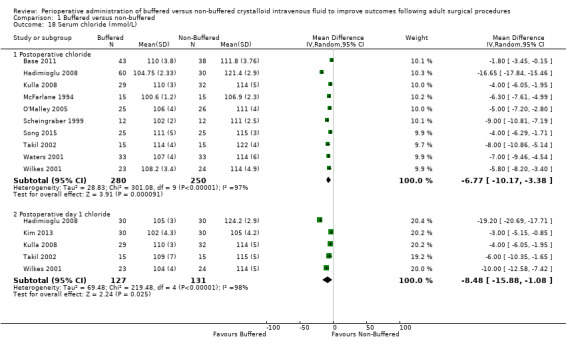
Main results: This review includes, in total, 19 publications of 18 randomized controlled trials with a total of 1096 participants. We incorporated five of those 19 studies (330 participants) after the June 2016 update. Outcome measures in the included studies were thematically similar, covering perioperative electrolyte status, renal function, and acid-base status; however, we found significant clinical and statistical heterogeneity among the included studies. We identified variable protocols for fluid administration and total volumes of fluid administered to patients intraoperatively. Trial authors variably reported outcome data at disparate time points and with heterogeneous patient groups. Consequently, many outcome measures are reported in small group sizes, reducing overall confidence in effect size, despite relatively low inherent bias in the included studies. Several studies reported orphan outcome measures. We did not include in the results of this review one large, ongoing study of saline versus Ringer's solution.We found insufficient evidence on effects of fluid therapies on mortality and postoperative organ dysfunction (defined as renal insufficiency leading to renal replacement therapy); confidence intervals were wide and included both clinically relevant benefit and harm: mortality (Peto OR 1.85, 95% CI 0.37 to 9.33; I² = 0%; 3 trials, 6 deaths, 276 participants; low-quality evidence); renal insufficiency (OR 0.82, 95% CI 0.34 to 1.98; I² = 0%; 4 trials, 22 events, 276 participants; low-quality evidence).We noted several metabolic differences, including a difference in postoperative pH measured at end of surgery of 0.05 units - lower in the non-buffered fluid group (12 studies with a total of 720 participants; 95% CI 0.04 to 0.07; I² = 61%). However, this difference was not maintained on postoperative day one. We rated the quality of evidence for this outcome as moderate. We observed a higher postoperative serum chloride level immediately after operation, with use of non-buffered fluids reported in 10 studies with a total of 530 participants (MD 6.77 mmol/L, 95% CI 3.38 to 10.17), and this difference persisted until day one postoperatively (five studies with a total of 258 participants; MD 8.48 mmol/L, 95% CI 1.08 to 15.88). We rated the quality of evidence for this outcome as moderate.
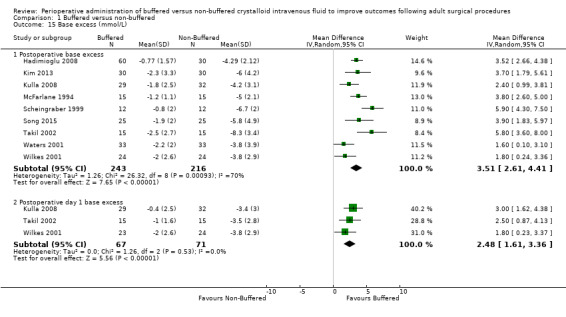
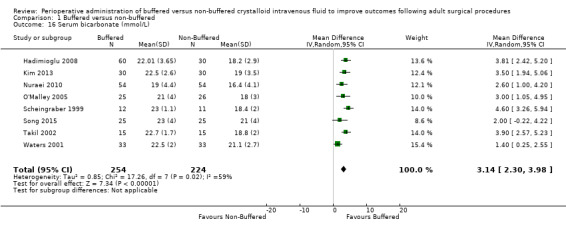
Authors' conclusions: Current evidence is insufficient to show effects of perioperative administration of buffered versus non-buffered crystalloid fluids on mortality and organ system function in adult patients following surgery. Benefits of buffered fluid were measurable in biochemical terms, particularly a significant reduction in postoperative hyperchloraemia and metabolic acidosis. Small effect sizes for biochemical outcomes and lack of correlated clinical follow-up data mean that robust conclusions on major morbidity and mortality associated with buffered versus non-buffered perioperative fluid choices are still lacking. Larger studies are needed to assess these relevant clinical outcomes.
Conflict of interest statement
For this updated review, new review authors (SB and PO) performed searches, extracted data, analysed data, and prepared the manuscript. Conflicts of interest include the following.
Edward Burdett ‐ none known.
Sohail Bampoe ‐ none known.
Peter M Odor ‐ none known.
Ahilanandan Dushianthan ‐ none known.
Elliott Bennett‐Guerrerois ‐ author of the following included studies: Gan 1999, Martin 2002, and O'Malley 2005.
Suzie Cro ‐ none known.
Tong J Gan is an author of the following included studies: Gan 1999, Martin 2002, and Moretti 2003.
Michael PW Grocott ‐ none known.
Michael FM James continues to receive ongoing lecture support and honoraria from Fresenius Kabi, which manufactures Voluven ‐ an intervention provided in one of the primary studies included in this review (Base 2011). Professor James did not conduct searches or extract or analyse data for this updated review.
Michael G Mythen is an author of the following included studies: Gan 1999, Martin 2002, and Wilkes 2001.
Catherine O'Malley is an author of the following included study: O'Malley 2005.
Anthony M Roche ‐ none known.
Kathy Rowan ‐ none known.
Edward Burdett, Sohail Bampoe, Peter M Odor, Ahilanandan Dushianthan, Elliott Bennett‐Guerrero, Tong J Gan, Michael PW Grocott, Michael FM James, Michael G Mythen, Anthony M Roche, Kathy Rowan, and Catherine O'Malley all work within the specialities of anaesthesia or critical care medicine, in which both buffered and non‐buffered fluids are used.
Authors of this review authored five of the primary studies included in this Cochrane review (Gan 1999; Martin 2002; Moretti 2003; O'Malley 2005; Wilkes 2001). PO and SB, who were not authors of these primary studies, extracted data from all studies in this updated review.
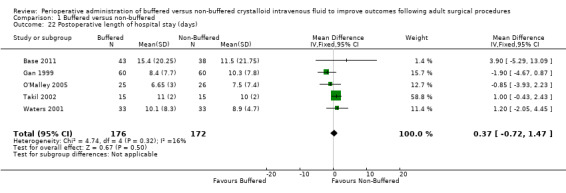
Figures
Update of
-
Perioperative buffered versus non-buffered fluid administration for surgery in adults.Cochrane Database Syst Rev. 2012 Dec 12;12:CD004089. doi: 10.1002/14651858.CD004089.pub2. Cochrane Database Syst Rev. 2012. Update in: Cochrane Database Syst Rev. 2017 Sep 21;9:CD004089. doi: 10.1002/14651858.CD004089.pub3. PMID: 23235602 Updated.
References
References to studies included in this review
Base 2011 {published data only}
-
- Base EM, Standl T, Lassnigg A, Skhirtladze K, Jungheinrich C, Gayko D, et al. Efficacy and safety of hydroxyethyl starch 6% in a balanced electrolyte solution (Volulyte) during cardiac surgery. Journal of Cardiothoracic and Vascular Anesthesia 2011;25(3):407‐14. [PUBMED: 21345699] - PubMed
Chin 2006 {published and unpublished data}
-
- Chin J, Macachor J, Ong KC, Ong BC. A comparison of 5% dextrose in 0.9% normal saline versus non‐dextrose‐containing crystalloids as the initial intravenous replacement fluid in elective surgery. Anaesthesia and Intensive Care 2006;34(5):613‐7. [PUBMED: 17061636] - PubMed
Gan 1999 {published and unpublished data}
-
- Gan TJ, Bennett‐Guerrero E, Phillips‐Bute B, Wakeling H, Moskowitz DM, Olufolabi Y, et al. Hextend, a physiologically balanced plasma expander for large volume use in major surgery: a randomized phase III clinical trial. Anesthesia and Analgesia 1999;88(5):992‐8. [PUBMED: 10320157 ] - PubMed
Hadimioglu 2008 {published data only (unpublished sought but not used)}
-
- Hadimioglu N, Saadawy I, Saglam T, Ertug Z, Dinckan A. The effect of different crystalloid solutions on acid‐base balance and early kidney function after kidney transplantation. Anesthesia and Analgesia 2008;107(1):264‐9. [PUBMED: 18635497] - PubMed
Heidari 2011 {published data only}
-
- Heidari SM, Saryazdi H, Shafa A, Arefpour R. Comparison of the effect of preoperative administration of Ringer’s solution, normal saline and hypertonic saline 5% on postoperative nausea and vomiting: a randomized, double blinded clinical study. Pakistan Journal of Medical Sciences 2011;27(4):771‐4.
Khajavi 2008 {published data only}
-
- Khajavi MR, Etezadi F, Moharari RS, Imani F, Meysamie AP, Khashayar P, et al. Effects of normal saline vs. lactated Ringer's during renal transplantation. Renal Failure 2008;30(5):535‐9. [PUBMED: 18569935] - PubMed
Kim 2013 {published data only}
-
- Kim SY, Huh KH, Lee JR, Kim SH, Jeong SH, Choi YS. Comparison of the effects of normal saline versus Plasmalyte on acid‐base balance during living donor kidney transplantation using the Stewart and base excess methods. Transplantation Proceedings 2013;45:2191‐6. [PUBMED: 23953528] - PubMed
Kulla 2008 {published data only (unpublished sought but not used)}
-
- Kulla M, Weidhase R, Lampl L. Hydroxyethyl starch 6% 130/0.42 In acetate‐buffered Ringer's solution as a part of a balanced‐volume resuscitation in abdominal surgery. Anasthesiologie und Intensivmedizin 2008;49:7‐18.
Martin 2002 {published and unpublished data}
-
- Martin G, Bennett‐Guerrero E, Wakeling H, Mythen MG, el‐Moalem H, Robertson K, et al. A prospective randomised comparison of thromboelastographic coagulation profile in patients receiving lactated Ringer's solution, 6% Hetastarch in a balanced‐salt vehicle, or 6% Hetastarch in saline during major surgery. Journal of Cardiothoracic and Vascular Anesthesia 2002;16(4):441‐6. [PUBMED: 12154422] - PubMed
McFarlane 1994 {published data only (unpublished sought but not used)}
-
- McFarlane C, Lee A. A comparison of Plasmalyte 148 and 0.9% saline for intra‐operative fluid replacement. Anaesthesia 1994;49(9):779‐81. [PUBMED: 7978133] - PubMed
Moretti 2003 {published data only (unpublished sought but not used)}
-
- Moretti EW, Robertson KM, El‐Moalem H, Gan TJ. Intraoperative colloid administration reduces postoperative nausea and vomiting and improves postoperative outcomes compared with crystalloid administration. Anesthesia and Analgesia 2003;96(2):611‐7. [PUBMED: 12538221] - PubMed
Nuraei 2010 {published data only}
-
- Nuraei N, Khajenouri R, Soleimani M, Dabbagh A. The effects of intraoperative normal saline versus lactated Ringer solution on clinical outcomes and laboratory findings in renal transplant patients. Tehran University Medical Journal 2010;68(4):243‐9.
O'Malley 2005 {published data only (unpublished sought but not used)}
-
- O'Malley CM, Frumento RJ, Hardy MA, Benvenisty AI, Brentjens TE, Mercer JS, et al. A randomized, double‐blind comparison of lactated Ringer's solution and 0.9% NaCl during renal transplantation. Anesthesia and Analgesia 2005;100(5):1518‐24. - PubMed
Scheingraber 1999 {published data only (unpublished sought but not used)}
-
- Scheingraber S, Rehm M, Sehmisch C, Finsterer U. Rapid saline infusion produces hyperchloremic acidosis in patients undergoing gynecologic surgery. Anesthesiology 1999;90(5):1265‐70. [PUBMED: 10319771 ] - PubMed
Song 2015 {published data only}
-
- Song JW, Shim JK, Kim NY, Jang J, Kwak YL. The effect of 0.9% saline versus Plasmalyte on coagulation in patients undergoing lumbar spinal surgery: a randomized controlled trial. International Journal of Surgery 2015;20:128‐34. - PubMed
Takil 2002 {published data only (unpublished sought but not used)}
-
- Takil A, Eti Z, Irmak P, Yilmaz Gogus F. Early postoperative respiratory acidosis after large intravascular volume infusion of lactated Ringer's solution during major spine surgery. Anesthesia and Analgesia 2002;95(2):294‐8. [PUBMED: 12145036 ] - PubMed
Walsh 1983 {published data only (unpublished sought but not used)}
-
- Walsh ES, Traynor C, Paterson JL, Hall GM. Effect of different intraoperative fluid regimens on circulating metabolites and insulin during abdominal surgery. British Journal of Anaesthesia 1983;55(2):135‐40. [PUBMED: 6338893] - PubMed
Waters 2001 {published and unpublished data}
-
- Waters JH, Gottlieb A, Schoenwald P, Popovich MJ, Sprung J, Nelson DR. Normal saline versus lactated Ringer's solution for intraoperative fluid management in patients undergoing abdominal aortic aneurysm repair: an outcome study. Anesthesia and Analgesia 2001;93(4):817‐22. [PUBMED: 11574339 ] - PubMed
Wilkes 2001 {published and unpublished data}
-
- Wilkes NJ, Woolf R, Mutch M, Mallett SV, Peachey T, Stephens R, et al. The effects of balanced versus saline‐based Hetastarch and crystalloid solutions on acid‐base and electrolyte status and gastric mucosal perfusion in elderly surgical patients. Anesthesia and Analgesia 2001;93(4):811‐6. [PUBMED: 11574338 ] - PubMed
References to studies excluded from this review
Bennett‐Guerrero 2001 {published data only (unpublished sought but not used)}
-
- Bennett‐Guerrero E, Frumento RJ, Berend Mets MPH, Manspeizer HE, Hirsh AL. Impact of normal saline based versus balanced‐salt intravenous fluid replacement on clinical outcomes: a randomized blinded clinical trial. Anesthesiology 2001;95:A147.
Bick 1995 {published data only}
-
- Bick RL. Evaluation of a new hydroxyethyl starch preparation on selected coagulation variables. Clinical and Applied Thrombosis/Hemostasis 1995;1:215‐9.
Boldt 1993 {published data only}
-
- Boldt J, Knothe C, Zickmann B, Andres P, Dapper F, Hempelmann G. Influence of different intravascular volume therapies on platelet function in patients undergoing cardiopulmonary bypass. Anesthesia and Analgesia 1993;76(6):1185‐90. [PUBMED: 7684579 ] - PubMed
Boldt 2002a {published data only (unpublished sought but not used)}
-
- Boldt J, Haisch G, Suttner S, Kumle B, Schellhase F. Are lactated Ringer's solution and normal saline equal with regard to coagulation? Retraction in: Are lactated Ringer's solution and normal saline solution equal with regard to coagulation?: Retraction. [Anesth Analg 2011]. Anesthesia and Analgesia 2002;94(2):378‐84. [PUBMED: 11812703] - PubMed
Boldt 2002b {published data only}
-
- Boldt J, Haisch G, Suttner S, Kumle B, Schellhaass A. Effects of a new modified, balanced hydroxyethyl starch preparation (Hextend) on measures of coagulation. Retraction. Notice of formal retraction of articles by Dr. Joachim Boldt. [Br J Anaesth 2011]. British Journal of Anaesthesia 2002;89(5):722‐8. [PUBMED: 12393770] - PubMed
Boldt 2007 {published data only (unpublished sought but not used)}
-
- Boldt J, Schollhorn T, Munchbach J, Pabsdorf M. A total balanced volume replacement strategy using a new balanced hydroxyethyl starch preparation (6% HES 130/0.42) in patients undergoing major abdominal surgery. European Journal of Anaesthesiology 2007;24(3):267‐75. [PUBMED: 17054812 ] - PubMed
Boldt 2009 {published data only (unpublished sought but not used)}
-
- Boldt J, Suttner S, Brosch C, Lehmann A, Rohm K, Mengistu A. The influence of a balanced volume replacement concept on inflammation, endothelial activation, and kidney integrity in elderly cardiac surgery patients. Retraction Note: The influence of a balanced volume replacement concept on inflammation, endothelial activation, and kidney integrity in elderly cardiac surgery patients. [Intensive Care Med 2011]. Intensive Care Medicine 2009;35(3):462‐70. [PUBMED: 18807007] - PubMed
Boldt 2010 {published data only}
-
- Boldt J, Mayer J, Brosch C, Lehmann A, Mengistu A. Volume replacement with a balanced hydroxyethyl starch (HES) preparation in cardiac surgery patients. Retractions. [J Cardiothorac Vasc Anesth 2011]. Journal of Cardiothoracic and Vascular Anesthesia 2010;24(3):399‐407. - PubMed
Campbell 1990 {published data only}
-
- Campbell IT, Baxter JN, Tweedie IE, Taylor GT, Keens SJ. IV fluids during surgery. British Journal of Anaesthesia 1990;65:726‐9. [PUBMED: 2248854 ] - PubMed
Choi 2010 {published data only}
-
- Choi SJ, Ahn HJ, Chung SS, Kim MH, Choi DH, Lee SM, et al. Hemostatic and electrolyte effects of hydroxyethyl starches in patients undergoing posterior lumbar interbody fusion using pedicle screws and cages. Spine 2010;35(7):829‐34. [PUBMED: 20072091] - PubMed
Evans 2003 {published data only}
-
- Evans PA, Heptinstall S, Crowhurst EC, Davies T, Glenn JR, Madira W, et al. Prospective double‐blind randomized study of the effects of four intravenous fluids on platelet function and hemostasis in elective hip surgery. Journal of Thrombosis and Haemostasis 2003;1(10):2140‐8. [PUBMED: 14521596] - PubMed
Javnrin 1980 {published data only}
-
- Janvrin SB, Davies G, Greenhalgh RM. Postoperative deep vein thrombosis caused by intravenous fluids during surgery. British Journal of Surgery 1980;67(10):690‐3. [PUBMED: 7000224] - PubMed
Kaplan 2001 {published data only}
-
- Kaplan LJ, Bailey H. Large volume resuscitation with hydroxyethyl starch (HES) in lactated Ringer's (LR) solution restores perfusion, minimally induces hyperchloremia or impairs coagulation. Critical Care 2001;5 Suppl 1:113.
Krebbel 2014 {published data only}
-
- Krebbel H, Feldheiser A, Müller O, Boemke W, Sander M, Perka C, et al. Influence of goal‐directed therapy with balanced crystalloid‐colloid or unbalanced crystalloid solution on base excess. Journal of International Medical Research 2014;42(2):468‐86. [PUBMED: 24514432] - PubMed
Lowery 1967 {published data only}
-
- Lowery BD, Cloutier CT, Carey LC. Electrolye solutions in resuscitation in human hemorrhagic shock. Surgery, Gynecology & Obstetrics 1971;133(2):273‐84. - PubMed
Protsenko 2009 {published data only}
-
- Protsenko DN, Leiderman IN, Grigor'ev EV, Kokarev EA, Levit AL, Gel'fand BR. Evaluation of the effectiveness and safety of synthetic colloid solutions in the treatment of severe abdominal sepsis: a randomized comparative study. Anesteziologiia i Reanimatologiia 2009;5:9‐13. [PUBMED: 19938709] - PubMed
Reid 2003 {published data only}
-
- Reid F, Lobo DN, Williams RN, Rowlands BJ, Allison SP. (Ab)normal saline and physiological Hartmann's solution: a randomized double‐blind crossover study. Clinical Science (London) 2003;104(1):17‐24. [PUBMED: 12519083] - PubMed
Roche 2006 {published data only}
-
- Roche A, James MF, Bennett‐Guerrero E, Mythen MG. A head‐to‐head comparison of the in vitro coagulation effects of saline‐based and balanced electrolyte crystalloid and colloid intravenous fluids. Anesthesia and Analgesia 2006;102(4):1274‐9. [PUBMED: 16551936] - PubMed
Ruttman 1996 {published data only}
-
- Ruttmann TG, James MF, Viljoen JF. Haemodilution induces a hypercoagulable state. British Journal of Anaesthesia 1996;76(3):412‐4. [PUBMED: 8785143] - PubMed
Walker 2001 {published data only}
-
- Walker SC, Hoover LR, Shepherd JM, Cancio L, Goodwin C. Balanced electrolyte solution reduces acidosis in the resuscitation of perioperative burn patients. Anesthesiology 2001;95(3A):A375.
Williams 1999 {published data only}
-
- Williams EL, Hildebrand KL, McCormick SA, Bedel MJ. The effect of intravenous lactated Ringer's solution versus 0.9% sodium chloride solution on serum osmolality in human volunteers. Anesthesia and Analgesia 1999;88(5):999‐1003. [PUBMED: 10320158] - PubMed
Young 2015 {published data only}
-
- Young P, Bailey M, Beasley R, Henderson S, Mackle D, McArthur C, et al. SPLIT Investigators, ANZICS CTG. Effect of a buffered crystalloid solution vs saline on acute kidney injury among patients in the intensive care unit: the SPLIT randomized clinical trial. JAMA 2015;314(16):1701‐10. [PUBMED: 26444692] - PubMed
References to studies awaiting assessment
Pfortmueller 2017 {published data only}
-
- Pfortmueller C, Funk G, Potura E, Reiterer C, Luf F, Kabon B, et al. Acetate‐buffered crystalloid infusate versus infusion of 0.9% saline and hemodynamic stability in patients undergoing renal transplantation. The Wiener Klinische Wochenschrift ‐ The Central European Journal of Medicine 2017;e‐pub. - PMC - PubMed
References to ongoing studies
NCT02565420 {published data only}
-
- NCT02565420. Saline versus Lactated Ringer's Solution: The SOLAR Fluid Trial. https://clinicaltrials.gov/ct2/show/NCT02565420. First received 28 September 2015.
Additional references
Altman 1996
Bellomo 2001
-
- Bellomo R, Liskaser F. What is the clinical relevance of dilutional acidosis?. Anesthesiology 2001;95(3):810‐11. [PUBMED: 11575565] - PubMed
Bland 1996
Cosnett 1989
-
- Cosnett JE. The origins of intravenous fluid therapy. Lancet 1989;1(8641):768‐71. [PUBMED: 2564573 ] - PubMed
Egger 1997
GIFTASUP
-
- Powell‐Tuck J, Gosling P, Lobo D, Allison SP, Carlson GL, Gore M, et al. British consensus guidelines on intravenous fluid therapy for adult surgical patients. GIFTASUP. 1. UK, 2009. - PubMed
GIFTASUP 2011
-
- Powell‐Tuck J, Gosling P, Lobo DN, Allison SP, Carlson GL, Gore M, et al. British consensus guidelines on intravenous fluid therapy for adult surgical patients. GIFTASUP 2011.
Gilbody 2000
-
- Gilbody SM, Song F, Eastwood AJ, Sutton A. The causes, consequences and detection of publication bias in psychiatry. Acta Psychiatrica Scandinavica 2000;102(4):241‐9. [PUBMED: 11089723] - PubMed
GRADEproGDT 2015 [Computer program]
-
- GRADE Working Group, McMaster University. GRADEpro GDT. Version Accessed July 2017. Hamilton (ON): GRADE Working Group, McMaster University, 2015.
Guyatt 2011a
-
- Guyatt G, Oxman AD, Akl EA, Kunz ZR, Vist G, Brozek J, et al. GRADE guideline: 1. Introduction ‐ GRADE evidence profiles and summary of findings tables. Journal of Clinical Epidemiology 2011;64(4):389‐94. [PUBMED: 21195583] - PubMed
Hartmann 1934
-
- Hartmann AF. Theory and practice of parenteral fluid administration. JAMA 1934;103:1349‐54.
Higgins 2008
Higgins 2011
-
- Higgins JPT, Altman D, Sterne J (editors). Cochrane Handbook for Systematic Reviews of Interventions Version 5.1.0 (updated 2011). The Cochrane Collaboration. www.cochrane‐handbook.org. The Cochrane Collaboration.
Hozo 2005
Jones 2011
-
- Jones RM, Arlidge J, Gillham R, Reagu S, Bree M, Taylor PJ. Efficacy of mood stabilisers in the treatment of impulsive or repetitive aggression: systematic review and meta‐analysis. British Journal of Psychiatry 2011;198(2):93‐8. [PUBMED: 21282779] - PubMed
Kellum 2004
-
- Kellum JA, Song M, Alasri E. Hyperchloremic acidosis increases circulating inflammatory molecules in experimental sepsis. Chest 2004;130(4):962‐7. [PUBMED: 17035425 ] - PubMed
Krajewski 2015
Navarro 2015
-
- Navarro L, Bloomstone J, Auler J, Cannesson M, Rocca G, Gan TJ, et al. Perioperative fluid therapy: a statement from the international Fluid Optimization Group. Perioperative Medicine 2015; Vol. 4, issue 3:published online 2015. [DOI: 10.1186/s13741-015-0014-z; PUBMED: 25897397] - DOI - PMC - PubMed
O'Connor 2001
-
- O'Connor MF, Roizen MF. Lactate versus chloride: which is better?. Anesthesia and Analgesia 2001;4(93):809‐10. [PUBMED: 11574337 ] - PubMed
Orbegozo 2014
-
- Orbegozo Cortes D, Rayo Bonor A, Vincent JL. Isotonic crystalloid solutions: a structured review of the literature. British Journal of Anaesthesia 2014;112(6):968–81. [PUBMED: 24736393] - PubMed
Prough 1996
-
- Prough DS. Crystalloids versus colloids in the perioperative period. Anesthesiology Clinics of North America 1996;14(2):341‐68.
RevMan 5.3 [Computer program]
-
- The Nordic Cochrane Centre, The Cochrane Collaboration. Review Manager (RevMan 5). Version 5.3. Copenhagen: The Nordic Cochrane Centre, The Cochrane Collaboration, 2014.
Sterne 2001
-
- Sterne J, Egger M. Funnel plots for detecting bias in meta‐analysis: guidelines on choice of axis. Journal of Clinical Epidemiology 2001;54(10):1046‐55. [PUBMED: 11576817] - PubMed
Stewart 1978
-
- Stewart PA. Independent and dependent variables of acid‐base control. Respiration Physiology 1978;33(1):9‐26. [PUBMED: 27857] - PubMed
Sutton 2000
References to other published versions of this review
Burdett 2003
Publication types
MeSH terms
Substances
LinkOut - more resources
Full Text Sources
Other Literature Sources
Medical
Research Materials
Miscellaneous
