


Activation of phosphatidylinositol 3-kinase/AKT/snail signaling pathway contributes to epithelial-mesenchymal transition-induced multi-drug resistance to sorafenib in hepatocellular carcinoma cells
- PMID: 28934275
- PMCID: PMC5608310
- DOI: 10.1371/journal.pone.0185088
Activation of phosphatidylinositol 3-kinase/AKT/snail signaling pathway contributes to epithelial-mesenchymal transition-induced multi-drug resistance to sorafenib in hepatocellular carcinoma cells
Abstract
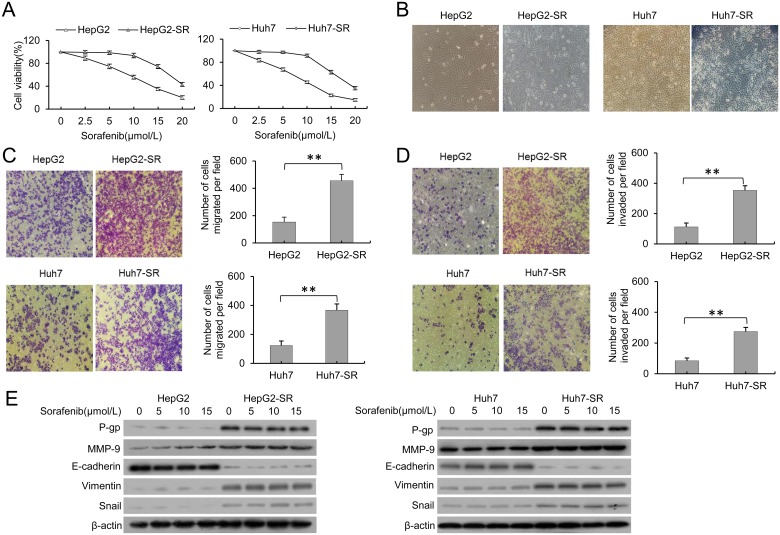
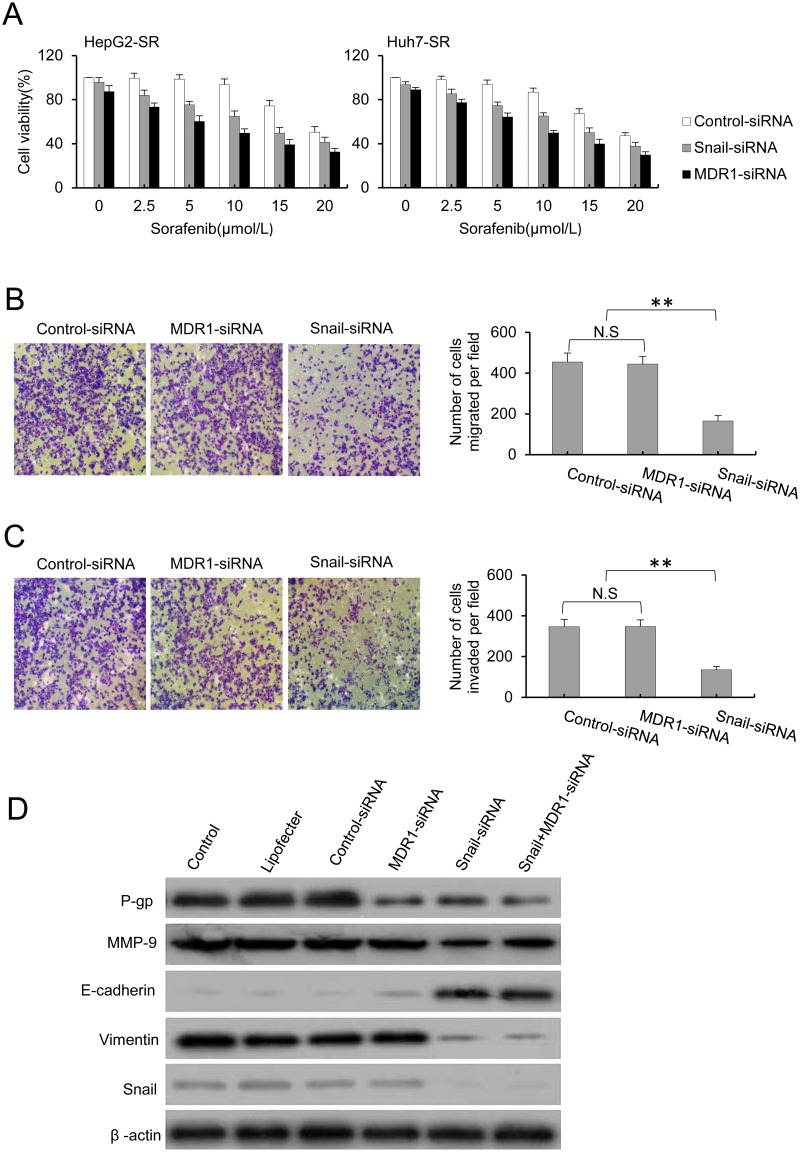
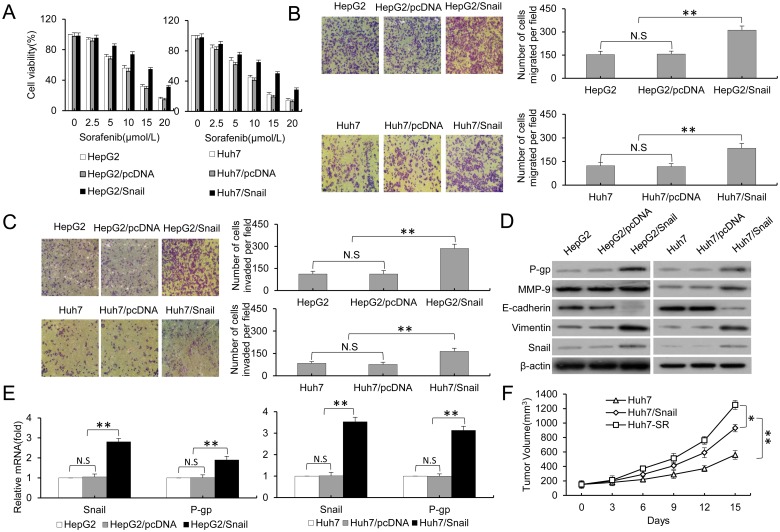
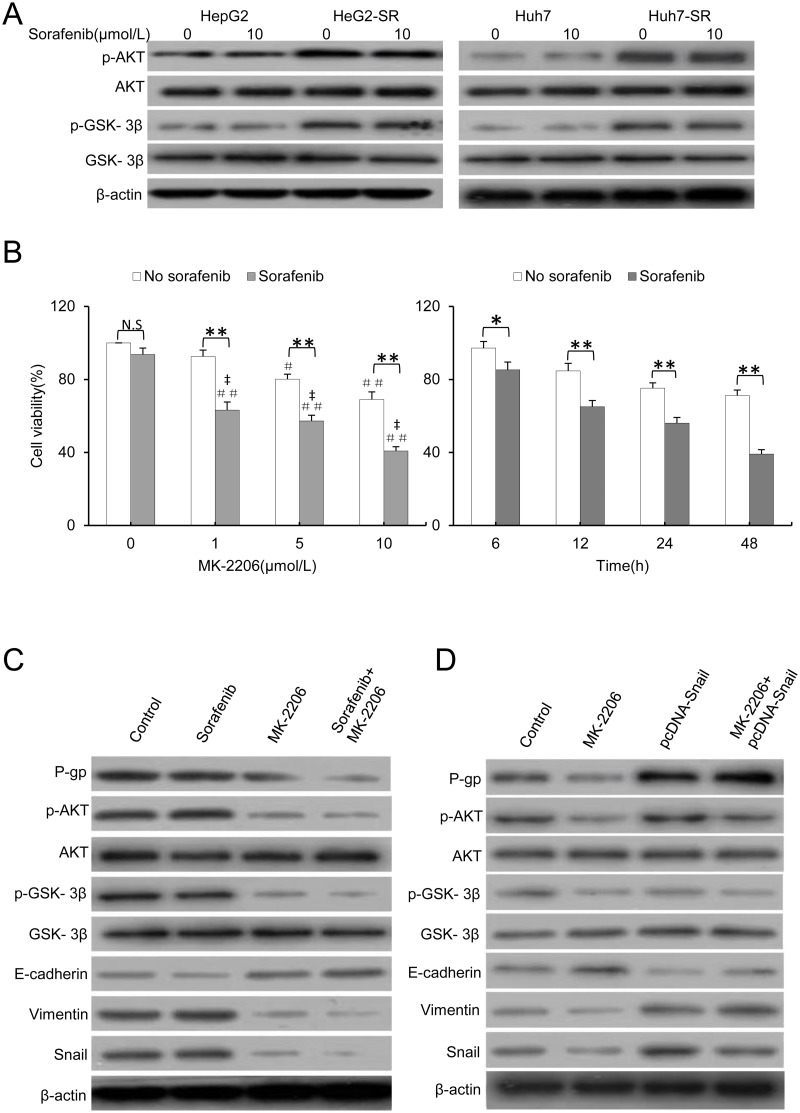
Sorafenib, an orally available kinase inhibitor, is the standard first-line systemic drug for advanced hepatocellular carcinoma (HCC), and it exerts potent inhibitory activity against epithelial-mesenchymal transition (EMT) and multidrug resistance (MDR) by inhibiting mitogen-activated protein kinase (MAPK) signaling in HCC. However, after long-term exposure to sorafenib, HCC cells exhibit EMT and resistance to sorafenib. The activation of AKT by sorafenib is thought to be responsible for the development of these characteristics. The present study aims to examine the underlying mechanism and seek potential strategies to reverse this resistance and the progression to EMT. Sorafenib-resistant cells showed increased metastatic and invasive ability, with a higher expression of P-glycoprotein (P-gp), compared with the parental cells. This phenomenon was at least partially due to EMT and the appearance of MDR in sorafenib-resistant HCC cells. Moreover, MDR was a downstream molecular event of EMT. Silencing Snail with siRNA blocked EMT and partially reversed the MDR, thereby markedly abolishing invasion and metastasis in sorafenib-resistant HCC cells, but silencing of MDR1 had no effect on the EMT phenotype. Additionally, HCC parental cells that were stably transfected with pCDNA3.1-Snail exhibited EMT and MDR. Two sorafenib-resistant HCC cell lines, established from human HCC HepG2 and Huh7 cells, were refractory to sorafenib-induced growth inhibition but were sensitive to MK-2206, a novel allosteric AKT inhibitor. Thus, the combination of sorafenib and MK-2206 led to significant reversion of the EMT phenotype and P-gp-mediated MDR by downregulating phosphorylated AKT. These findings underscore the significance of EMT, MDR and enhanced PI3K/AKT signaling in sorafenib-resistant HCC cells.
Conflict of interest statement
Figures
References
-
- Torre LA, Bray F, Siegel RL, Ferlay J, Lortet-Tieulent J, Jemai A. Global cancer statistics, 2012. CA Cancer J Clin. 2015;65(2):87–108. doi: 10.3322/caac.21262 - DOI - PubMed
-
- Wang L, Yao M, Dong ZZ, Zhang Y, Yao DF. Circulating specific biomarkers in diagnosis of hepatocellular carcinoma and its metastasis monitoring. Tumour Biol. 2014;35(1):9–20. doi: 10.1007/s13277-013-1141-0 - DOI - PMC - PubMed
-
- Cheng AL, Kang YK, Chen ZD, Tsao CJ, Qin SK. Efficacy and safety of sorafenib in patients in the Asia-Pacific region with advanced hepatocellular carcinoma: a phase III randomised, double-blind, placebo-controlled trial. Lancet Oncol. 2009;10(1):25–34. doi: 10.1016/S1470-2045(08)70285-7 - DOI - PubMed
-
- Llovet JM, Ricci S, Mazzaferro V, Hilgard P, Gane E, Blanc JF, et al. Sorafenib in advanced hepatocellular carcinoma. N Engl J Med. 2008;359(4):378–90. doi: 10.1056/NEJMoa0708857 - DOI - PubMed
-
- Nagai T, Arao T, Furuta K, Sakai K, Kudo K, Kaneda H, et al. Sorafenib inhibits the hepatocyte growth factor-mediated epithelial mesenchymal transition in hepatocellular carcinoma. Mol Cancer Ther. 2011;10(1):169–177. doi: 10.1158/1535-7163.MCT-10-0544 - DOI - PubMed
MeSH terms
Substances
LinkOut - more resources
Full Text Sources
Other Literature Sources
Medical
Research Materials
Miscellaneous
