Association of Long-Term Exposure to Transportation Noise and Traffic-Related Air Pollution with the Incidence of Diabetes: A Prospective Cohort Study
- PMID: 28934721
- PMCID: PMC5783665
- DOI: 10.1289/EHP1279
Association of Long-Term Exposure to Transportation Noise and Traffic-Related Air Pollution with the Incidence of Diabetes: A Prospective Cohort Study
Abstract
Background: Evidence for an association between transportation noise and cardiovascular disease has increased; however, few studies have examined metabolic outcomes such as diabetes or accounted for environmental coexposures such as air pollution, greenness, or walkability.
Objectives: Because diabetes prevalence is increasing and may be on the causal pathway between noise and cardiovascular disease, we examined the influence of long-term residential transportation noise exposure and traffic-related air pollution on the incidence of diabetes using a population-based cohort in British Columbia, Canada.
Methods: We examined the influence of transportation noise exposure over a 5-y period (1994-1998) on incident diabetes cases in a population-based prospective cohort study (n=380,738) of metropolitan Vancouver (BC) residents who were 45-85 y old, with 4-y of follow-up (1999-2002). Annual average transportation noise (Lden), air pollution [black carbon, particulate matter with aerodynamic diameter <2.5μm (PM2.5), nitrogen oxides], greenness [Normalized Difference Vegetation Index (NDVI)], and neighborhood walkability at each participant's residence were modeled. Incident diabetes cases were identified using administrative health records.
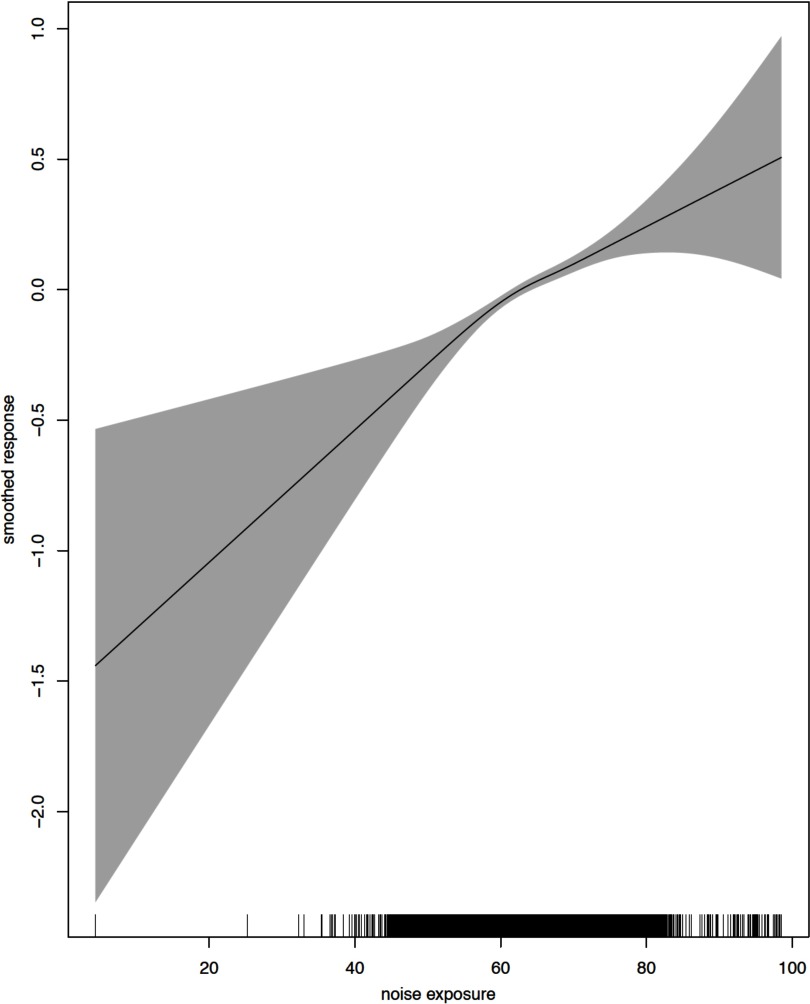
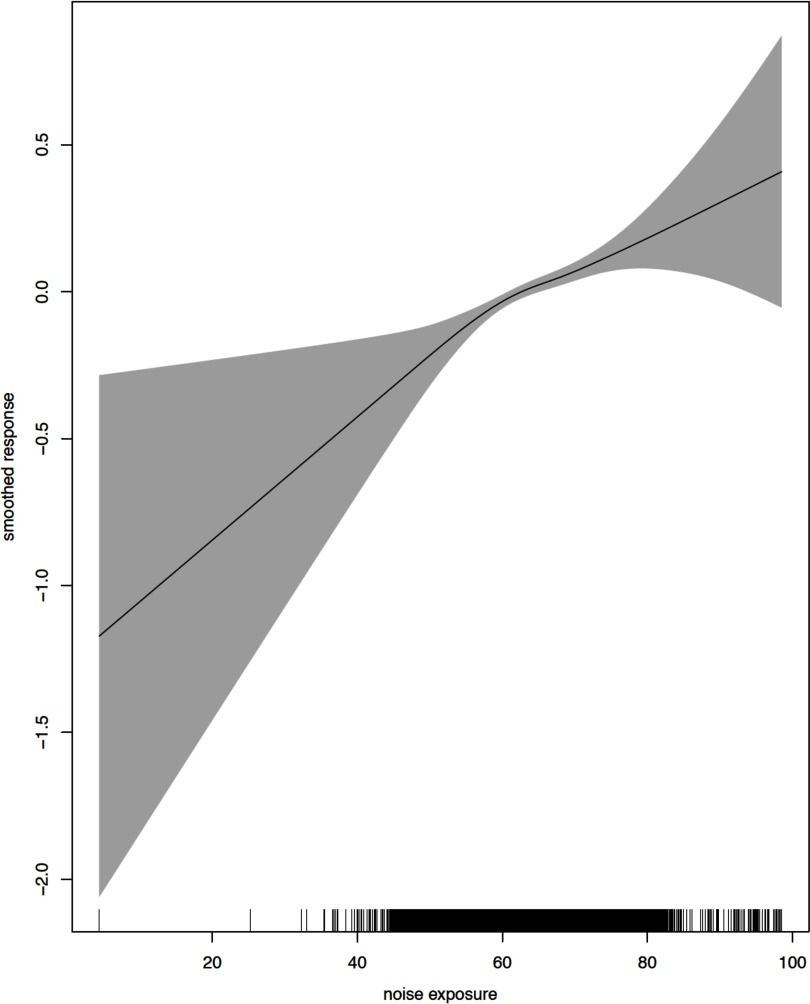
Results: Transportation noise was associated with the incidence of diabetes [interquartile range (IQR) increase, 6.8 A-weighted decibels (dBA); OR=1.08 (95% CI: 1.05, 1.10)]. This association remained after adjustment for environmental coexposures including traffic-related air pollutants, greenness, and neighborhood walkability. After adjustment for coexposure to noise, traffic-related air pollutants were not associated with the incidence of diabetes, whereas greenness was protective.
Conclusion: We found a positive association between residential transportation noise and diabetes, adding to the growing body of evidence that noise pollution exposure may be independently linked to metabolic health and should be considered when developing public health interventions. https://doi.org/10.1289/EHP1279.
Figures
References
Publication types
MeSH terms
Substances
LinkOut - more resources
Full Text Sources
Other Literature Sources
Medical