


A Cluster-Randomized Trial of Restorative Practices: An Illustration to Spur High-Quality Research and Evaluation
- PMID: 28936104
- PMCID: PMC5603319
- DOI: 10.1080/10474412.2016.1217488
A Cluster-Randomized Trial of Restorative Practices: An Illustration to Spur High-Quality Research and Evaluation
Abstract
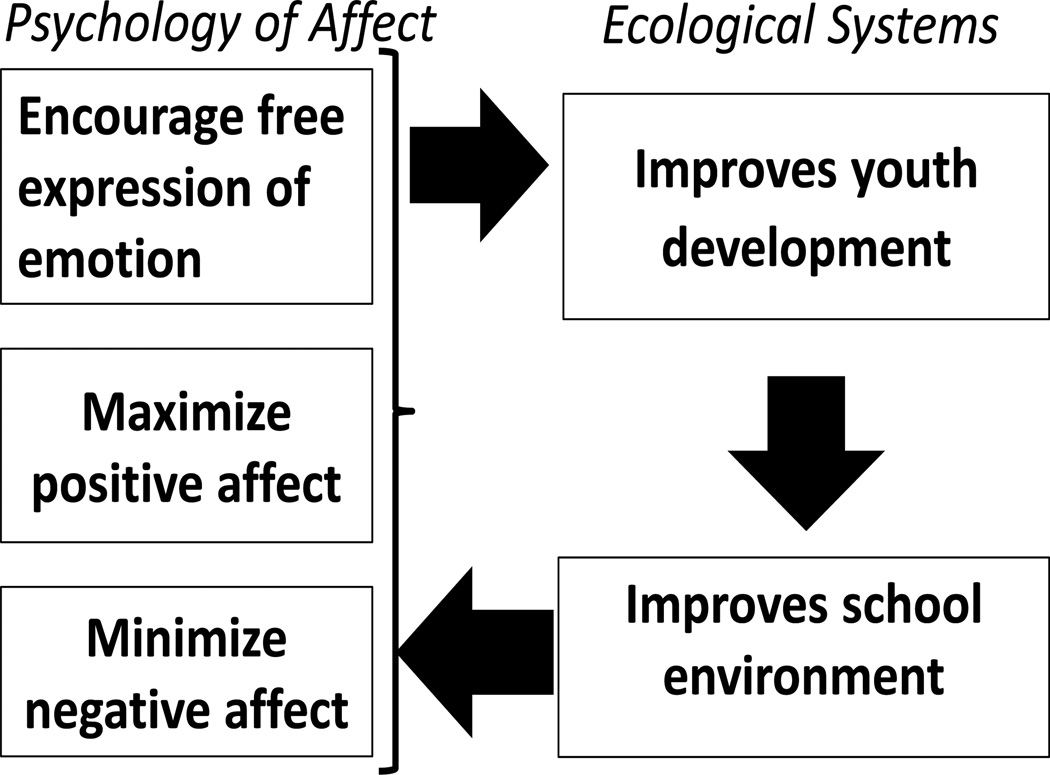
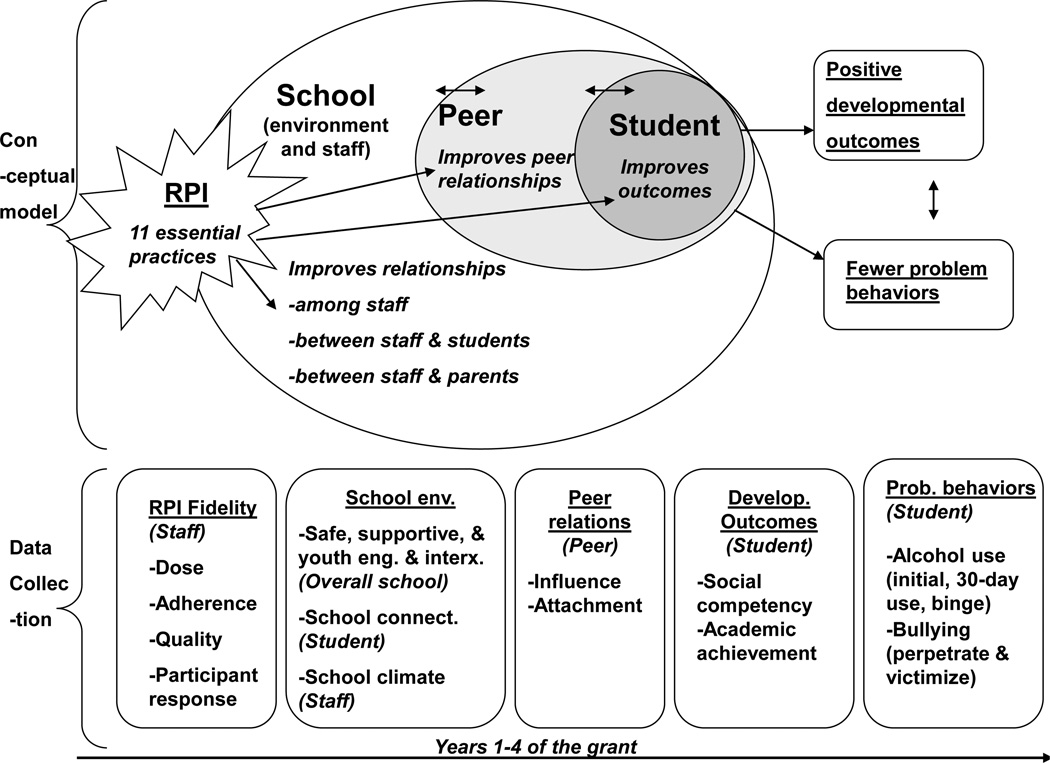
Restorative Practices in schools lack rigorous evaluation studies. As an example of rigorous school-based research, this paper describes the first randomized control trial of restorative practices to date, the Study of Restorative Practices. It is a 5-year, cluster-randomized controlled trial (RCT) of the Restorative Practices Intervention (RPI) in 14 middle schools in Maine to assess whether RPI impacts both positive developmental outcomes and problem behaviors and whether the effects persist during the transition from middle to high school. The two-year RPI intervention began in the 2014-2015 school year. The study's rationale and theoretical concerns are discussed along with methodological concerns including teacher professional development. The theoretical rationale and description of the methods from this study may be useful to others conducting rigorous research and evaluation in this area.
Keywords: positive youth development; randomized control trial; restorative justice.
Figures
References
-
- Acosta J. The effects of cultural differences on peer group relationships. Journal of Prevention & Intervention in the Community. 2003;25(2):13–26.
-
- Anderman E. School effects on psychological outcomes during adolescence. Journal of Educational Psychology. 2002;94(4):795–809.
-
- Arthur M, Briney J, Hawkins J, Abbott R, Brooke-Weiss B, Catalano RF. Measuring risk and protection in communities using the Communities That Care Youth Survey. Evaluation and Program Planning. 2007;30(2):197–211. - PubMed
-
- Arthur M, Hawkins J, Pollard J, Catalano R, Baglioni A. Measuring risk and protective factors for use, delinquency, and other adolescent problem behaviors the communities that care youth survey. Evaluation Review. 2002;26(6):575–601. - PubMed
-
- Ashworth J, Van Bockern S, Ailts J, Donnelly J, Erickson K, Woltermann J. The Restorative Justice Center: An Alternative to School Detention. Reclaiming Children and Youth. 2008;17(3):22–26.
Grants and funding
LinkOut - more resources
Full Text Sources
Other Literature Sources