


A working paradigm for the treatment of obesity in gastrointestinal practice
- PMID: 28936110
- PMCID: PMC5602523
- DOI: 10.1016/j.tgie.2017.01.003
A working paradigm for the treatment of obesity in gastrointestinal practice
Abstract
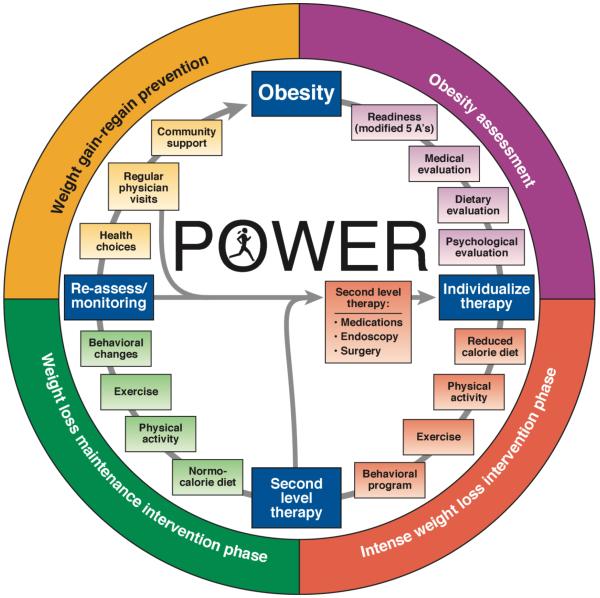
Obesity is a chronic, relapsing, multi-factorial disease characterized by abnormal or excessive adipose tissue accumulation that may impair health and increase disease risks. Despite the ever-increasing prevalence and economic and societal burden, the current approaches to treat obesity are not standardized or generally effective. In this manuscript, we describe a current working paradigm developed by a consensus approach for the multidisciplinary treatment of obesity in the GI practice. Obesity should be managed as a continuum of care focusing on weight loss, weight loss maintenance and prevention of weight regain. This approach needs to be disseminated throughout the health care system, coordinated by a multidisciplinary team and include gastroenterologists who are in a unique position to address obesity. Gastroenterologists are in the front line of managing the morbidity resulting from obesity, and have expertise in use of the essential tools to manage obesity: nutrition, pharmacology, endoscopy and surgery.
Keywords: obesity; weight loss; weight loss management.
Figures
References
-
- Bray GA, Bouchard C. Handbook of obesity : epidemiology, etiology, and physiopathology. 3rd CRC Press; Boca Raton: 2014.
-
- Yach D, Stuckler D, Brownell KD. Epidemiologic and economic consequences of the global epidemics of obesity and diabetes. Nature medicine. 2006 Jan;12(1):62–6. - PubMed
-
- Guize L, Pannier B, Thomas F, Bean K, Jego B, Benetos A. Recent advances in metabolic syndrome and cardiovascular disease. Arch Cardiovasc Dis. 2008 Sep;101(9):577–83. - PubMed
-
- Hill MJ, Metcalfe D, McTernan PG. Obesity and diabetes: lipids, 'nowhere to run to'. Clin Sci (Lond) 2009 Jan;116(2):113–23. - PubMed
Grants and funding
LinkOut - more resources
Full Text Sources
Other Literature Sources