


Developing product quality standards for wheelchairs used in less-resourced environments
- PMID: 28936410
- PMCID: PMC5594264
- DOI: 10.4102/ajod.v6i0.288
Developing product quality standards for wheelchairs used in less-resourced environments
Abstract
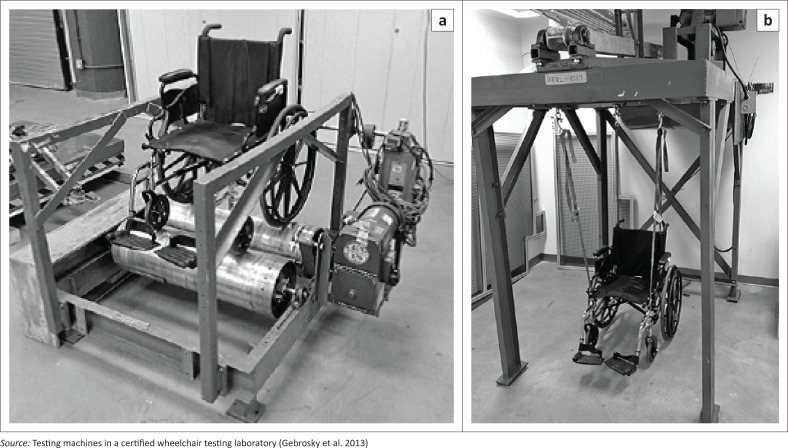
Background: Premature failures of wheelchairs in less-resourced environments (LREs) may be because of shortcomings in product regulation and quality standards. The standards published by the International Organization for Standardization (ISO) specify wheelchair tests for durability, safety and performance, but their applicability to products used in the rugged conditions of LREs is unclear. Because of this, wheelchair-related guidelines published by the World Health Organization recommended developing more rigorous durability tests for wheelchairs.
Objectives: This study was performed to identify the additional tests needed for LREs.
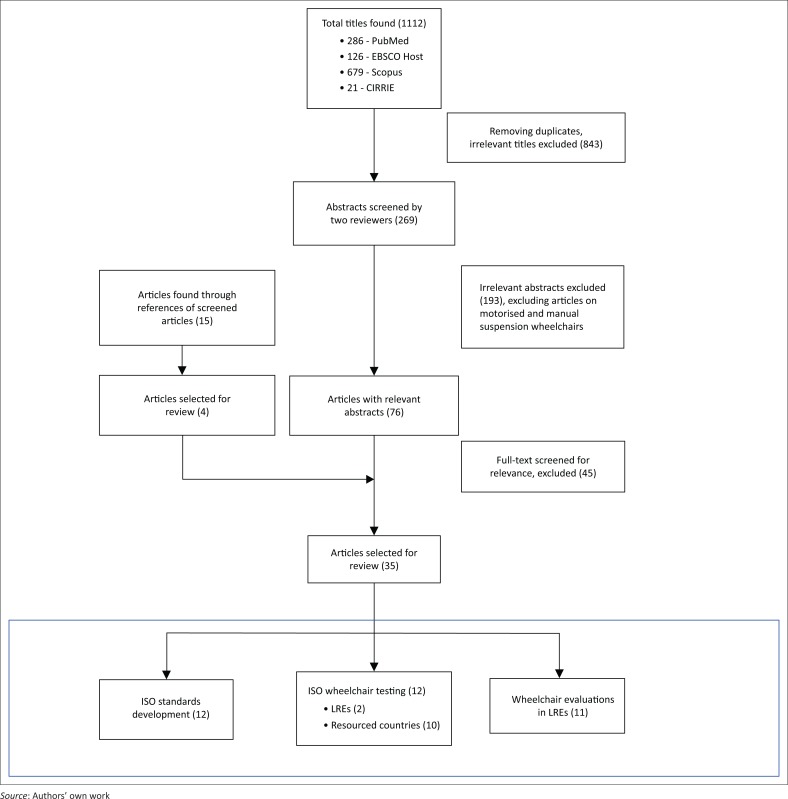
Methods: First, a literature review of the development of ISO test standards, wheelchair standards testing studies and wheelchair evaluations in LREs was performed. Second, expert advice from members of the Standards Working Group of the International Society of Wheelchair Professionals (ISWP) was compiled and reviewed.
Results: A total of 35 articles were included in the literature review. Participation from LREs was not observed in the ISO standards development. As per wheelchair testing study evidence, wheelchair models delivered in LREs did not meet the minimum standards requirement. Multiple part failures and repairs were observed with reviewed field evaluation studies. ISWP experts noted that several testing factors responsible for premature failures with wheelchair parts are not included in the standards and accordingly provided advice for additional test development.
Conclusion: The study findings indicate the need to develop a wide range of tests, with specific tests for measuring corrosion resistance of the entire wheelchair, rolling resistance of castors and rear wheels, and durability of whole wheelchair and castor assemblies.
Conflict of interest statement
The authors declare that they have no financial or personal relationships that may have inappropriately influenced the writing of this article.
Figures

References
-
- Adobe Systems Incorporated , 2016, Adobe Connect, Adobe Systems Incorporated, San Jose, CA
-
- Armstrong W., Reisinger K.D. & Smith W.K, 2007, ‘Evaluation of CIR-whirlwind wheelchair and service provision in Afghanistan’, Disability and Rehabilitation 29(11–12), 935–948. https://doi.org/10.1080/09638280701240615 - DOI - PubMed
-
- Borg J. & Khasnabis C, 2008, Guidelines on the provision of manual wheelchairs in less-resourced settings, World Health Organization, viewed 21 July 2015, from http://www.who.int/disabilities/publications/technology/wheelchairguidel... - PubMed
-
- Borg J., Lindström A. & Larsson S, 2011, ‘Assistive technology in developing countries: A review from the perspective of the convention on the rights of persons with disabilities’, Prosthetics and Orthotics International 35(1), 20–29. https://doi.org/10.1177/0309364610389351 - DOI - PubMed
-
- Chakwizira J., Nhemachena C., Dube S. & Maponya G, 2010, ‘Rural travel and disability in Leroro and Moremela villages, South Africa’, in The 12th International Conference on Mobility and Transport for Elderly and Disabled Persons (TRANSED), Hong Kong, June 2–4, 2010.
LinkOut - more resources
Full Text Sources
Other Literature Sources
Research Materials