


Menopause and Ischemic Stroke: A Brief Review
- PMID: 28936482
- PMCID: PMC5604887
- DOI: 10.15406/mojt.2017.03.00059
Menopause and Ischemic Stroke: A Brief Review
Abstract
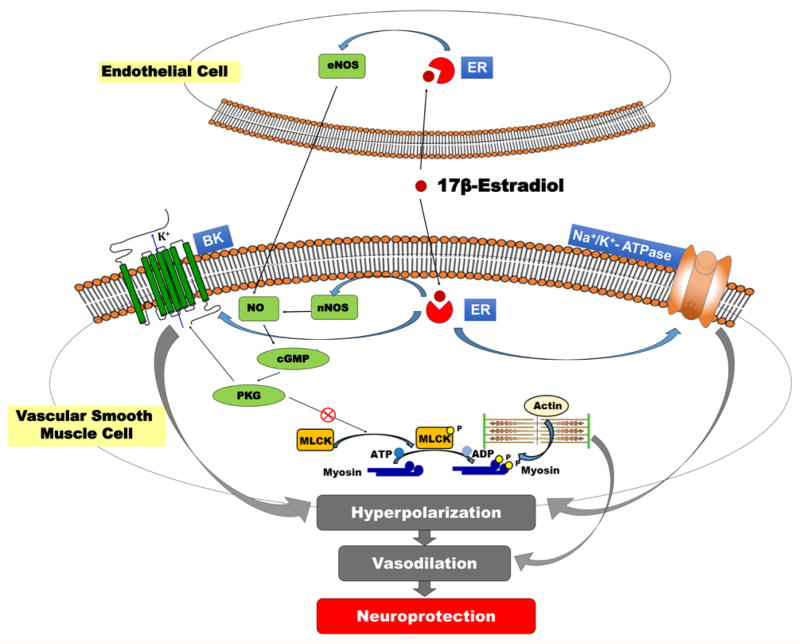
Ischemic stroke is one of the leading causes of morbidity and mortality worldwide. Females are protected against stroke before the onset of menopause. Menopause results in increased incidence of stroke when compared to men. The mechanisms of these differences remain to be elucidated. Considering that there is a postmenopausal phenomenon and females in general, are living longer sex hormone-dependent mechanisms have been postulated to be the primary factors responsible for the premenopausal protection from stroke and later to be responsible for the higher incidence and increased the severity of stroke after menopause. Animal studies suggest that administration of estrogen and progesterone is neuroprotective and decreases the incidence of stroke. However, the real-world outcomes of hormone replacement therapy have failed to decrease the stroke risk. Despite the multifactorial nature of sex differences in stroke, here, we briefly discuss the pathophysiology of sex steroid hormones, the molecular mechanisms of estrogen receptor-dependent signaling pathways in stroke, and the potential factors that determine the discrepant effects of hormone replacement therapy in stroke.
Keywords: Epidemiology; Gender; Hormones; Receptors; Stroke.
Figures
References
-
- Feigin VL, Lawes CM, Bennett DA, Anderson CS. Stroke epidemiology: a review of population-based studies of incidence, prevalence, and case-fatality in the late 20th century. Lancet Neurol. 2003;2(1):43–53. - PubMed
-
- Sudlow CL, Warlow CP. Comparable studies of the incidence of stroke and its pathological types: results from an international collaboration. International Stroke Incidence Collaboration. Stroke. 1997;28(3):491–499. - PubMed
-
- Zhang YQ, Shi J, Rajakumar G, Day AL, Simpkins JW. Effects of gender and estradiol treatment on focal brain ischemia. Brain Res. 1998;784(1–2):321–324. - PubMed
Grants and funding
LinkOut - more resources
Full Text Sources
Other Literature Sources