


Congenital hypothyroidism due to ectopic sublingual thyroid gland in Prader-Willi Syndrome: a case report
- PMID: 28938886
- PMCID: PMC5610404
- DOI: 10.1186/s13052-017-0403-7
Congenital hypothyroidism due to ectopic sublingual thyroid gland in Prader-Willi Syndrome: a case report
Abstract
Background: Thyroid gland disorders are variably associated with Prader-Willi syndrome (PWS). Many of the clinical features in newborns with PWS are similar to those found in congenital hypothyroidism (CH).
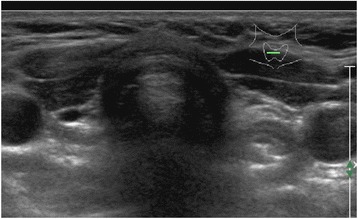
Case presentation: We report a case of a girl with CH and PWS. At the age of 9 months CH caused by an ectopic sublingual thyroid was diagnosed, and hormone replacement therapy was started. In spite of this treatment a decrease in growth velocity, weight excess and delayed development were observed. At the age of 9 years PWS was suspected on the basis of phenotype and genetic tests confirmed a maternal uniparental disomy of chromosome 15. This is the second reported case of hypothyroidism due to an ectopic sublingual thyroid gland in PWS suggesting that, although rare, an association between CH and PWS may exist. In our case diagnosis of PWS was delayed because mental retardation, hypotonia, obesity and short stature were initially attributed to hypothyroidism.
Conclusions: In this context PWS should be considered in obese children with CH who do not improve adequately with l-thyroxine therapy. Also, thyroid function in all PWS children should be assessed regularly in order to avoid delayed diagnosis of hypothyroidism.
Keywords: Hypothyroidism; Hypotonia; Obesity; Prader-Willi syndrome.
Conflict of interest statement
Ethics approval and consent to participate
The study has been approved by the authors’ institutional Ethical Research Committee. Both the patient and her legal guardian have given their written informed consent to participate.
Consent for publication
Written informed consent was obtained from the patient and her parent for publication of this case report and any accompanying images. A copy of the written consent is available for review by the Editor-in-Chief of this journal.
Competing interests
The authors declare that they have no competing interests in the manuscript.
Publisher’s Note
Springer Nature remains neutral with regard to jurisdictional claims in published maps and institutional affiliations.
Figures

Similar articles
-
Congenital hypothyroidism with Prader-Willi syndrome.J Pediatr Endocrinol Metab. 2002 Jan;15(1):105-7. doi: 10.1515/jpem.2002.15.1.105. J Pediatr Endocrinol Metab. 2002. PMID: 11822575
-
Thyroid function in patients with Prader-Willi syndrome: an Italian multicenter study of 339 patients.J Pediatr Endocrinol Metab. 2019 Feb 25;32(2):159-165. doi: 10.1515/jpem-2018-0388. J Pediatr Endocrinol Metab. 2019. PMID: 30703060
-
Thyroid function from birth to adolescence in Prader-Willi syndrome.J Pediatr. 2013 Sep;163(3):800-5. doi: 10.1016/j.jpeds.2013.03.058. Epub 2013 Apr 25. J Pediatr. 2013. PMID: 23623517
-
[Prader-Willi syndrome--clinical picture and genetics].Ugeskr Laeger. 1995 Mar 13;157(11):1513-9. Ugeskr Laeger. 1995. PMID: 7725549 Review. Danish.
-
[Clinical aspects and genetics of Prader-Willi syndrome].Klin Padiatr. 2001 May-Jun;213(3):91-8. doi: 10.1055/s-2001-15857. Klin Padiatr. 2001. PMID: 11417368 Review. German.
Cited by
-
Autoimmune Thyroid Disease in Specific Genetic Syndromes in Childhood and Adolescence.Front Endocrinol (Lausanne). 2020 Aug 19;11:543. doi: 10.3389/fendo.2020.00543. eCollection 2020. Front Endocrinol (Lausanne). 2020. PMID: 32973676 Free PMC article. Review.
-
Case Report: Plummer's adenoma in Prader-Willi syndrome.Front Pediatr. 2024 Aug 8;12:1388437. doi: 10.3389/fped.2024.1388437. eCollection 2024. Front Pediatr. 2024. PMID: 39175805 Free PMC article.
-
Endocrine features of Prader-Willi syndrome: a narrative review focusing on genotype-phenotype correlation.Front Endocrinol (Lausanne). 2024 Apr 26;15:1382583. doi: 10.3389/fendo.2024.1382583. eCollection 2024. Front Endocrinol (Lausanne). 2024. PMID: 38737552 Free PMC article. Review.
-
Prader- Willi syndrome: An uptodate on endocrine and metabolic complications.Rev Endocr Metab Disord. 2019 Jun;20(2):239-250. doi: 10.1007/s11154-019-09502-2. Rev Endocr Metab Disord. 2019. PMID: 31065942 Review.
References
Publication types
MeSH terms
LinkOut - more resources
Full Text Sources
Other Literature Sources
Medical
