


The Relationship Between the Dietary Inflammatory Index and Incident Frailty: A Longitudinal Cohort Study
- PMID: 28943182
- PMCID: PMC5756582
- DOI: 10.1016/j.jamda.2017.08.006
The Relationship Between the Dietary Inflammatory Index and Incident Frailty: A Longitudinal Cohort Study
Abstract
Objective: Inflammation is key risk factor for several conditions in the elderly. However, the relationship between inflammation and frailty is still unclear. We investigated whether higher dietary inflammatory index (DII) scores were associated with higher incidence of frailty in a cohort of North Americans.
Design: Longitudinal, with a follow-up of 8 years.
Setting: Osteoarthritis Initiative.
Participants: A total of 4421 participants with, or at high risk of, knee osteoarthritis.
Measurements: DII scores were calculated using the validated Block Brief 2000 Food-Frequency Questionnaire and categorized into sex-specific quartiles. Frailty was defined as 2 out of 3 of the criteria of the Study of Osteoporotic Fracture study (ie, weight loss, inability to rise from a chair 5 times, and poor energy). The strength of the association between baseline DII score and incident frailty was assessed through a Cox's regression analysis, adjusted for potential baseline confounders, and reported as hazard ratios.
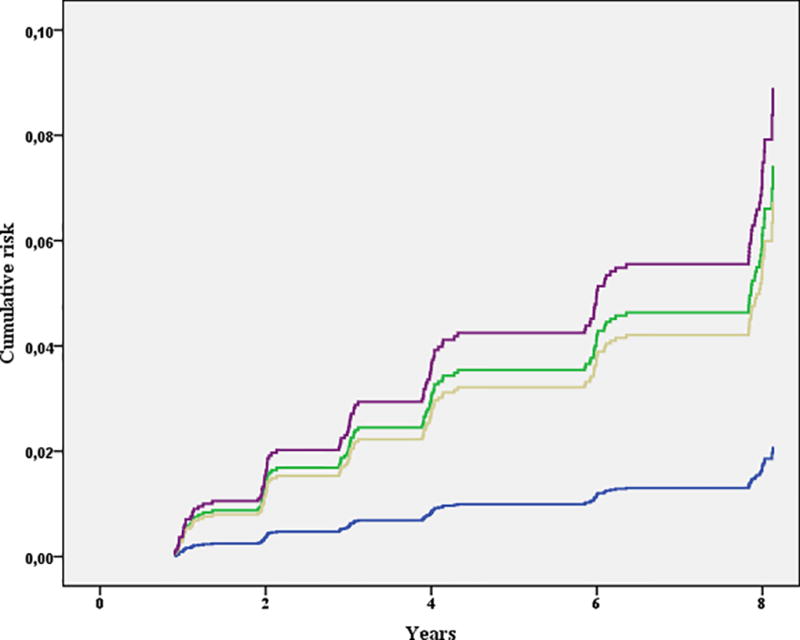
Results: A total of 4421 community-dwelling participants (2564 female participants; mean age: 61.3 years) without frailty at baseline were identified from the Osteoarthritis Initiative. During 8 years of follow-up, 356 individuals developed frailty (8.2%). Using Cox's regression analysis, adjusting for 11 potential confounders, participants with the highest DII score (quartile 4) had a significantly higher risk of experiencing frailty (hazard ratio 1.37; 95% confidence interval 1.01-1.89; P = .04) compared with participants with the lowest DII score (quartile 1). The association between DII score and frailty was significant only in men.
Conclusions: Higher DII scores, indicating a more proinflammatory diet, are associated with higher incidence of frailty, particularly in men.
Keywords: Aged; dietary inflammatory index; frailty; inflammation.
Copyright © 2017 AMDA – The Society for Post-Acute and Long-Term Care Medicine. Published by Elsevier Inc. All rights reserved.
Conflict of interest statement
Figures
Comment in
-
The Pathophysiology of Frailty: Why Sex Is So Important.J Am Med Dir Assoc. 2018 Jan;19(1):4-5. doi: 10.1016/j.jamda.2017.10.009. Epub 2017 Nov 10. J Am Med Dir Assoc. 2018. PMID: 29133018 No abstract available.
References
-
- Fried LP, Tangen CM, Walston J, et al. Frailty in older adults: evidence for a phenotype. The journals of gerontology Series A, Biological sciences and medical sciences. 2001;56(3):M146–156. - PubMed
-
- Kojima G. Prevalence of Frailty in Nursing Homes: A Systematic Review and Meta-Analysis. Journal of the American Medical Directors Association. 2015;16(11):940–945. - PubMed
-
- Soysal P, Veronese N, Thompson T, et al. Relationship between depression and frailty in older adults: A systematic review and meta-analysis. Ageing research reviews. 2017;36:78–87. - PubMed
-
- Veronese N, Solmi M, Maggi S, et al. Frailty and incident depression in communityd-welling older people: results from the ELSA study. International journal of geriatric psychiatry. 2017 - PubMed
Publication types
MeSH terms
Grants and funding
LinkOut - more resources
Full Text Sources
Other Literature Sources
Medical
