Novel biomarkers and endoscopic techniques for diagnosing pancreaticobiliary malignancy
- PMID: 28944047
- PMCID: PMC5585877
- DOI: 10.12688/f1000research.11371.1
Novel biomarkers and endoscopic techniques for diagnosing pancreaticobiliary malignancy
Abstract
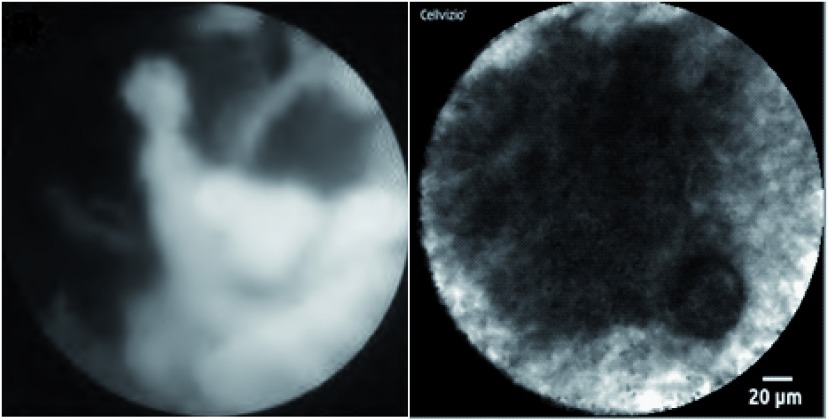
The UK incidence of pancreatic ductal adenocarcinoma is 9 per 100,000 population, and biliary tract cancer occurs at a rate of 1-2 per 100,000. The incidence of both cancers is increasing annually and these tumours continue to be diagnosed late and at an advanced stage, limiting options for curative treatment. Population-based screening programmes do not exist for these cancers, and diagnosis currently is dependent on symptom recognition, but often symptoms are not present until the disease is advanced. Recently, a number of promising blood and urine biomarkers have been described for pancreaticobiliary malignancy and are summarised in this review. Novel endoscopic techniques such as single-operator cholangioscopy and confocal endomicroscopy have been used in some centres to enhance standard endoscopic diagnostic techniques and are also evaluated in this review.
Keywords: CA 19-9; Endoscopic retrograde; Pancreaticobiliary malignancy; biliary; cholangiopancreatography; pancreatic.
Conflict of interest statement
Competing interests: The authors declare that they have no competing interests.No competing interests were disclosed.No competing interests were disclosed.No competing interests were disclosed.No competing interests were disclosed.
Figures
References
-
- CRUK: Pancreatic cancer statistics.2013. Reference Source
-
- CRUK: Cancer Research UK Cancer Stats Incidence 2008.2011. Reference Source
-
- Altekruse SF, Kosary CL, Krapcho M, et al. : SEER Cancer Statistics. Review, 1975–2007. National Cancer Institute Bethesda, MD based on November 2009 SEER data submission, posted to the SEER web site, 2010.2010. Reference Source
Publication types
Grants and funding
LinkOut - more resources
Full Text Sources
Other Literature Sources