


PI3Kδ-selective and PI3Kα/δ-combinatorial inhibitors in clinical development for B-cell non-Hodgkin lymphoma
- PMID: 28945111
- PMCID: PMC5747968
- DOI: 10.1080/13543784.2017.1384815
PI3Kδ-selective and PI3Kα/δ-combinatorial inhibitors in clinical development for B-cell non-Hodgkin lymphoma
Abstract
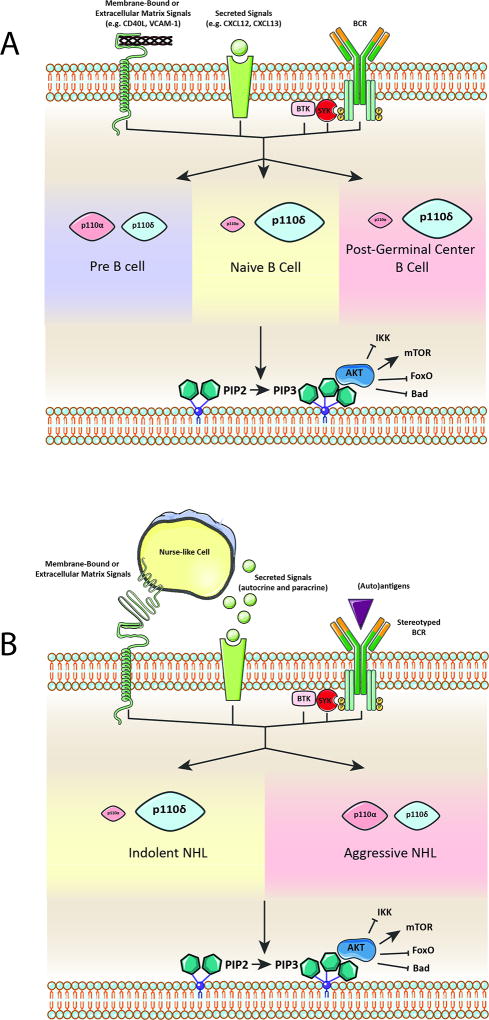
The efficacy of the prototypical phosphatidylinositol-3-kinase (PI3K) inhibitor idelalisib for the treatment of chronic lymphocytic leukemia (CLL) and indolent non-Hodgkin lymphoma (iNHL) has led to development of multiple compounds targeting this pathway. Areas Covered: We review the hypothesized therapeutic mechanisms of PI3K inhibitors, including abrogation of B cell receptor signaling, blockade of microenvironmental pro-survival signals, and enhancement of anti-tumor immunity. We examine toxicities of idelalisib, including bacterial infections (possibly secondary to drug-induced neutropenia), opportunistic infections (possibly attributable to on-target inhibition of T cell function), and organ toxicities such as transaminitis and enterocolitis (possibly autoimmune, secondary to on-target inhibition of p110δ in regulatory T cells). We evaluate PI3K inhibitors that have entered trials for the treatment of lymphoma, focusing on agents with selectivity for PI3Kα and PI3Kδ. Expert Opinion: PI3K inhibitors, particularly those that target p110δ, have robust efficacy in the treatment of CLL and iNHL. However, idelalisib has infectious and autoimmune toxicities that limit its use. Outside of trials, idelalisib should be restricted to CLL patients with progression on ibrutinib or iNHL patients with progression on two prior therapies. Whether newer PI3K inhibitors will demonstrate differentiated toxicity profiles in comparable patient populations while retaining efficacy remains to be seen.
Keywords: PI3-kinase inhibitors; chronic lymphocytic leukemia; copanlisib; duvelisib; idelalisib; indolent non-Hodgkin lymphoma; umbralisib.
Figures
References
-
- Goodman LS, Wintrobe MM, et al. Nitrogen mustard therapy; use of methyl-bis (beta-chloroethyl) amine hydrochloride and tris (beta-chloroethyl) amine hydrochloride for Hodgkin’s disease, lymphosarcoma, leukemia and certain allied and miscellaneous disorders. J Am Med Assoc. 1946 Sep 21;132:126–32. - PubMed
Publication types
MeSH terms
Substances
Grants and funding
LinkOut - more resources
Full Text Sources
Other Literature Sources
Miscellaneous
