. 2017:2017:1478625.
doi: 10.1155/2017/1478625. Epub 2017 Aug 29.

Lycopene Inhibits Propagation of Chlamydia Infection

Affiliations

Lycopene Inhibits Propagation of Chlamydia Infection

Naylia A Zigangirova et al. Scientifica (Cairo). 2017.

Abstract

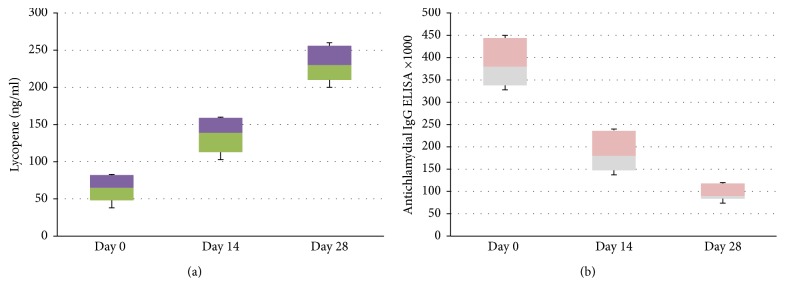
Chlamydiaceae is a family of obligate intracellular pathogenic bacteria with similar developmental cycles and cell biology responsible for a wide range of diseases in different hosts including genital and eye inflammatory diseases, arthritis, and inflammatory diseases of the respiratory and cardiovascular systems. In the present paper, we report that lycopene, one of the main dietary carotenoids, which is present in tomato and some other fruits, has a strong inhibitory effect on C. trachomatis and C. pneumoniae infections in alveolar macrophages. This finding was documented by both immunofluorescence analysis and electron microscopy. It was noted that lycopene treatment inhibited intracellular phase of the chlamydial developmental cycle and resulted in a significant loss of infectious progeny. The antichlamydial effect of lycopene was also confirmed in a clinical setting. There was a significant reduction of IgG antibodies against C. pneumoniae in the serum of volunteers treated for a month with oral ingestion of 7 mg of lycopene. Additional studies are needed to further explore the antichlamydial activity of lycopene and its possible effect on C. pneumoniae in relation to antichlamydial activity of lycopene to mechanisms of atherosclerosis.


Figures
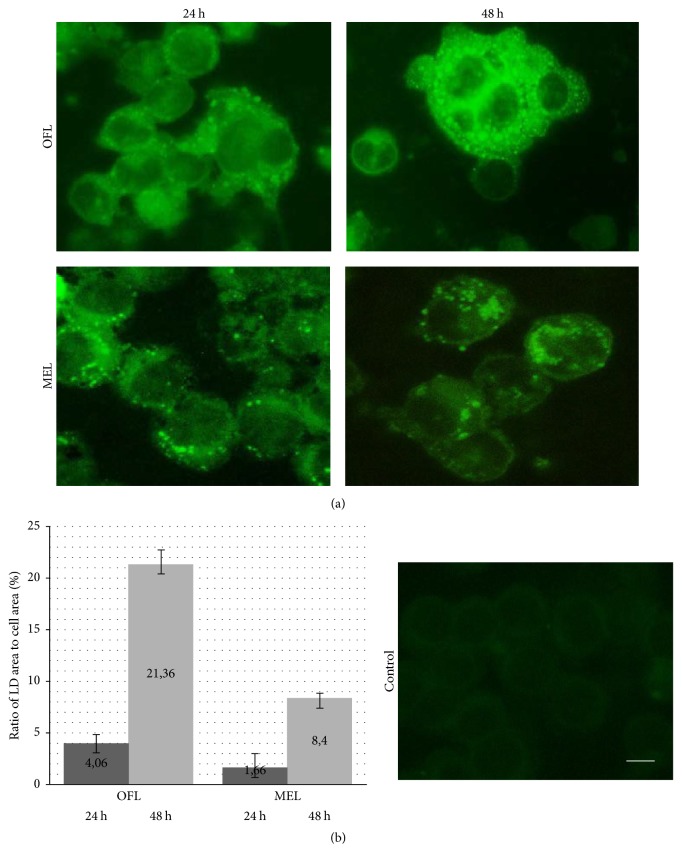
Figure 1
Figure 1
Lycopene induces formation of lipid droplets in B10.MLM cells. (a) Cells were stained with fluorescent dye BODIPY in 24 and 42 hours after lycopene addition; (b) ratio of lipid droplet area to cell area was estimated with automatic image processing method. OFL: oil-formulated lycopene and MEL: microencapsulated lycopene. Scale bar 10 µM.
Figure 2
Figure 2
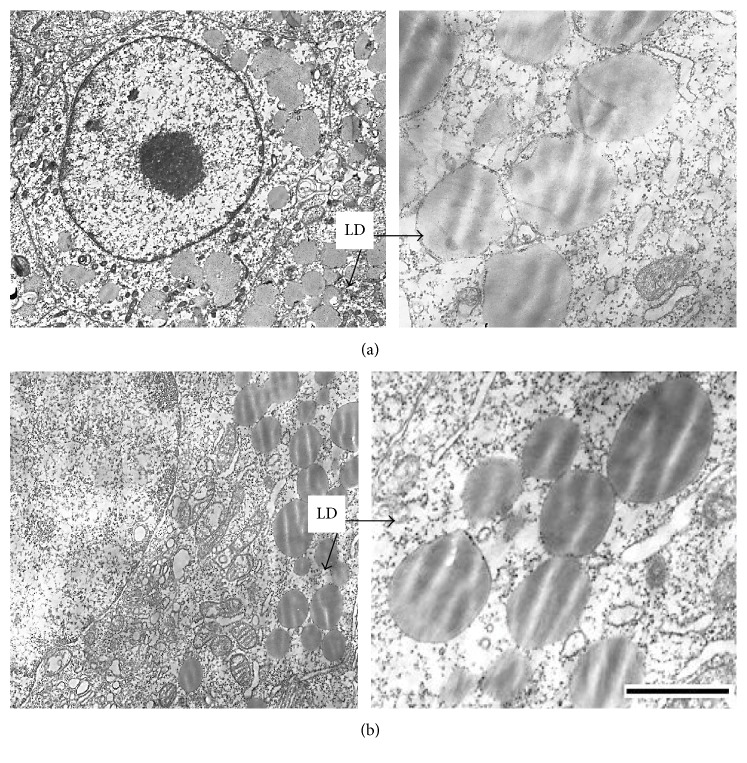
Lipid droplets in cytoplasm of B10.MLM cells. Multiple lipid droplet (LD) particles of moderate electron density in cytoplasm after incubation with oil-formulated (a) and microencapsulated (b) lycopene for 42 hours. Scale bar 1 µm.
Figure 3
Figure 3
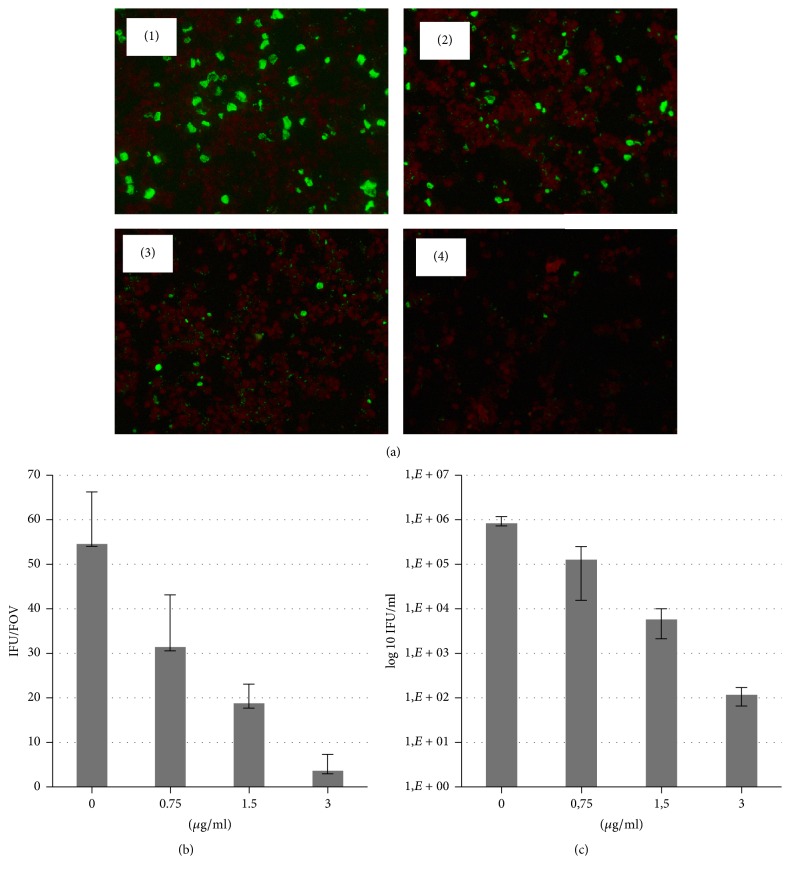
Dose-dependent inhibition of C. trachomatis growth in B10.MLM cells at 42 hpi in the presence of oil-formulated lycopene. (a) C. trachomatis infection in B10.MLM cells at 42 h.p.i. (1) growth in the presence of 0.015% olive oil in DMSO; (2) growth in the presence of 0.75 µg/ml; (3) 1.5 µg/ml; and (4) 3.0 µg/ml of oil-formulated lycopene. Scale bar 100 µm. (b) Quantitative representation of the inclusion numbers of control and lycopene treated cells. IFU/FOV = Average Inclusion Forming Units per Field of View (n = 20). (c) Infectious yield after treatment with different doses of lycopene.
Figure 4
Figure 4
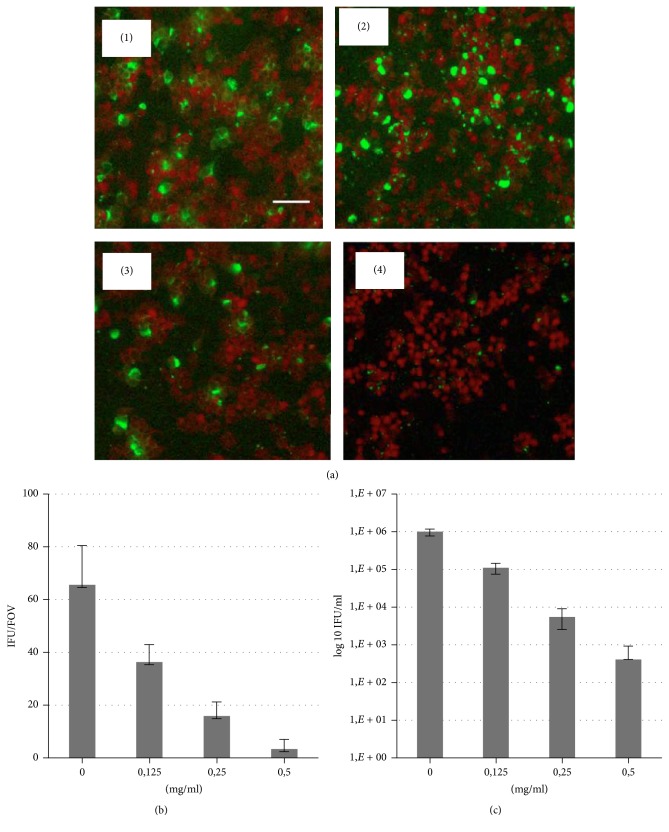
Dose-dependent inhibition of C. trachomatis growth in B10.MLM cells at 42 hpi in the presence of microencapsulated lycopene. (a) C. trachomatis infection in B10.MLM cells at 42 h.p.i. (1) growth in the presence of 1.0% cyclodextrin; (2) growth in the presence of 0.125 mg/ml; (3) 0.25 mg/ml; and (4) 0.5 mg/ml of microencapsulated lycopene. Scale bar 100 µm. (b) Quantitative representation of the inclusion numbers of control and lycopene treated cells. IFU/FOV = Average Inclusion Forming Units per Field of View (n = 20). (c) Infectious yield after treatment with different doses of lycopene.
Figure 5
Figure 5
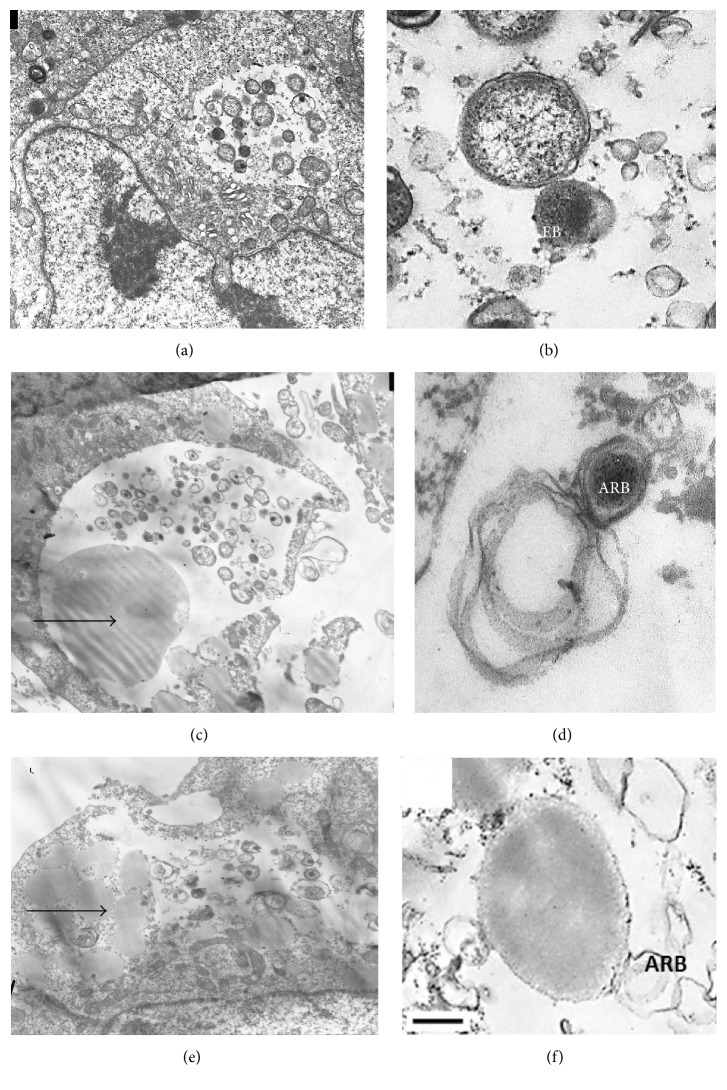
Lycopene treatment disrupts chlamydial developmental cycle in alveolar macrophages B10.MLM. ((a) and (b)) C. trachomatis infection at 42 hpi without lycopene (EB: elementary body and RB: reticulate body); ((c) and (d)) C. trachomatis infection at 42 hpi treated with oil-formulated lycopene (ARB: abnormal reticulate body); ((e) and (f)) C. trachomatis infection at 42 hpi treated with microencapsulated lycopene. Lipid droplets are in close contact to and inside chlamydial inclusions. Arrows indicate lipid droplets. Bar = 0.25 µm.
Figure 6
Figure 6
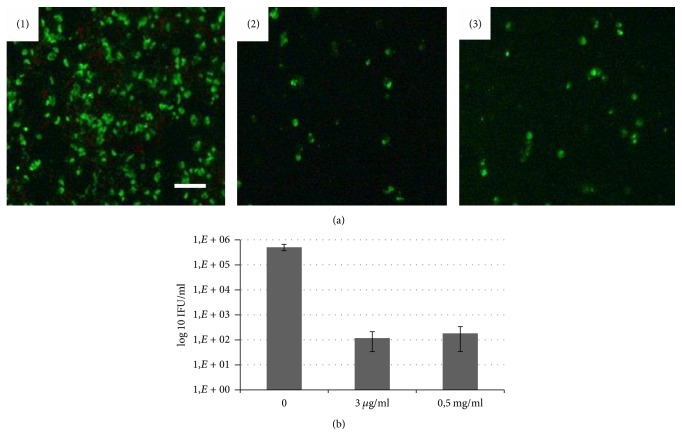
Inhibition of C. pneumoniae growth in B10.MLM cells in the presence of two formulations of lycopene. (a) C. pneumoniae infection in B10.MLM cells at 72 h.p.i. (1) growth without lycopene; (2) 3.0 µg/ml of oil-formulated lycopene; and (3) 0.5 mg/ml of microencapsulated lycopene. Scale bar 100 µm. (b) Infectious yield after treatment with two formulations of lycopene.
Figure 7
Figure 7
Changes in serum lycopene level (a) and serum chlamydia-specific IgG antibodies (b) in volunteers treated with 7 mg of GA lycopene for 28 days.

References

    1. Price M. J., Ades A. E., Soldan K., et al. The natural history of chlamydia trachomatis infection in women: A multi-parameter evidence synthesis. Health Technology Assessment. 2016;20(22) doi: 10.3310/hta20220. - DOI - PMC - PubMed
    1. Budzyński J., Wiśniewska J., Ciecierski M., Kedzia A. Association between Bacterial Infection and Peripheral Vascular Disease: A Review. International Journal of Angiology. 2015;25(1):3–13. doi: 10.1055/s-0035-1547385.140130 - DOI - PMC - PubMed
    1. Petyaev I. M., Zigangirova N. A., Kapotina L. N., Fedina E. D., Kyle N. H. Chlamydia trachomatis promotes 3T3 cell differentiation into adipocytes. Advances in Clinical and Experimental Medicine. 2014;23(4):511–516. doi: 10.17219/acem/37215. - DOI - PubMed
    1. Derré I. Chlamydiae interaction with the endoplasmic reticulum: Contact, function and consequences. Cellular Microbiology. 2015;17(7):959–966. doi: 10.1111/cmi.12455. - DOI - PMC - PubMed
    1. Nunes A., Gomes J. P. Evolution, phylogeny, and molecular epidemiology of Chlamydia. Infection, Genetics and Evolution. 2014;23:49–64. doi: 10.1016/j.meegid.2014.01.029. - DOI - PubMed