


Postdischarge Outcomes of Pyogenic Liver Abscesses: Single-Center Experience 2007-2012
- PMID: 28948182
- PMCID: PMC5604130
- DOI: 10.1093/ofid/ofx159
Postdischarge Outcomes of Pyogenic Liver Abscesses: Single-Center Experience 2007-2012
Abstract
Background: Pyogenic liver abscesses (PLA) are increasingly managed by percutaneous treatment instead of surgery, but there are limited data about postdischarge outcomes. Postdischarge services and factors predicting poor outcomes have not been described.
Methods: We performed a retrospective, descriptive case series at a single center assessing treatment and outpatient follow-up for patients treated for PLA from 2007 to 2012. We reviewed the electronic medical record for patient characteristics and outcomes. Data for care received at other facilities were not available. In our analysis, we compared patients with malignancy with those without and attempted to determine predictors of emergency department (ED) visits and hospital readmissions.
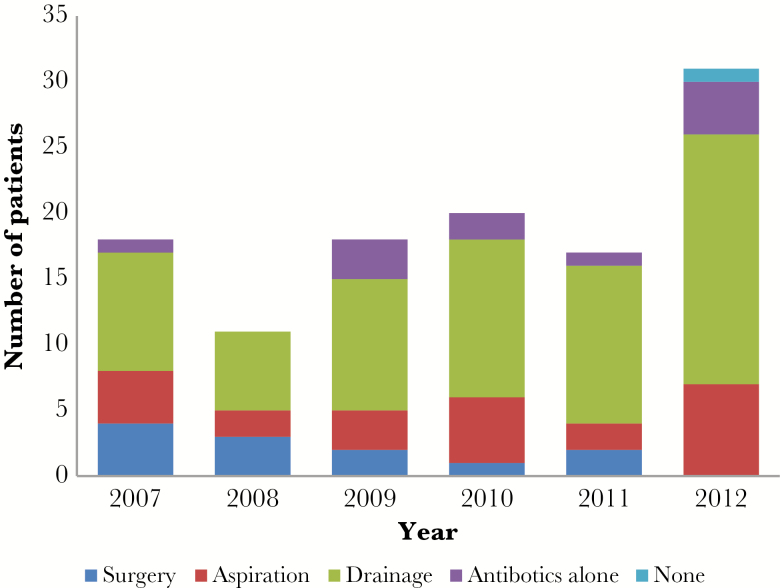
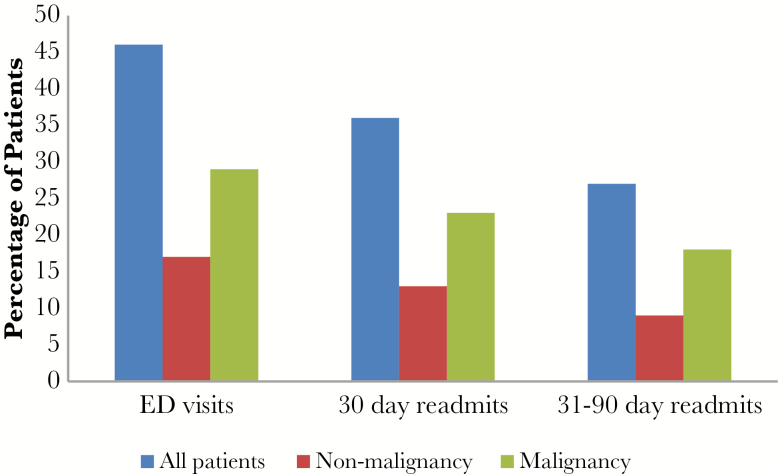
Results: Of 125 patients identified with PLA, 12 had surgical drainage, 23 had percutaneous aspiration, 78 had percutaneous drainage (PD), 11 had no drainage, and 1 was made comfort measures only. Seventy (60%) were discharged with a drain, and 31 (25%) were discharged on intravenous (IV) antibiotics. After discharge, 46 (38%) had ED visits and 36 (30%) were readmitted within 30 days of discharge. Fourteen (12%) had complications from antibiotics, and 4 (13%) had complications from peripherally inserted center catheter lines. A total of 8 patients, 5 in-hospital and 3 postdischarge, died. In our analysis of risk factors for 90-day postdischarge ED visit/readmission, only malignancy was a predictor.
Conclusions: Pyogenic liver abscess patients have intense postdischarge needs (drain management, IV antibiotics) and a high rate of ED visits and readmissions. Although PD provides source control without surgery, ambulatory needs are now more complex, requiring multidisciplinary collaboration.
Keywords: hepatic abscess; liver abscess; percutaneous drainage; postdischarge outcomes; readmissions.
Figures
References
-
- Meddings L, Myers RP, Hubbard J et al. A population-based study of pyogenic liver abscesses in the United States: incidence, mortality, and temporal trends. Am J Gastroenterol 2010; 105:117–24. - PubMed
-
- Mischinger HJ, Hauser H, Rabl H et al. Pyogenic liver abscess: studies of therapy and analysis of risk factors. World J Surg 1994; 18:852–7; discussion 858. - PubMed
LinkOut - more resources
Full Text Sources
Other Literature Sources
