


The Primary Results of the Treating Adult Smokers at Risk for Weight Gain with Interactive Technology (TARGIT) Study
- PMID: 28948720
- PMCID: PMC5679058
- DOI: 10.1002/oby.21968
The Primary Results of the Treating Adult Smokers at Risk for Weight Gain with Interactive Technology (TARGIT) Study
Abstract
Objective: To evaluate whether a behavioral weight management program combined with a smoking cessation program delivered via interactive technology could prevent postcessation weight gain.
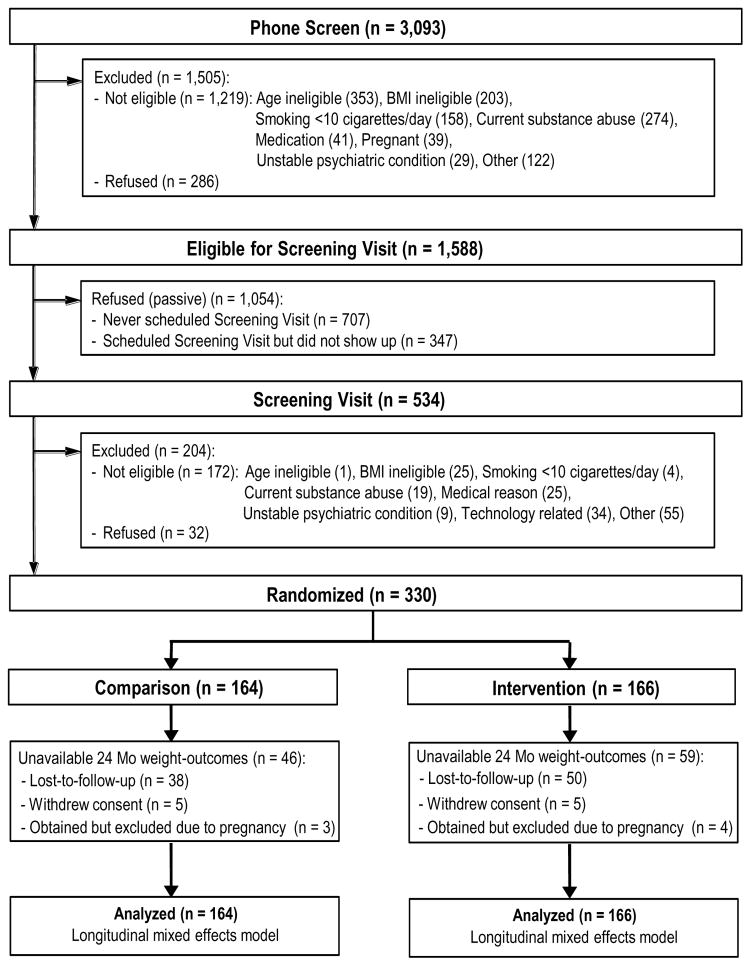
Methods: Three hundred and thirty young adult smokers, age 18 to 35 years, were randomized to a smoking cessation program alone (comparison group), which included behavioral counseling and nicotine replacement, or to a behavioral weight management program adapted from the Look AHEAD trial plus the same smoking cessation program (intervention group).
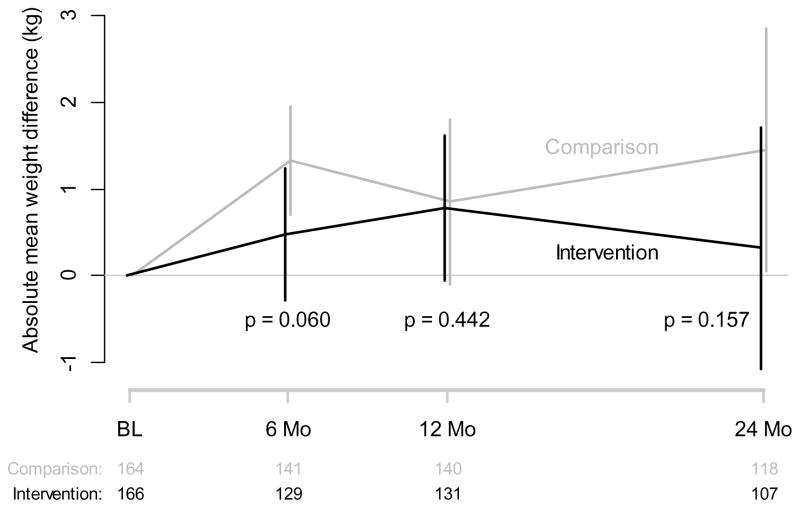
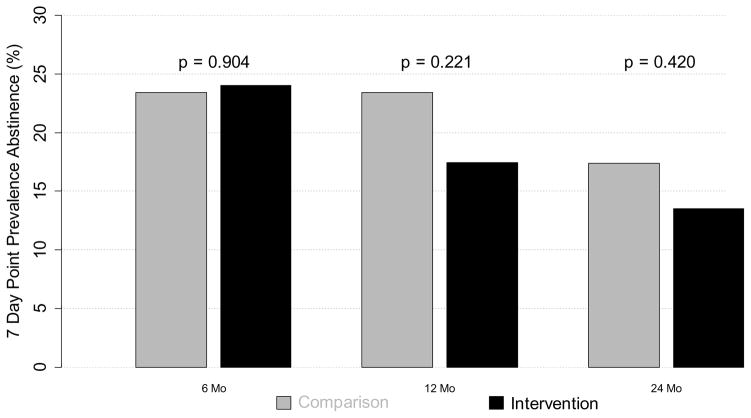
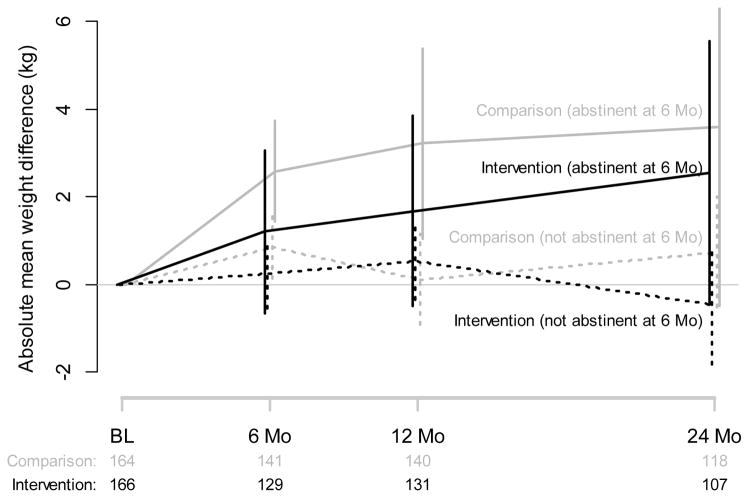
Results: The Treating Adult Smokers at Risk for Weight Gain with Interactive Technology study randomized 164 participants to the comparison group and 166 participants to the intervention group. On average, the participants gained 0.91 kg after 24 months in the trial (comparison group + 1.45 kg and intervention group + 0.32; P = 0.157). The only variable systematically affecting weight change over time was smoking abstinence, in which those who were abstinent, on average, gained 0.14 kg more per month compared with those who continued to smoke (P < 0.001). In exploratory analyses, the intervention participants who were abstinent at 6 months had numerically smaller weight gains compared with abstinent participants in the comparison group, but these differences were not statistically significant.
Conclusions: Providing an intensive weight gain prevention program combined with a smoking cessation program via interactive technology was not associated with greater long-term weight gain prevention.
Trial registration: ClinicalTrials.gov NCT01199185.
© 2017 The Obesity Society.
Conflict of interest statement
Figures
References
-
- Flegal KM, Carroll MD, Kuczmarski RJ, Johnson CL. Overweight and obesity in the United States: prevalence and trends, 1960–1994. Int J Obes Relat Metab Disord. 1998;22(1):39–47. - PubMed
-
- Mokdad AH, Bowman BA, Ford ES, Vinicor F, Marks JS, Koplan JP. The continuing epidemics of obesity and diabetes in the United States. Jama. 2001;286(10):1195–1200. - PubMed
-
- Mokdad AH, Ford ES, Bowman BA, et al. Prevalence of obesity, diabetes, and obesity-related health risk factors, 2001. Jama. 2003;289(1):76–79. - PubMed
-
- Williamson DF, Kahn HS, Remington PL, Anda RF. The 10-year incidence of overweight and major weight gain in US adults. Archives of internal medicine. 1990;150(3):665–672. - PubMed
-
- Ball K, Crawford D, Ireland P, Hodge A. Patterns and demographic predictors of 5-year weight change in a multi-ethnic cohort of men and women in Australia. Public health nutrition. 2003;6(3):269–281. - PubMed
MeSH terms
Associated data
Grants and funding
LinkOut - more resources
Full Text Sources
Other Literature Sources
Medical
