


Prevalence and risk factors of epiretinal membranes: a systematic review and meta-analysis of population-based studies
- PMID: 28951399
- PMCID: PMC5623383
- DOI: 10.1136/bmjopen-2016-014644
Prevalence and risk factors of epiretinal membranes: a systematic review and meta-analysis of population-based studies
Abstract
Objective: This study was to aggregate the prevalence and risks of epiretinal membranes (ERMs) and determine the possible causes of the varied estimates.
Design: Systematic review and meta-analysis.
Data sources: The search strategy was designed prospectively. We searched PubMed, Embase and Web of Science databases from inception to July 2016. Reference lists of the included literatures were reviewed as well.
Study selection: Surveys published in English language from any population were included if they had a population-based design and reported the prevalence of ERM from retinal photography with or without optical coherence tomography. Eligibility and quality evaluation was conducted independently by two investigators.
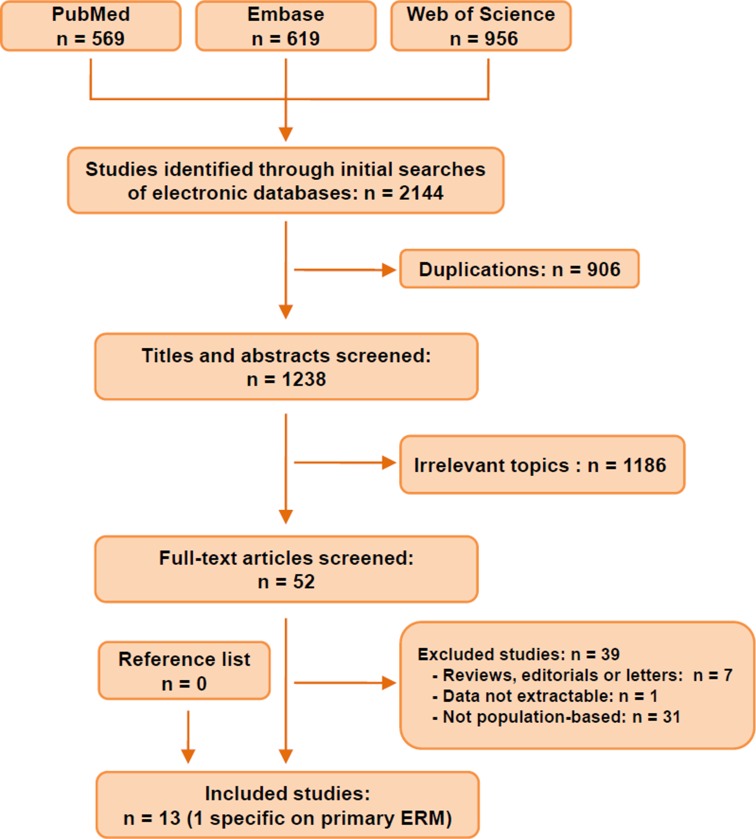
Data extraction: The literature search generated 2144 records, and 13 population-based studies comprising 49 697 subjects were finally included. The prevalence of ERM and the ORs of potential risk factors (age, sex, myopia, hypertension and so on) were extracted.
Results: The pooled age-standardised prevalence estimates of earlier ERM (cellophane macular reflex (CMR)), advanced ERM (preretinal macular fibrosis (PMF)) and any ERM were 6.5% (95% CI 4.2% to 8.9%), 2.6% (95% CI 1.8% to 3.4%) and 9.1% (95% CI 6.0% to 12.2%), respectively. In the subgroup analysis, race and photography modality contributed to the variation in the prevalence estimates of PMF, while the WHO regions and image reading methods were associated with the varied prevalence of CMR and any ERM. Meta-analysis showed that only greater age and female significantly conferred a higher risk of ERMs.
Conclusions: Our findings suggest that ERMs are relatively common among aged population. Race, image taking and reading methodology may play important roles in influencing the large variability of ERM prevalence estimates.
Keywords: epiretinal membranes; meta-analysis; population-based; prevalence; risk factors.
© Article author(s) (or their employer(s) unless otherwise stated in the text of the article) 2017. All rights reserved. No commercial use is permitted unless otherwise expressly granted.
Conflict of interest statement
Competing interests: None declared.
Figures
References
Publication types
MeSH terms
LinkOut - more resources
Full Text Sources
Other Literature Sources
