Review
. 2017 Dec;18(12):758-770.
doi: 10.1038/nrm.2017.87. Epub 2017 Sep 27.

Mechanobiology of YAP and TAZ in physiology and disease

Affiliations
Review

Mechanobiology of YAP and TAZ in physiology and disease

Tito Panciera et al. Nat Rev Mol Cell Biol. 2017 Dec.

Abstract

A growing body of evidence suggests that mechanical signals emanating from the cell's microenvironment are fundamental regulators of cell behaviour. Moreover, at the macroscopic scale, the influence of forces, such as the forces generated by blood flow, muscle contraction, gravity and overall tissue rigidity (for example, inside of a tumour lump), is central to our understanding of physiology and disease pathogenesis. Still, how mechanical cues are sensed and transduced at the molecular level to regulate gene expression has long remained enigmatic. The identification of the transcription factors YAP and TAZ as mechanotransducers started to fill this gap. YAP and TAZ read a broad range of mechanical cues, from shear stress to cell shape and extracellular matrix rigidity, and translate them into cell-specific transcriptional programmes. YAP and TAZ mechanotransduction is critical for driving stem cell behaviour and regeneration, and it sheds new light on the mechanisms by which aberrant cell mechanics is instrumental for the onset of multiple diseases, such as atherosclerosis, fibrosis, pulmonary hypertension, inflammation, muscular dystrophy and cancer.


Conflict of interest statement

The authors declare no competing financial interests.

Figures
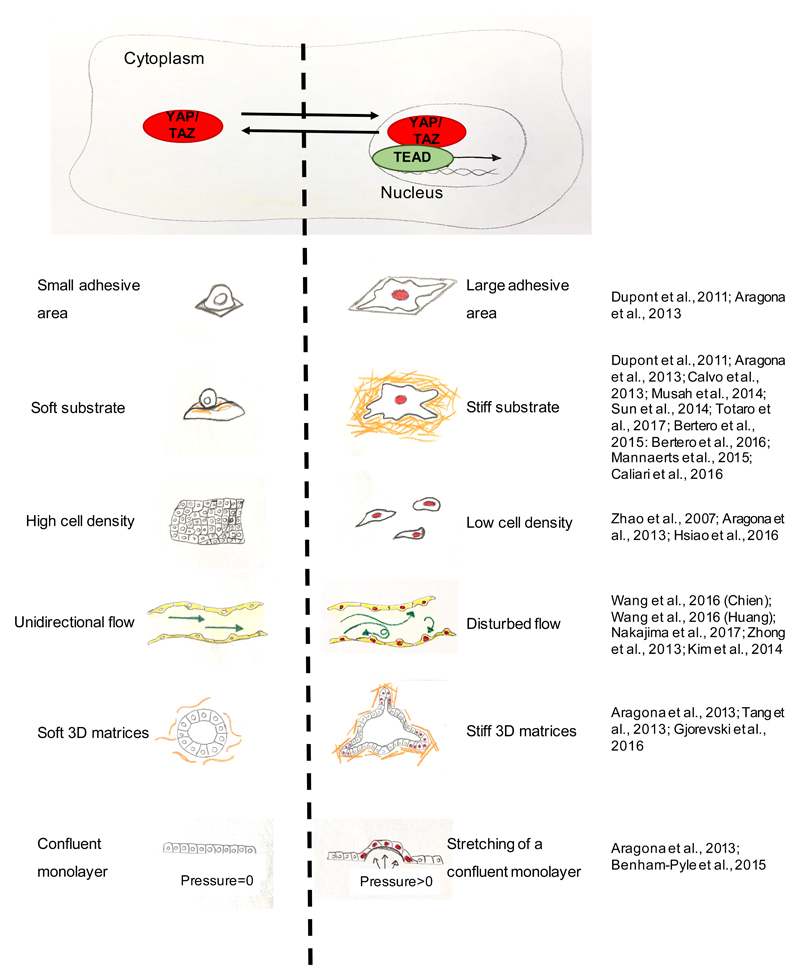
Figure 1
Figure 1. Schematic representations of mechanical stimuli influencing YAP and TAZ subcellular localization and activity.
A) When YAP and TAZ are mechanically activated (red) they translocate to the nucleus, where they interact with TEAD factors to regulate gene expression. B) schematics illustrating how different matrix, geometry, and physical conditions influence YAP and TAZ localization and activity: left panels show conditions, when YAP and TAZ are inhibited and localized to the cytoplasm, whereas right panels show conditions that promote YAP and TAZ nuclear localization (indicated by red colouring of cell nuclei). For references see: part a:,; part b:,,,,,,,,,; part c:,,; part d:–,,; part e:,,; part f:,.
Figure 2
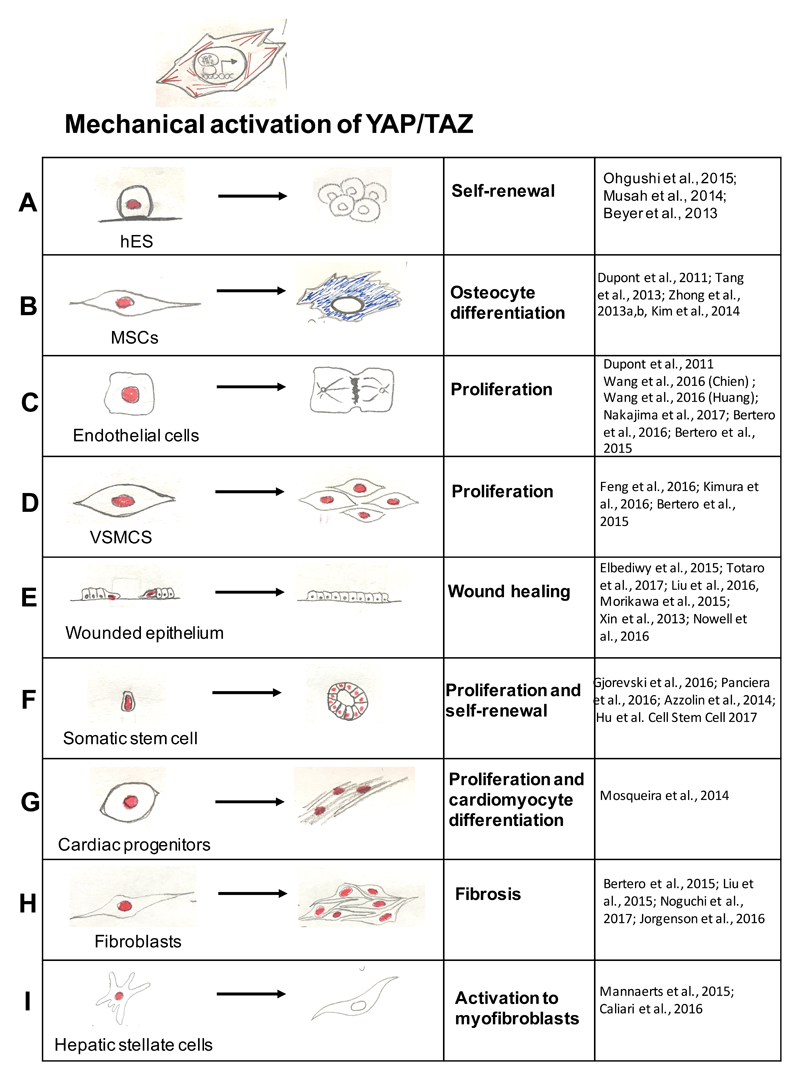
Figure 2. List of biological responses caused by nuclear accumulation and activation of YAP and TAZ by high mechanical signalling.
When YAP and TAZ are activated by raised mechanical inputs (see Figure 1, right panels), this causes a host of YAP and TAZ-dependent biological effects (indicated in boxes) specific for each cell type. Red-labelled nuclei indicate the nuclear activation of YAP and TAZ. For references see: part a:–; part b:,,–; part c:,–,,; part d:,,; part e:,,,,, ; part f:,,, ; part g:; part h:,–; part i:,. Legend: hES, human embryonic stem cells; MSC, mesenchymal stem cell; VSMCs, vascular smooth muscle cells.
Figure 3
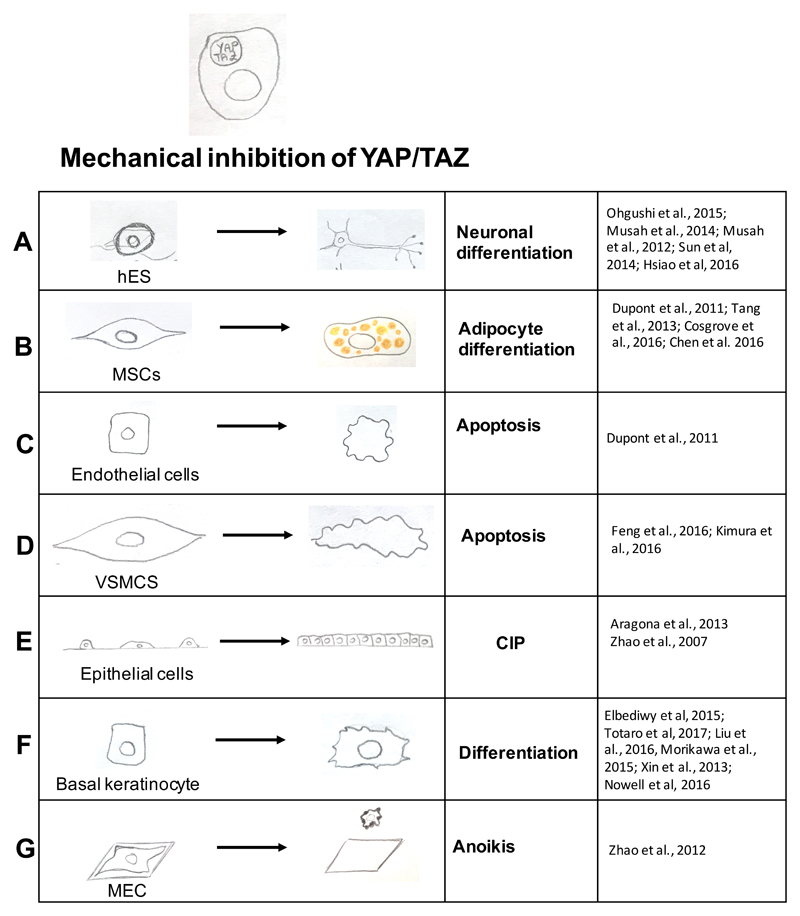
Figure 3. List of biological responses caused by cytoplasmic YAP and TAZ retention and inhibition due to low mechanical stimuli.
Low mechanical forces (see Figure 1, left panels) blunt YAP and TAZ activity and this results in a panel of YAP and TAZ-dependent biological effects in diverse cell types. For references see: part a:,,–; part b:,,, ; part c: ; part d:, ; part e:, ; part f:,,,,,; part g:. Legend: CIP, contact inhibition of proliferation; hES, human embryonic stem cells; MSC, mesenchymal stem cell; VSMCs, vascular smooth muscle cells; MEC, mammary epithelial cells.
Figure 4
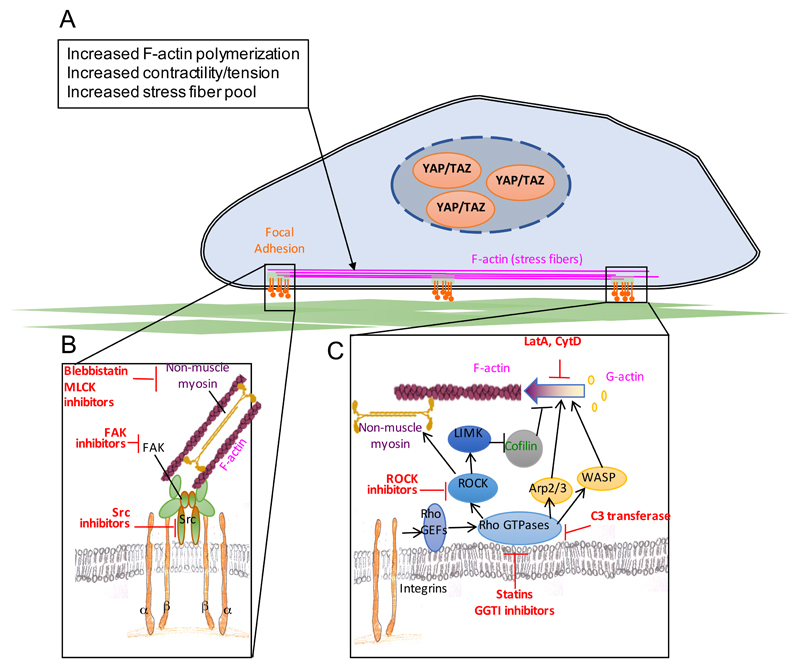
Figure 4. Molecular players involved in YAP and TAZ mechanotransduction.
(a) Cell–extracellular matrix (ECM) adhesion complexes undergo force-dependent conformational changes to trigger increase in actin polymerization and consequent increase in stress fibres contractility, resulting in YAP and TAZ activation. (b) a stiffer matrix causes integrin clustering which results in the activation of focal-adhesion associated kinases such as focal adhesion kinase (FAK) and Src, which in turn favour stress fibre growth, stability and contractility, thereby activating YAP and TAZ,,,,,. Src has also been shown to phosphorylate YAP and this was linked to YAP activation downstream of Src. However, whether such phosphorylation events by Src are indeed causal for effective YAP (and TAZ) activation remains to be determined. (c) signalling from focal adhesions activates Rho GTPases which can directly activate actin regulatory proteins such as actin-related protein 2/3 complex (Arp2/3) and Wiskott-Aldrich syndrome protein (WASP) or can favour filamentous -actin (F-actin) polymerization through the activation of Rho-associated protein kinase (ROCK); active ROCK promotes acto-myosin contractility and activates LIM domain protein kinase (LIMK), which in turn inhibits the F-actin severing protein Cofilin. In parts a and b boxes with inhibitory arrows list relevant chemical inhibitors of key players in the YAP and TAZ mechanotransduction pathway,,,,. Legend: MLCK: myosin light chain kinase; GEFs: guanine nucleotide exchange factors; LatA: LatrunculinA; CytD: Cytochalasin D; GGTI: geranyl-geranyl transferase I; C3: clostridium botulinum C3 exoenzyme.
Figure 5
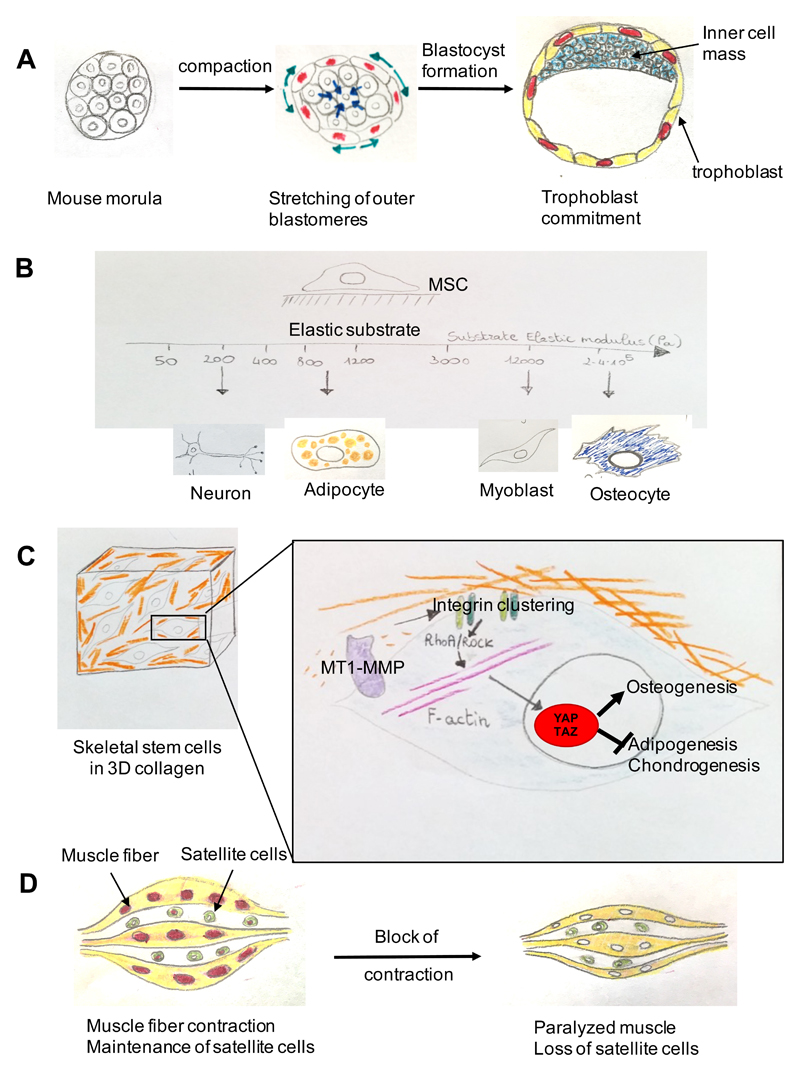
Figure 5. YAP and TAZ mechanotransduction in stem cell biology.
(a) Trophoblast commitment in the early mouse embryo involves a phase of stretching of the outer cells caused by compaction (inward pointing arrows) of the embryo. This stretching causes YAP and TAZ nuclear translocation in the outer cells and the acquisition of a trophoblast fate. Cells that do not activate YAP and TAZ become the cells of the embryo proper (the inner cell mass),. (b) In vivo cells experience a range of different ECM elasticities in different tissues. By recapitulating these different stiffnesses in vitro, it was found that mesenchymal stem cells (MSCs) differentiate optimally into neurons, adipocytes, skeletal muscle cells or osteoblasts at specific elasticities that match the physiological ECM stiffness of their corresponding natural niche. (c) Control of skeletal stem cell lineage commitment mediated by ECM remodelling by membrane type 1-matrix metalloproteinase 1 (MT1-MMP). By affecting the ECM and thereby the cell shape of mesenchymal stem cells in a collagen-based 3D environment, the MT1-MMP promotes integrin clustering and the concomitant activation of the integrin–RhoA pathway, thereby triggering YAP and TAZ activation, which switches on a programme favouring osteogenic differentiation over alternative adipogenic and chondrogenic cell fates. (d) YAP- and TAZ-dependent maintenance of satellite cells (muscle progenitors) by muscle contraction. In the chick embryo contraction of post-mitotic muscle fibres triggers YAP-dependent, expression of the Delta-like ligand JAG2, that activates NOTCH in muscle progenitor cells and prevents their differentiation. Blocking embryonic muscle contraction (muscle paralysis) inhibits YAP and transcription of JAG2 in myofibres, which causes a shift towards satellite cell differentiation. Enhanced differentiation eventually depletes the pool of muscle progenitor cells and interferes with regenerative potential of the tissue. Similarly, expression of Delta-like ligands, such as DLL1 and JAG2, are also downstream of YAP and TAZ in epidermal stem cells.
Figure 6
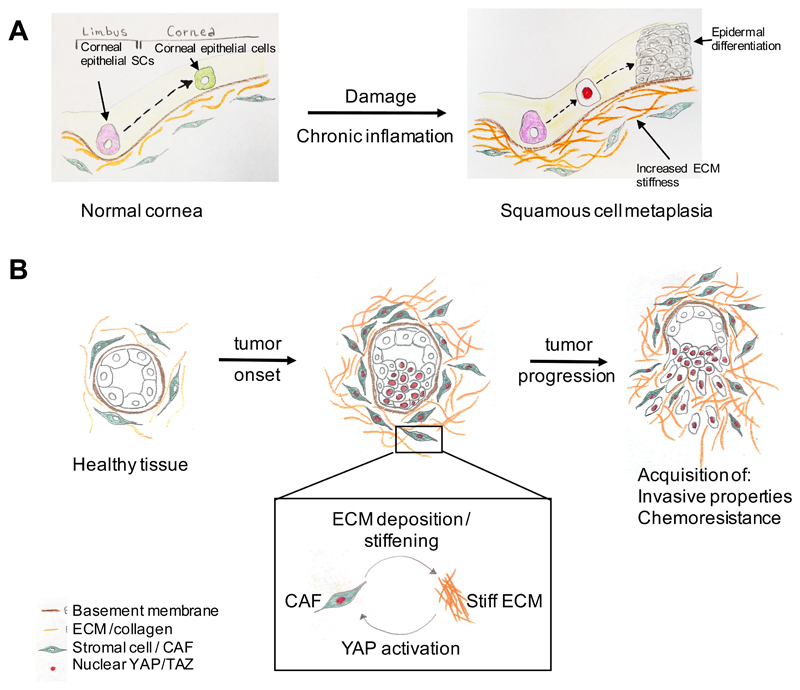
Figure 6. Deregulation of YAP and TAZ mechanotransduction in disease.
Aberrant mechanotransduction can lead to abnormal YAP and TAZ activation (red nuclei) in a variety of pathological conditions. These include: (a) the change of fate of corneal epithelial cells into epidermal cells resulting in squamous cell metaplasia; this is induced by tissue damage and chronic inflammation, which results in extracellular matrix (ECM) stiffening (b) cancer development,,; this involves the activation of YAP in cancer associated fibroblasts (CAFs) by ECM stiffening, which in turn promotes the activity of CAFs and leads to collagen deposition and further stiffening of the ECM. As a result, a mechanically-activated positive feedback loop operates that exacerbates the pathological outcome (see box). Stiff ECM also promotes YAP and TAZ-mediated mechanotransduction in the cells of the developing tumour, which promotes their metastatic dissemination and acquisition of chemoresistance. Intriguingly, a similar mechanical feedback mechanism is likely to occur also in the case of pulmonary hypertension, and fibrosis,.

References

    1. Butcher DT, Alliston T, Weaver VM. A tense situation: forcing tumour progression. Nature reviews Cancer. 2009;9:108–122. doi: 10.1038/nrc2544. - DOI - PMC - PubMed
    1. Discher DE, Mooney DJ, Zandstra PW. Growth factors, matrices, and forces combine and control stem cells. Science. 2009;324:1673–1677. doi: 10.1126/science.1171643. - DOI - PMC - PubMed
    1. Hahn C, Schwartz MA. Mechanotransduction in vascular physiology and atherogenesis. Nat Rev Mol Cell Biol. 2009;10:53–62. doi: 10.1038/nrm2596. - DOI - PMC - PubMed
    1. Jaalouk DE, Lammerding J. Mechanotransduction gone awry. Nat Rev Mol Cell Biol. 2009;10:63–73. doi: 10.1038/nrm2597. - DOI - PMC - PubMed
    1. Mammoto A, Ingber DE. Cytoskeletal control of growth and cell fate switching. Curr Opin Cell Biol. 2009;21:864–870. doi: 10.1016/j.ceb.2009.08.001. - DOI - PubMed

MeSH terms