


Earlier Intervention with Deep Brain Stimulation for Parkinson's Disease
- PMID: 28951797
- PMCID: PMC5603745
- DOI: 10.1155/2017/9358153
Earlier Intervention with Deep Brain Stimulation for Parkinson's Disease
Abstract
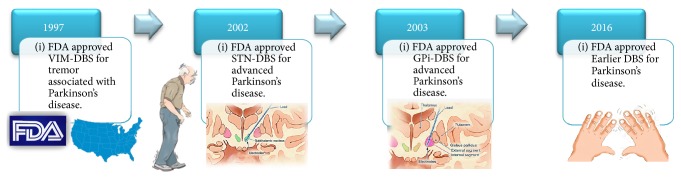
Neuromodulation of subcortical areas of the brain as therapy to reduce Parkinsonian motor symptoms was developed in the mid-twentieth century and went through many technical and scientific advances that established specific targets and stimulation parameters. Deep Brain Stimulation (DBS) was approved by the FDA in 2002 as neuromodulation therapy for advanced Parkinson's disease, prompting several randomized controlled trials that confirmed its safety and effectiveness. The implantation of tens of thousands of patients in North America and Europe ignited research into its potential role in early disease stages and the therapeutic benefit of DBS compared to best medical therapy. In 2013 the EARLY-STIM trial provided Class I evidence for the use of DBS earlier in Parkinson's disease. This finding led to the most recent FDA approval in patients with at least 4 years of disease duration and 4 months of motor complications as an adjunct therapy for patients not adequately controlled with medications. This following review highlights the historical development and advances made overtime in DBS implantation, the current application, and the challenges that come with it.
References
-
- Benabid A. L., Pollak P., Louveau A., Henry S., De Rougemont J. Combined (thalamotomy and stimulation) stereotactic surgery of the vim thalamic nucleus for bilateral parkinson disease. Stereotactic and Functional Neurosurgery. 1987;50(1-6):344–346. doi: 10.1159/000100760. doi: 10.1159/000100803. - DOI - DOI - PubMed
Publication types
LinkOut - more resources
Full Text Sources
Other Literature Sources
