


Microbial abundance on the eggs of a passerine bird and related fitness consequences between urban and rural habitats
- PMID: 28953940
- PMCID: PMC5617198
- DOI: 10.1371/journal.pone.0185411
Microbial abundance on the eggs of a passerine bird and related fitness consequences between urban and rural habitats
Abstract
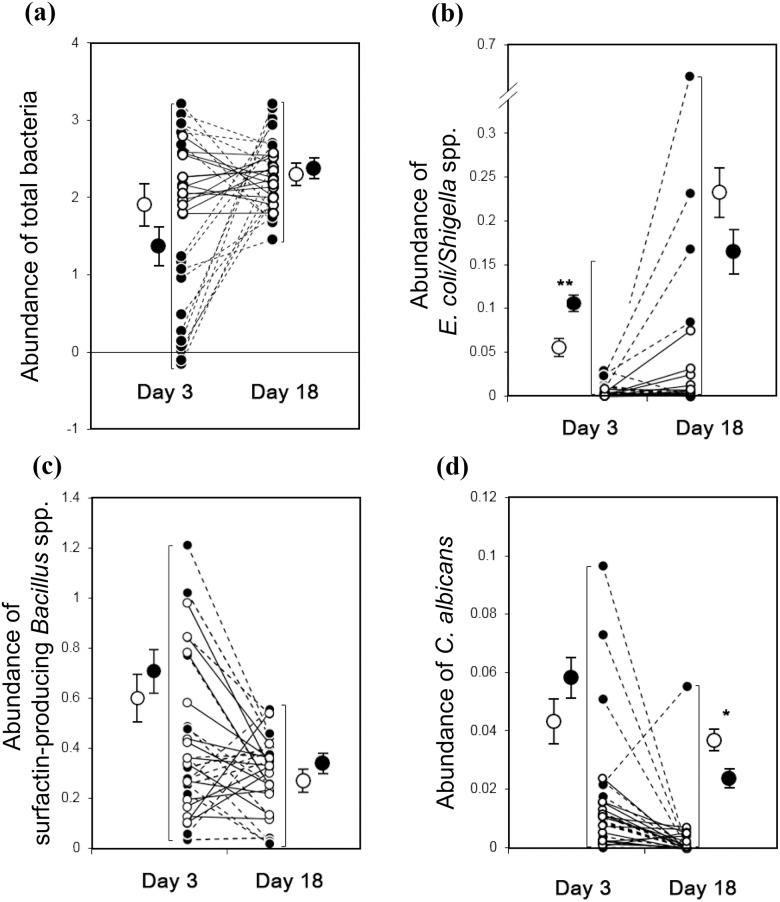
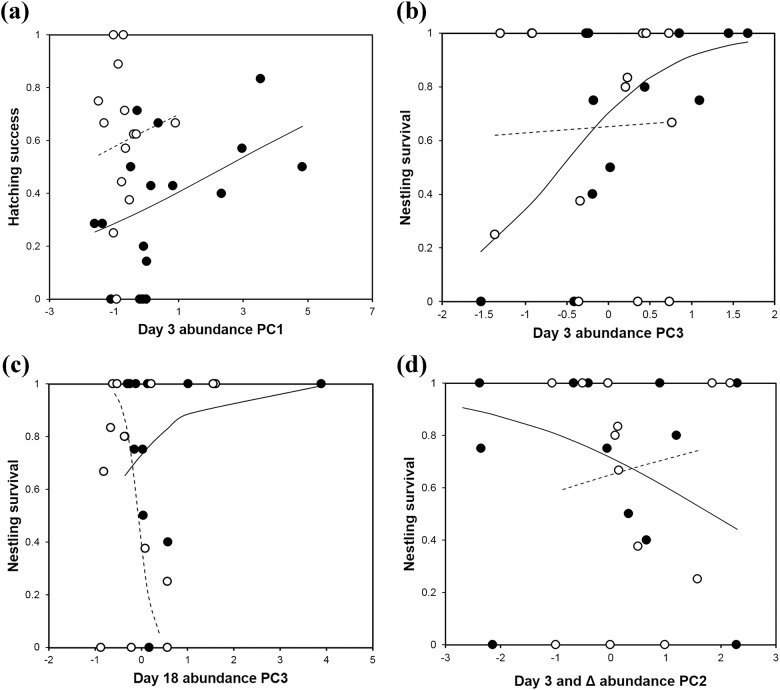
Urban environments present novel and challenging habitats to wildlife. In addition to well-known difference in abiotic factors between rural and urban environments, the biotic environment, including microbial fauna, may also differ significantly. In this study, we aimed to compare the change in microbial abundance on eggshells during incubation between urban and rural populations of a passerine bird, the Eurasian Magpie (Pica pica), and examine the consequences of any differences in microbial abundances in terms of hatching success and nestling survival. Using real-time PCR, we quantified the abundances of total bacteria, Escherichia coli/Shigella spp., surfactin-producing Bacillus spp. and Candida albicans on the eggshells of magpies. We found that urban magpie eggs harboured greater abundances of E. coli/Shigella spp. and C. albicans before incubation than rural magpie eggs. During incubation, there was an increase in the total bacterial load, but a decrease in C. albicans on urban eggs relative to rural eggs. Rural eggs showed a greater increase in E. coli/Shigella spp. relative to their urban counterpart. Hatching success of the brood was generally lower in urban than rural population. Nestling survival was differentially related with the eggshell microbial abundance between urban and rural populations, which was speculated to be the result of the difference in the strength of the interaction among the microbes. This is the first demonstration that avian clutches in urban and rural populations differ in eggshell microbial abundance, which can be further related to the difference in hatching success and nestling survival in these two types of environments. We suggest that future studies on the eggshell microbes should investigate the interaction among the microbes, because the incubation and/or environmental factors such as urbanization or climate condition can influence the dynamic interactions among the microbes on the eggshells which can further determine the breeding success of the parents.
Conflict of interest statement
Figures
References
-
- Marzluff JM, Bowman R, Donnelly R. Avian ecology and conservation in an urbanizing world. New York: Springer Science + Business Media; 2001.
-
- Grimm NB, Faeth SH, Golubiewski NE, Redman CL, Wu J, Bai X, Briggs JM. Global change and the ecology of cities. Science 2008; 319: 756–760. doi: 10.1126/science.1150195 - DOI - PubMed
-
- Ellis JB. Pharmaceutical and personal care products (PPCPs) in urban receiving waters. Environ Pollut. 2006; 144: 184–189. doi: 10.1016/j.envpol.2005.12.018 - DOI - PubMed
-
- Longcore T, Rich C. Ecological light pollution. Front Ecol Environ. 2004; 2: 191–198.
-
- Bradley CA, Altizer S. Urbanization and the ecology of wildlife diseases. Trends Ecol Evol. 2007; 22: 95–102. doi: 10.1016/j.tree.2006.11.001 - DOI - PMC - PubMed
Publication types
MeSH terms
LinkOut - more resources
Full Text Sources
Other Literature Sources
Miscellaneous
