Dismantling motivational interviewing: Effects on initiation of behavior change among problem drinkers seeking treatment
- PMID: 28956934
- PMCID: PMC6121710
- DOI: 10.1037/adb0000317
Dismantling motivational interviewing: Effects on initiation of behavior change among problem drinkers seeking treatment
Abstract
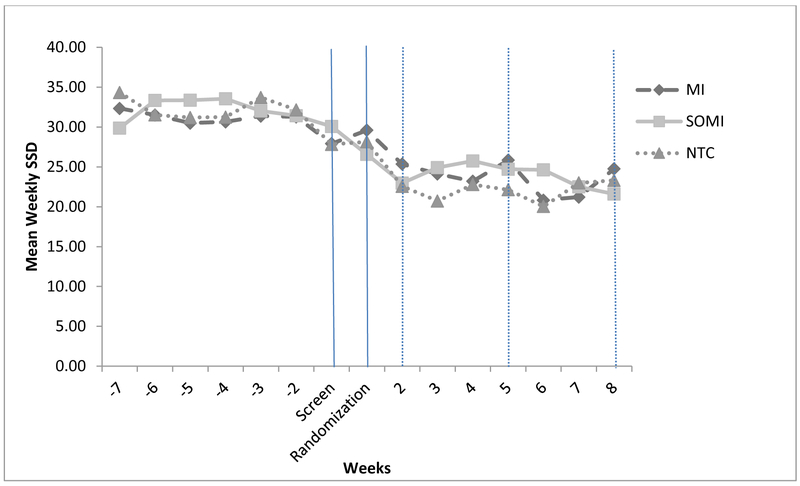
Motivational interviewing (MI) is an efficacious treatment for alcohol use disorders. MI is thought to enhance motivation via a combination of 2 therapeutic strategies or active ingredients: 1 relational and 1 directional. The primary aim of this study was to examine MI's hypothesized active ingredients using a dismantling design. Problem drinkers (N = 139) seeking treatment were randomized to 1 of 3 conditions: MI, relational MI without the directional elements labeled spirit-only MI (SOMI), or a nontherapy control condition and followed for 8 weeks. Those assigned to MI or SOMI received 4 sessions of treatment over 8 weeks. All participants significantly reduced their drinking by Week 8, but reductions were equivalent across conditions. The hypothesis that baseline motivation would significantly moderate condition effects on outcome was generally not supported. Failure to find support for MI's hypothesized active ingredients is discussed in the context of the strengths and limitations of the study design. (PsycINFO Database Record
(c) 2017 APA, all rights reserved).
Figures

References
-
- Amrhein PC, Miller WR, Yahne CE, Palmer M, & Fulcher L (2003). Client commitment language during motivational interviewing predicts drug use outcomes. Journal of Consulting and Clinical Psychology, 71(5), 862–878. - PubMed
-
- Babor T, Higgins-Biddle JC, Saunders JB, & Monteiro MG (2001). The Alcohol Use Disorders Identification Test (AUDIT): Guidelines for use in primary care (2nd ed.). Geneva, Switzerland: Department of Mental Health and Substance Dependence, World Health Organization.
Publication types
MeSH terms
Grants and funding
LinkOut - more resources
Full Text Sources
Other Literature Sources
Medical