


Interspecific behavioural synchronization: dogs exhibit locomotor synchrony with humans
- PMID: 28959014
- PMCID: PMC5620060
- DOI: 10.1038/s41598-017-12577-z
Interspecific behavioural synchronization: dogs exhibit locomotor synchrony with humans
Abstract
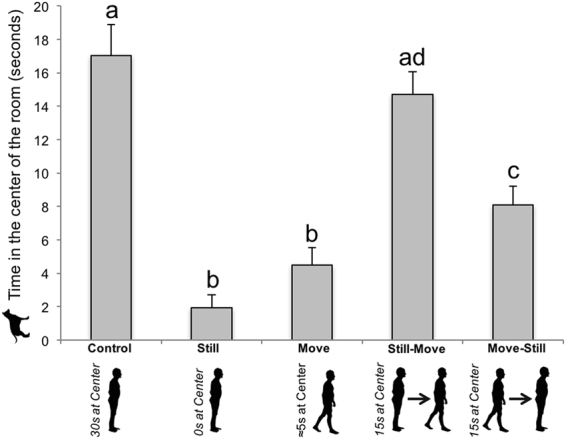
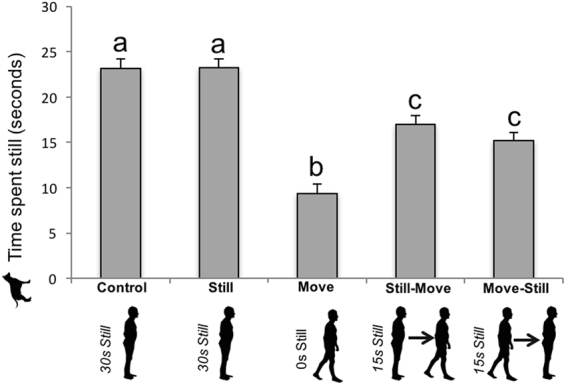
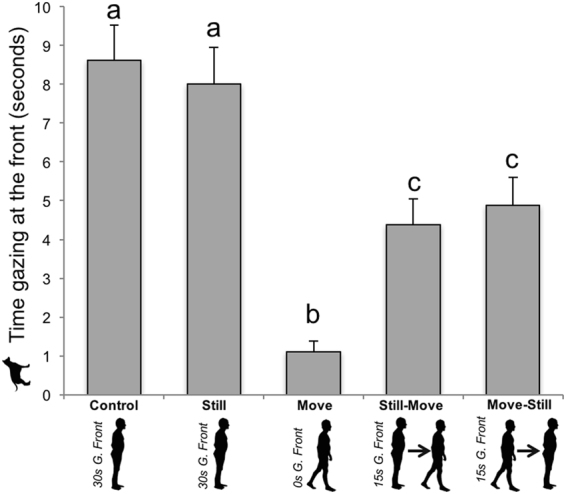
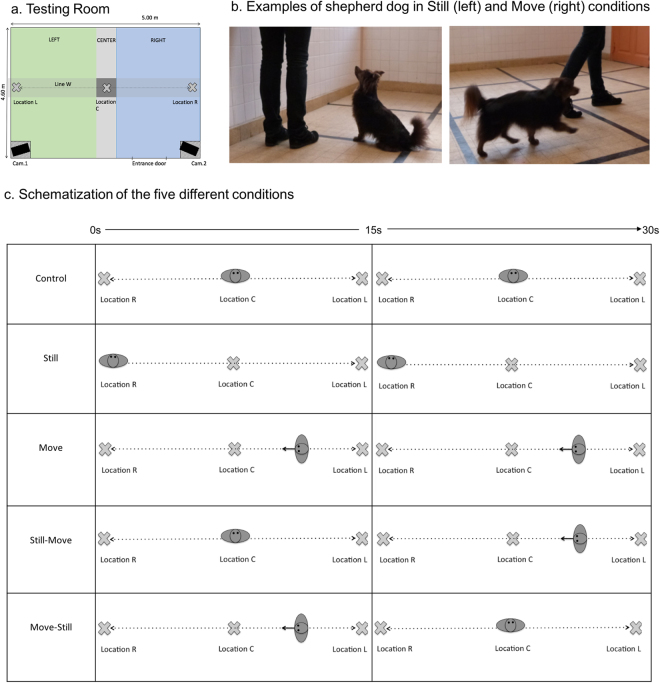
Behavioural synchronization is widespread among living beings, including humans. Pairs of humans synchronize their behaviour in various situations, such as walking together. Affiliation between dyadic partners is known to promote behavioral synchronization. Surprisingly, however, interspecific synchronization has recived little scientific investigation. Dogs are sensitive to human cues, and share strong affiliative bonds with their owners. We thus investigated whether, when allowed to move freely in an enclosed unfamiliar space, dogs synchronize their behaviour with that of their owners'. We found that dogs visibly synchronized their location with their owner (staying in close proximity and moving to the same area), as well as their activity and temporal changes in activity (moving when their owner moved, standing still when their owner stood still, and gazing in the same direction as their owner). The present study demonstrates that owners act as attractors for their dogs in an indoor space, as mothers do for their children.
Conflict of interest statement
The authors declare that they have no competing interests.
Figures
References
-
- Duranton C, Gaunet F. Behavioural synchronization from an ethological perspective: short overview of its adaptive values. Adapt. Behav. 2016;24(3):181–191. doi: 10.1177/1059712316644966. - DOI
-
- Wynne, C. D. L. & Udell, M. A. R. Animal Cognition. Second edition, Edition Palgrave Macmillan, England. (2013).
-
- Duranton C, Gaunet F. Canis sensitivus: Affiliation and dogs’ sensitivity to others’ behavior as the basis for synchronization with humans? J. Vet. Behav.: Clin. Appl. Res. 2015;10:513–524. doi: 10.1016/j.jveb.2015.08.008. - DOI
-
- Gaunet F. Sensitivity and adjustments of domestic dog to social agents: knowledge from the scientific field. J. Vet. Behav.: Clin. Appl. Res. 2012;7(6):e6.
Publication types
MeSH terms
LinkOut - more resources
Full Text Sources
Other Literature Sources
