


Effect of Hecogenin on DNA instability
- PMID: 28959577
- PMCID: PMC5615936
- DOI: 10.1016/j.toxrep.2016.06.004
Effect of Hecogenin on DNA instability
Abstract
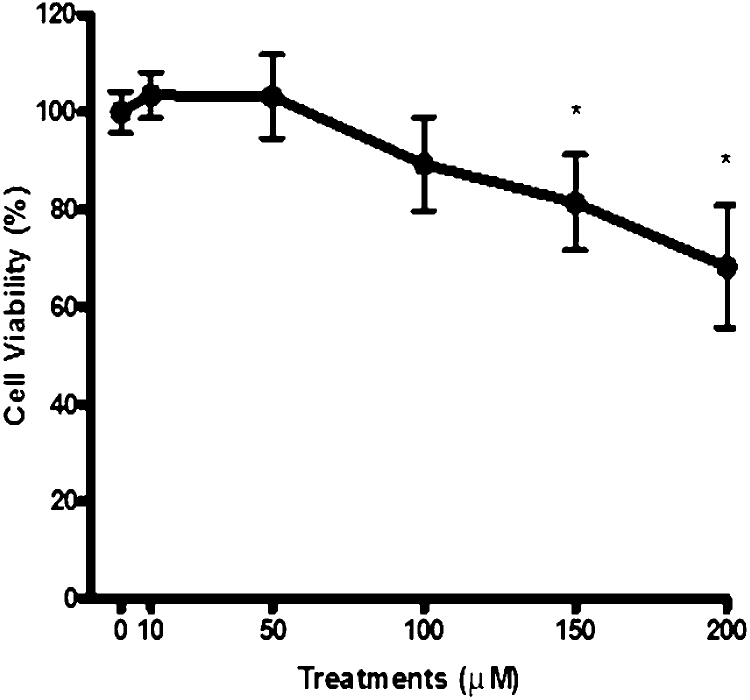
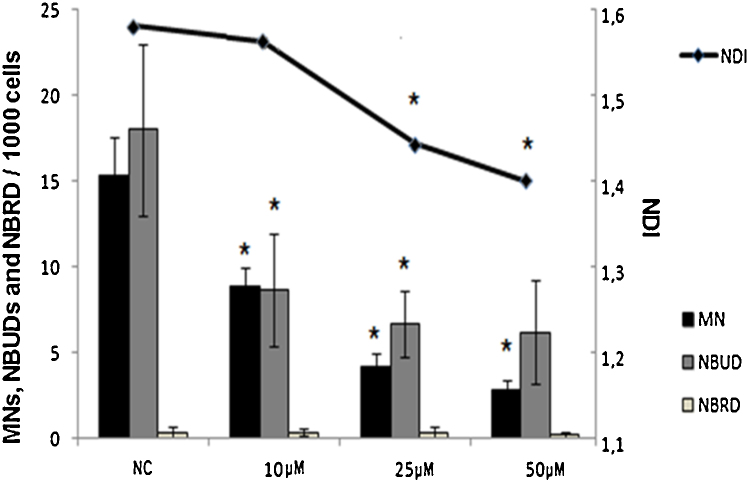
Hecogenin is a sapogenin found in Agave species in high quantities and is responsible for the many therapeutic effects of these medicinal plants. In addition, this compound is also widely used in the pharmaceutical industry as a precursor for the synthesis of steroidal hormones and anti-inflammatory drugs. Despite Hecogenin being widely used, little is known about its toxicological properties. Therefore, the present study aimed to investigate the cytotoxic, genotoxic and mutagenic effects of Hecogenin on HepG2 cells. Cytotoxicity was analyzed using the MTT test. Then, genotoxic and mutagenic potentials were assessed by comet assay and cytokinesis-block micronucleus assay, respectively. Cytotoxic effect was observed only when cells were exposed to concentrations of Hecogenin equal or higher than 100 μM. Although a lower concentration of Hecogenin caused DNA damage, a reduction on nuclear mutagenic markers in HepG2 cells was observed. The results indicated that Hecogenin treatment generated DNA damage, but in fact it would be repaired, avoiding dissemination of the damage throughout the cell division. Further studies need to be performed to confirm the observed protective effect of Hecogenin against genomic instability.
Keywords: CBMN; Comet assay; Genotoxicity; Hecogenin.
Figures
References
-
- Challinor V.L., De Voss J.J. Open-chain steroidal glycosides, a diverse class of plant saponins. Nat. Prod. Rep. 2013;30:429–454. - PubMed
-
- Kostova I., Dinchev D. Saponins in Tribulus terrestris – Chemistry and bioactivity. Phytochem. Rev. 2005;4:111–137.
-
- Eskander J., Lavaud C., Harakat D. Steroidal saponins from the leaves of Agave macroacantha. Fitoterapia. 2010;81:371–374. - PubMed
LinkOut - more resources
Full Text Sources
Other Literature Sources
