


Endothelium-specific amyloid precursor protein deficiency causes endothelial dysfunction in cerebral arteries
- PMID: 28959912
- PMCID: PMC6168907
- DOI: 10.1177/0271678X17735418
Endothelium-specific amyloid precursor protein deficiency causes endothelial dysfunction in cerebral arteries
Abstract
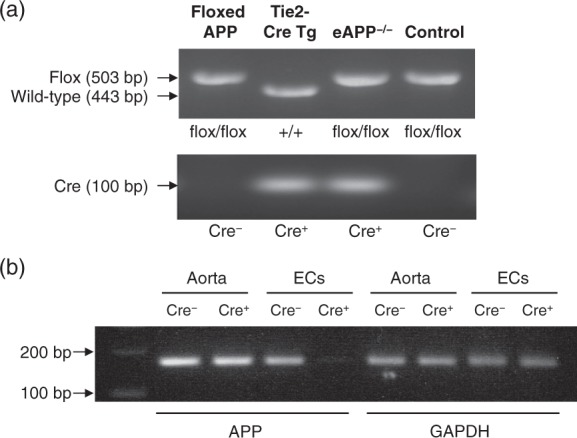
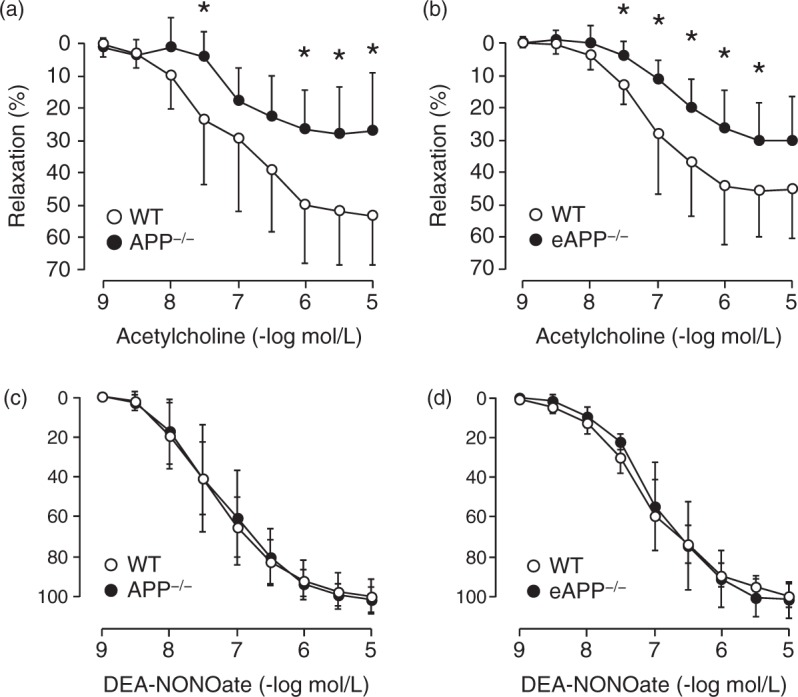
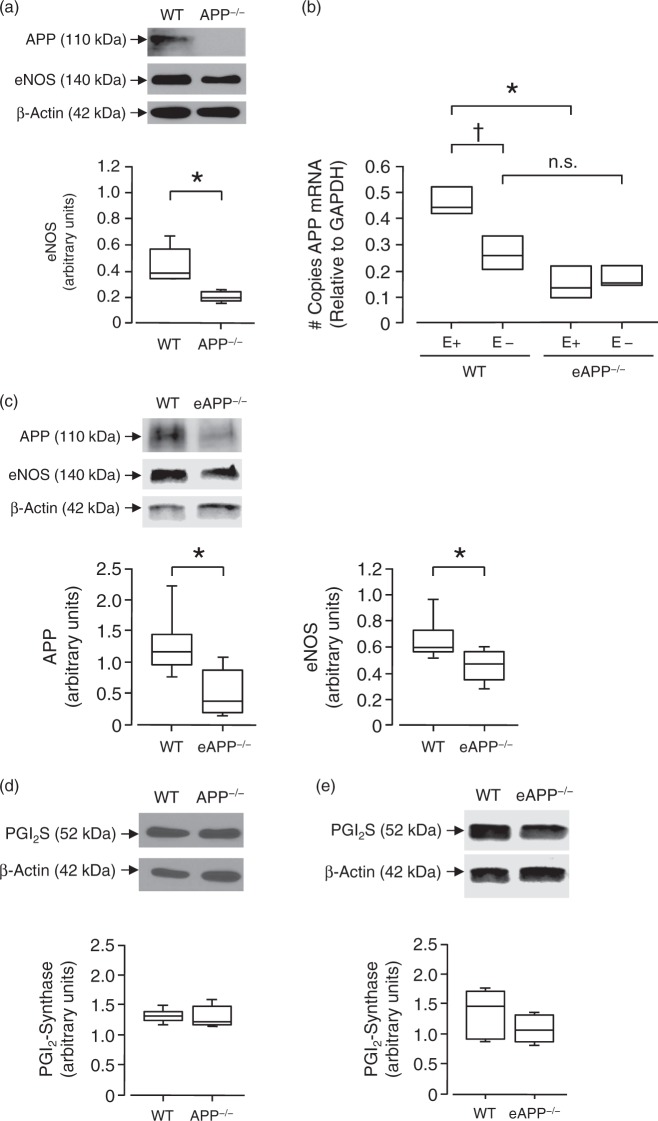
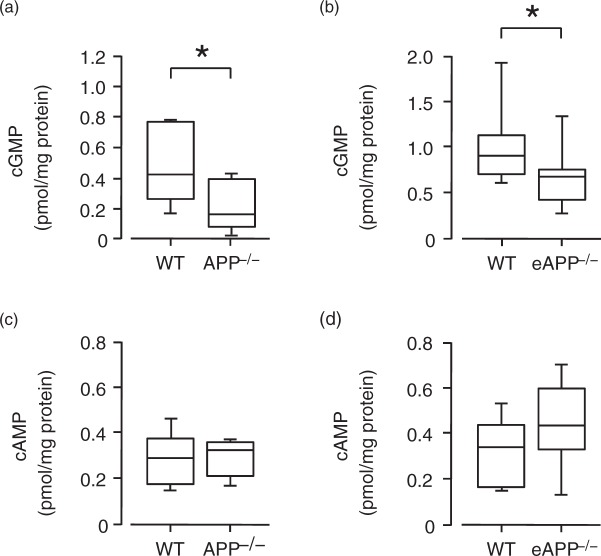
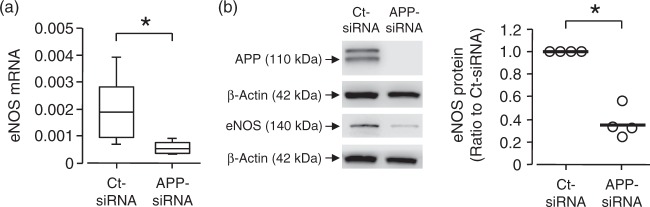
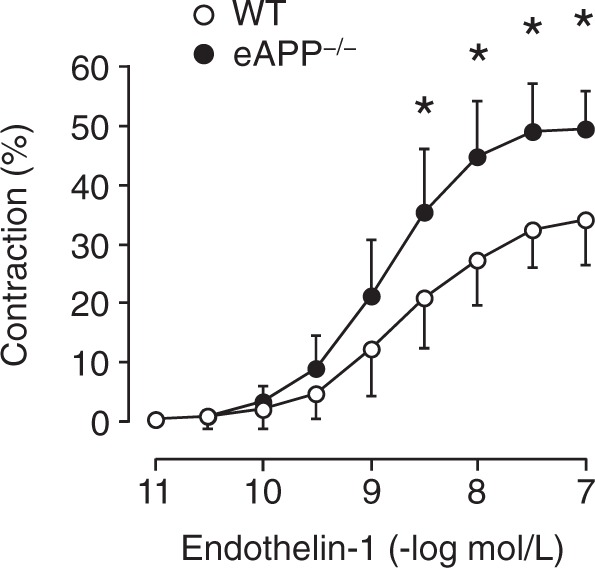
The exact physiological function of amyloid-β precursor protein (APP) in endothelial cells is unknown. Endothelium-specific APP-deficient (eAPP-/-) mice were created to gain new insights into the role of APP in the control of vascular endothelial function. Endothelium-dependent relaxations to acetylcholine were significantly impaired in basilar arteries of global APP knockout (APP-/-) and eAPP-/- mice ( P < 0.05). In contrast, endothelium-independent relaxations to nitric oxide (NO)-donor diethylamine-NONOate were unchanged. Western blot analysis revealed that protein expression of endothelial nitric oxide synthase (eNOS) was significantly downregulated in large cerebral arteries of APP-/- mice and eAPP-/- mice as compared to respective wild-type littermates ( P < 0.05). Furthermore, basal levels of cyclic guanosine monophosphate (cGMP) were also significantly reduced in large cerebral arteries of APP-deficient mice ( P < 0.05). In contrast, protein expression of prostacyclin synthase as well as levels of cyclic adenosine monophosphate (cAMP) was not affected by genetic inactivation of APP in endothelial cells. By using siRNA to knockdown APP in cultured human brain microvascular endothelial cells we also found a significant downregulation of eNOS mRNA and protein expressions in APP-deficient endothelium ( P < 0.05). These findings indicate that under physiological conditions, expression of APP in cerebral vascular endothelium plays an important protective function by maintaining constitutive expression of eNOS .
Keywords: Amyloid precursor protein; amyloid-β; cerebral arteries; endothelial nitric oxide synthase; endothelium.
Figures
References
-
- Faraci FM, Heistad DD. Regulation of large cerebral arteries and cerebral microvascular pressure. Circ Res 1990; 66: 8–17. - PubMed
-
- Moncada S, Palmer RM, Higgs EA. Nitric oxide: physiology, pathophysiology, and pharmacology. Pharmacol Rev 1991; 43: 109–142. - PubMed
-
- Atochin DN, Demchenko IT, Astern J, et al. Contributions of endothelial and neuronal nitric oxide synthases to cerebrovascular responses to hyperoxia. J Cereb Blood Flow Metab 2003; 23: 1219–1226. - PubMed
-
- Ma J, Meng W, Ayata C, et al. L-NNA-sensitive regional cerebral blood flow augmentation during hypercapnia in type III NOS mutant mice. Am J Physiol 1996; 271: H1717–1719. - PubMed
-
- Sobey CG, Faraci FM. Effects of a novel inhibitor of guanylyl cyclase on dilator responses of mouse cerebral arterioles. Stroke 1997; 28: 837–842; discussion 842–833. - PubMed
Publication types
MeSH terms
Substances
Grants and funding
LinkOut - more resources
Full Text Sources
Other Literature Sources
Molecular Biology Databases
