


Value of shared preclinical safety studies - The eTOX database
- PMID: 28962354
- PMCID: PMC5598263
- DOI: 10.1016/j.toxrep.2014.12.004
Value of shared preclinical safety studies - The eTOX database
Abstract
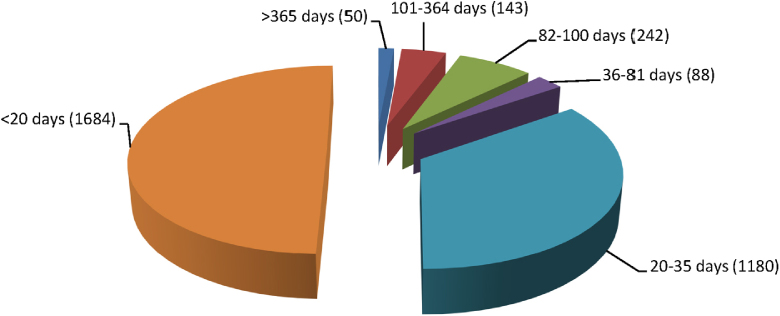
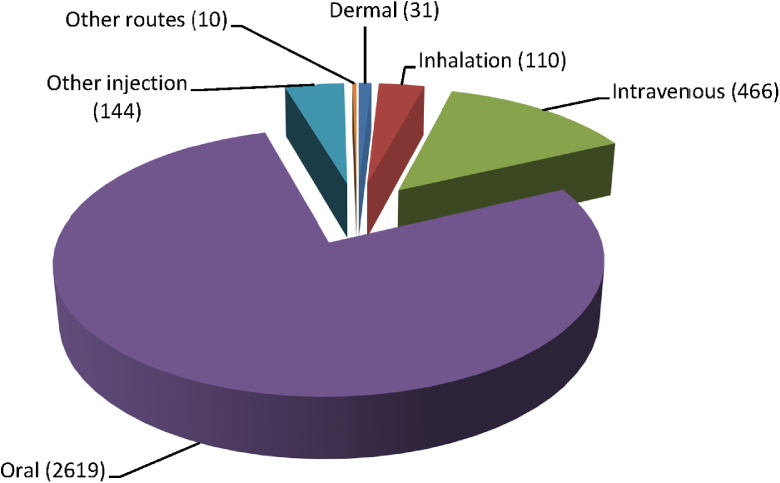
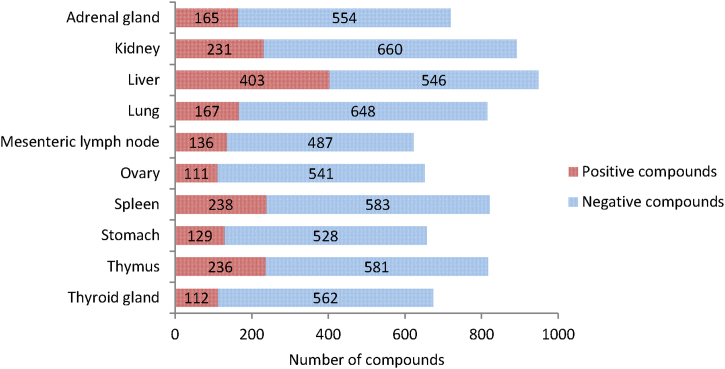
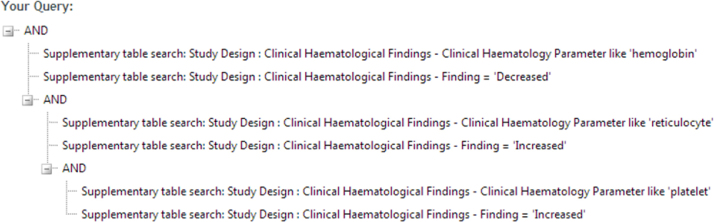
A first analysis of a database of shared preclinical safety data for 1214 small molecule drugs and drug candidates extracted from 3970 reports donated by thirteen pharmaceutical companies for the eTOX project (www.etoxproject.eu) is presented. Species, duration of exposure and administration route data were analysed to assess if large enough subsets of homogenous data are available for building in silico predictive models. Prevalence of treatment related effects for the different types of findings recorded were analysed. The eTOX ontology was used to determine the most common treatment-related clinical chemistry and histopathology findings reported in the database. The data were then mined to evaluate sensitivity of established in vivo biomarkers for liver toxicity risk assessment. The value of the database to inform other drug development projects during early drug development is illustrated by a case study.
Keywords: ALP, alkaline phosphatase; ALT, alanine aminotransferase; AST, aspartate aminotransferase; Biomarkers; CDISC, Clinical Data Interchange Standards Consortium; CRO, contract research organisation; DILI, drug induced liver injury; Data mining; Data sharing; EFPIA, European Federation of Pharmaceutical Industries and Associations; FN, false negative; FP, false positive; GLP, good laboratory practice; ICH, International Conference on Harmonisation; IMI, Innovative Medicines Initiative; INHAND, International Harmonization of Nomenclature and Diagnostic Criteria; IT, information technology; MCC, Matthews correlation coefficient; OECD, Organisation for Economic Co-operation and Development; Ontology; PDF, Portable Document Format; PDF/A, ISO-standardized version of PDF specialized for the digital preservation of electronic documents.; QA, quality assurance; SEND, Standard for Exchange of Nonclinical Data; SME, small-to-medium enterprise; TN, true negative; TP, true positive; Toxicology; ULN, upper limit of normal; eTOX, integrating bioinformatics and chemoinformatics approaches for the development of expert systems allowing the in silico prediction of toxicities.
Figures



References
-
- CMR International . Thomson Reuters; 2014. CMR International 2014 Pharmaceutical R&D Factbook.http://www.techstreet.com/cmr/products/1881849#jumps (accessed 04.09.14)
-
- Cook D., Brown D., Alexander R., March R., Morgan P., Satterthwaite G., Pangalos M.N. Lessons learned from the fate of AstraZeneca's drug pipeline: a five-dimensional framework. Nat. Rev. Drug Discov. 2014;13(6):419–431. - PubMed
-
- Marchant C., Briggs K., Long A. In silico tools for sharing data and knowledge on toxicity and metabolism: derek for windows, meteor, and vitic. Toxicol. Mech. Methods. 2008;18(2–3):177–187. - PubMed
-
- Klimisch H.J., Andreae M., Tillmann U. A systematic approach for evaluating the quality of experimental toxicological and ecotoxicological data. Regul. Toxicol. Pharmacol. 1997;25(1):1–5. - PubMed
LinkOut - more resources
Full Text Sources
Other Literature Sources
Miscellaneous
