


Determination of some soft drink constituents and contamination by some heavy metals in Nigeria
- PMID: 28962372
- PMCID: PMC5598381
- DOI: 10.1016/j.toxrep.2015.01.014
Determination of some soft drink constituents and contamination by some heavy metals in Nigeria
Abstract
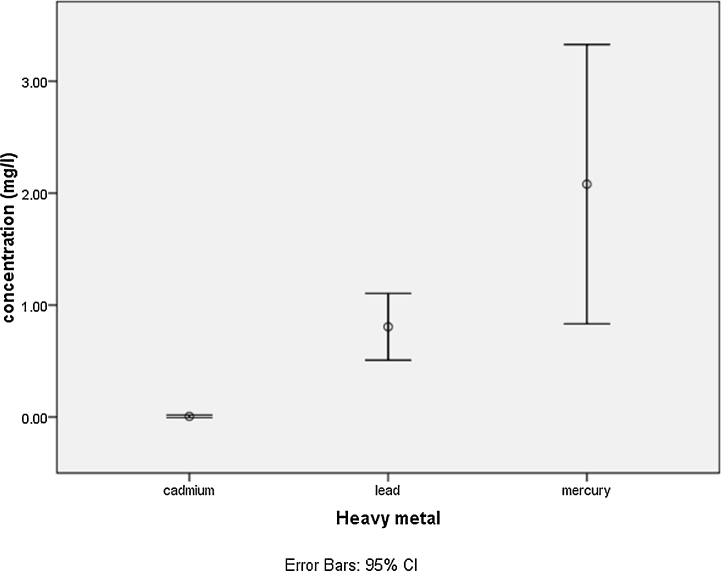
Soft drinks are consumed daily in Nigeria due to its affordability, characteristic taste, and thirst quenching potential. However, the high demand may compromise the quality of production with possible contamination of heavy metals which have shown to cause intoxication and death in humans. This study evaluated some constituents of twenty-six soft drinks in Nigeria and investigated the presence of some heavy metal contaminants. The soft drinks were screened for the presence of sugar, carbon dioxide, phosphate and alcohol as well as the pH and acidity determined. The level of cadmium, mercury and lead were determined using atomic absorption spectrophotometer. The study showed the presence of sugar, carbon dioxide, phosphate, and alcohol in the soft drinks. The soft drinks were acidic in nature, pH ranging from 3 to 5 with a mean of 3.6 and the acid concentration was relatively low between 3 and 12 g/L with a mean of 8.1 g/L. Lead was present in all the samples ranging from 0.17 to 3.39 mg/L with a mean of 0.8, mercury was present in 22 samples ranging from 0.29 to 11.32 mg/L with a mean of 2.08 mg/L while cadmium was present only in one sample (0.149 mg/L). When compared to EPA, WHO and NIS standards, the levels of the heavy metal contaminants were above the tolerated limits for good quality drinking water in most samples. These results suggest that soft drinks in Nigeria may be contaminated with heavy metals which constitute a major public health problem. Thus, quality control is recommended during the production process especially at the stages of sterilization and purification.
Keywords: Contamination; Heavy metal; Intoxication; Nigeria; Public health; Soft drink.
Figures
References
-
- FAO (United Nations Food and Agriculture Organisation) 2011. FAOSTAT data.http://faostat.fao.org (accessed February 2011)
-
- Asiegbu I.F. Salesforce competence development and marketing performance of industrial and domestic products firms in Nigeria. Far East J. Psychol. Bus. 2011;2(3)
-
- Ambler T., Styles C. Brand development versus new product development: toward a process model of extension decisions. J. Prod. Brand Manage. 1997;6(4):222–234.
-
- EFSA (European Food Safety Authority) 2006. The setting of nutrient profiles for foods bearing nutrition and health claims pursuant to Article 4 of the Regulation (EC) No 1924/2006: Scientific Opinion of the Panel on Dietetic Products, Nutrition and Allergies.http://www.efsa.europa.eu/en/efsajournal/doc/644.pdf (accessed February 2011)
-
- Dharmasena K.A. Texas A&M University; 2010. The Non-Alcoholic Beverage Market in the United States: Demand Interrelationships, Dynamics, Nutrition Issues and Probability Forecast Evaluation. (PhD thesis)
LinkOut - more resources
Full Text Sources
Other Literature Sources
Research Materials
