


Role of garlic extract and silymarin compared to dimercaptosuccinic acid (DMSA) in treatment of lead induced nephropathy in adult male albino rats
- PMID: 28962418
- PMCID: PMC5598274
- DOI: 10.1016/j.toxrep.2015.04.004
Role of garlic extract and silymarin compared to dimercaptosuccinic acid (DMSA) in treatment of lead induced nephropathy in adult male albino rats
Abstract
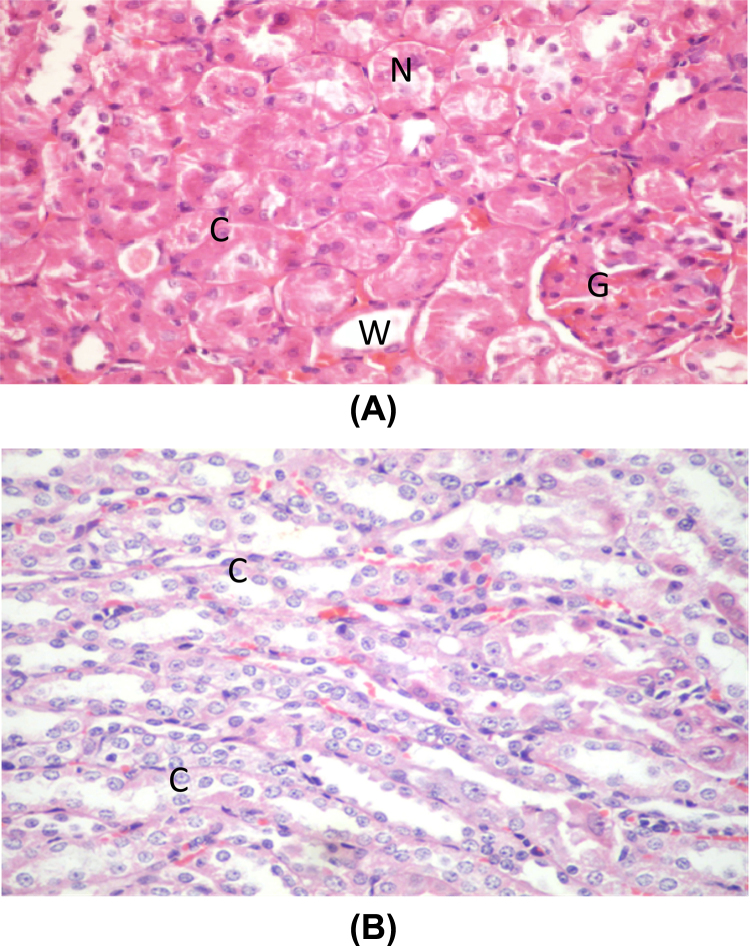
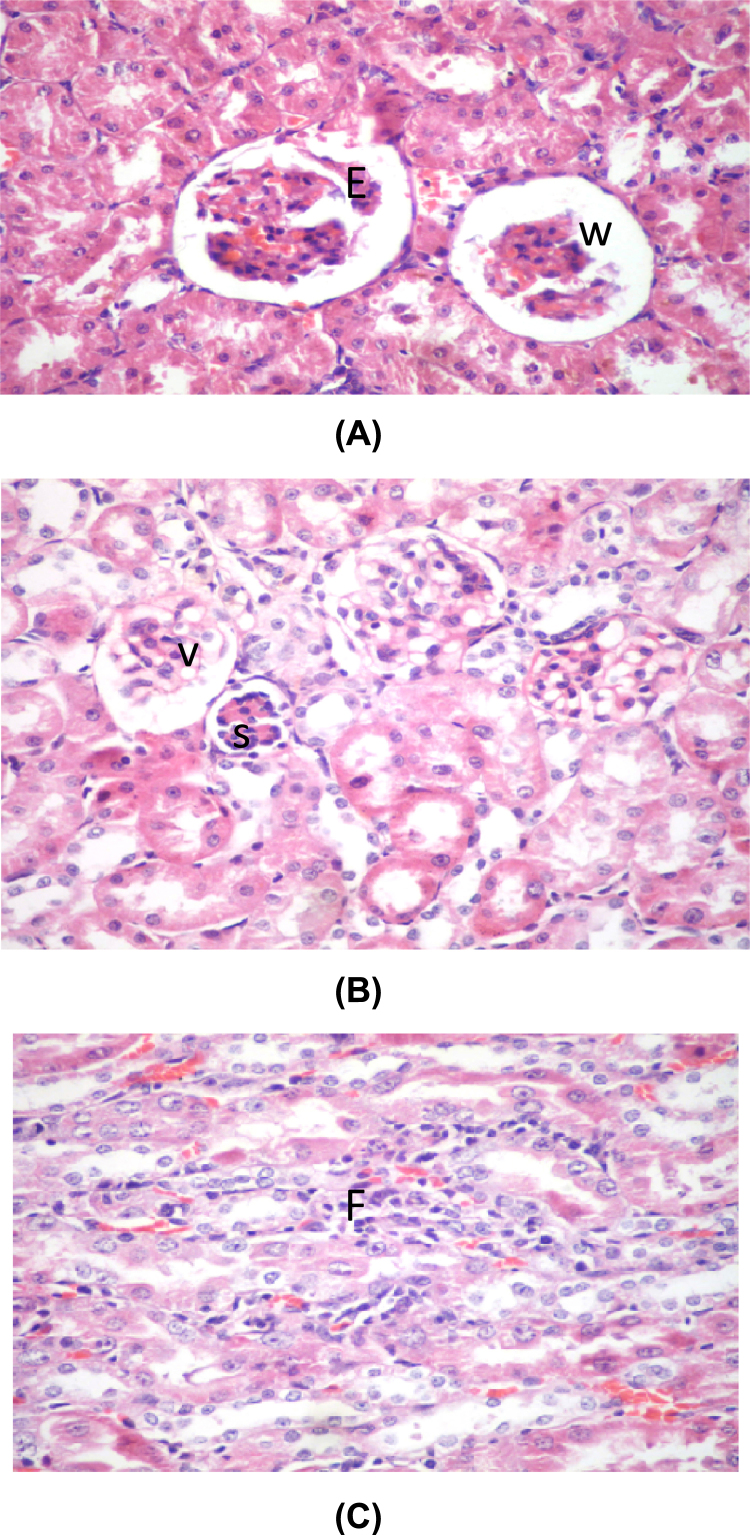
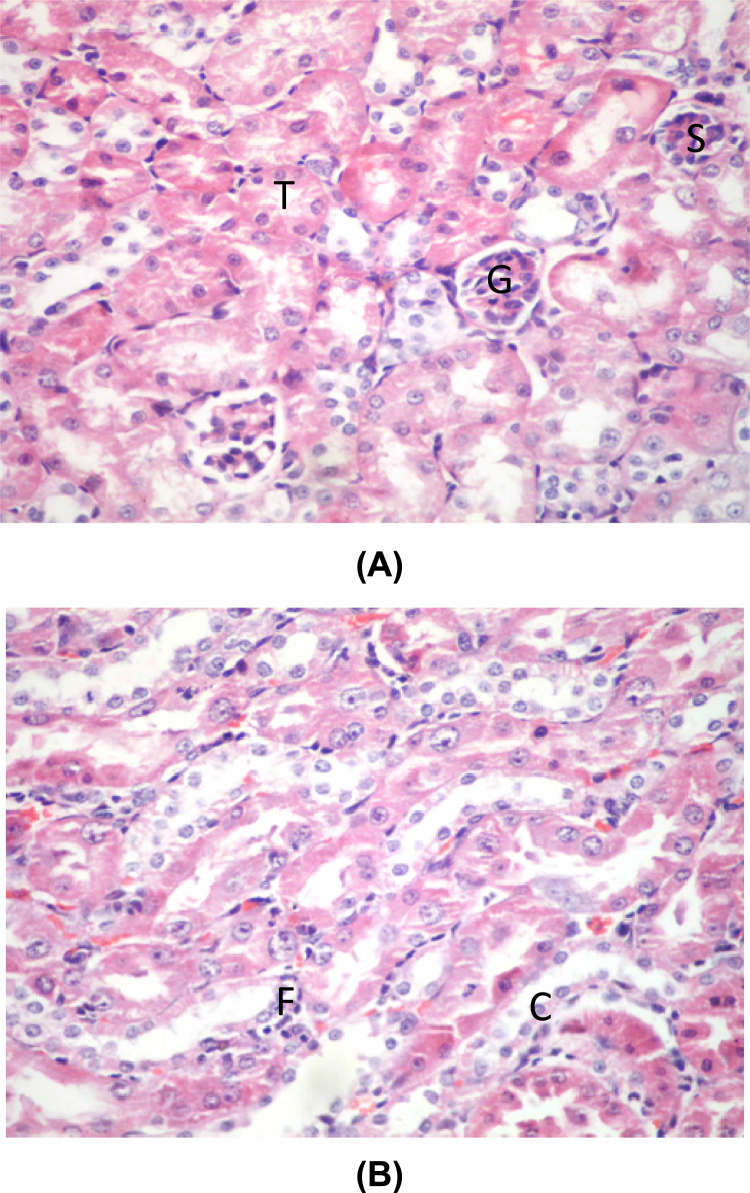
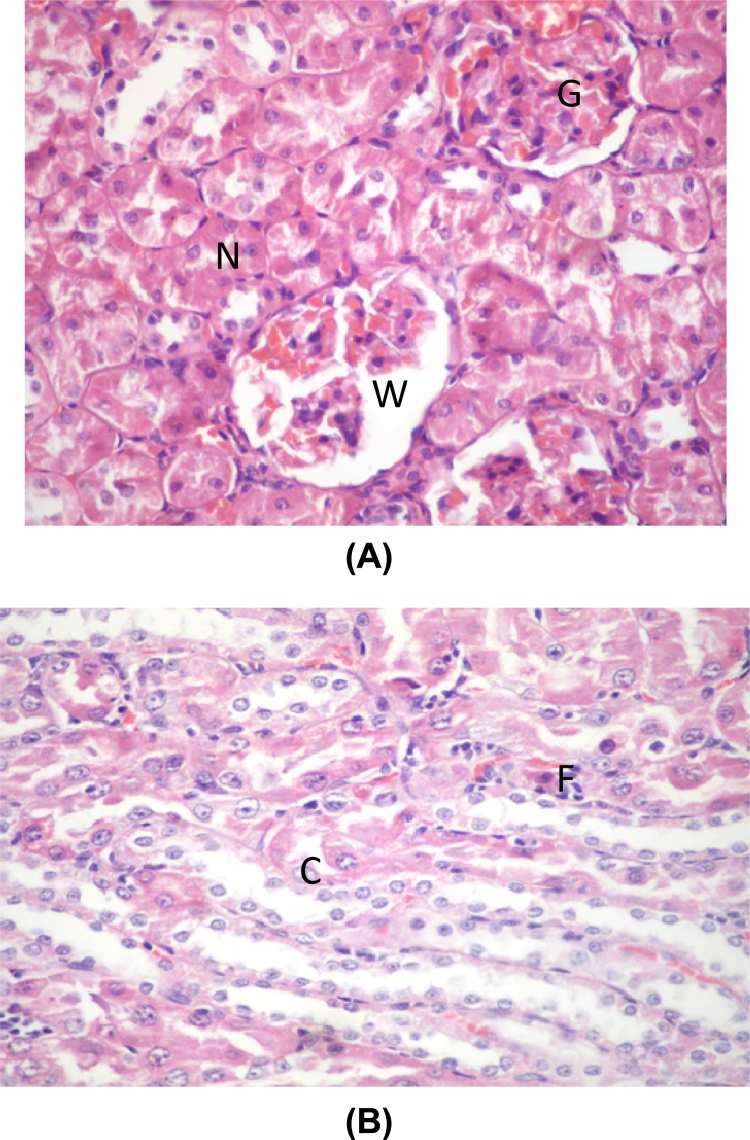
Lead poisoning has been known as an important disorder that affects individuals through acute, sub-acute and chronic exposure in environmental and occupational settings. This study was conducted to compare the curative role of garlic combined with silymarin versus dimercaptosuccinic acid (DMSA) in decreasing lead induced nephrotoxicity in adult male albino rats. The period of lead intoxication extended for 3 months followed by either 1 month treatment with garlic and silymarin or 5 days treatment with DMSA. Lead poisoning caused non-significant difference in kidney function tests (BUN and serum creatinine) while, it caused significant elevation in kidney lead level, significant decrease in renal antioxidant enzyme glutathione peroxidase and significant elevation in kidney malondialdehyde. Histologically, lead induced disorganization and shrinkage of glomeruli with sloughing and vaculation of epithelium, widening of Bowman's space and inflammatory infiltration in renal medulla. Treatment by garlic extract combined with silymarin as well as treatment with DMSA resulted in significant improvement in the affected parameters. Also, both methods of treatment resulted in improvement of the histopathological changes. It can be concluded that garlic extract combined to silymarin is comparable to DMSA in amelioration of lead induced nephrotoxicity.
Keywords: DMSA; DMSA (PubChem CID: 2724354); Garlic; Garlic (PubChem CID: 6850761); Kidney; Lead poisoning; Lead-acetate (PubChem CID: 19878658); Silymarin; Silymarin (PubChem CID: 1548994).
Figures
References
-
- Ashry K.M., El-Sayed Y.S., Khamiss R.M. Oxidative stress and immunotoxic effects of lead and their amelioration with myrrh (Commiphoramolmol) emulsion. Food Chem. Toxicol. 2010;48(1):236–241. - PubMed
-
- Ahmed Y.F., Eldebaky H.A.A., Karima G.M. Effects of lead exposure on DNA damage and apoptosis in reproductive and vital organs in female rabbits. Glob. Vet. 2012;9(4):401–408.
-
- Flora S., Kannan G.M., Pant B.P. Combined administration of oxalic acid, succimer and its analogue for the reversal of gallium arsenide-induced oxidative stress in rats. Arch. Toxicol. 2002;76:269–276. - PubMed
-
- Alan L., Miller N.D. Dimercaptosuccinic acid (DMSA), a non-toxic, water soluble treatment for heavy metal toxicity. Altern. Med. Rev. 1998;3(3):199–207. - PubMed
-
- Sharma V., Sharma A., Kansal L. The effect of oral administration of Allium sativum extracts on lead nitrate induced toxicity in male mice. Food Chem. Toxicol. 2010;48(3):928–936. - PubMed
LinkOut - more resources
Full Text Sources
Other Literature Sources
