


Continuous Positive Airway Pressure: Is it a route for infection in those with Obstructive Sleep Apnoea?
- PMID: 28966735
- PMCID: PMC5611769
- DOI: 10.5935/1984-0063.20170005
Continuous Positive Airway Pressure: Is it a route for infection in those with Obstructive Sleep Apnoea?
Abstract
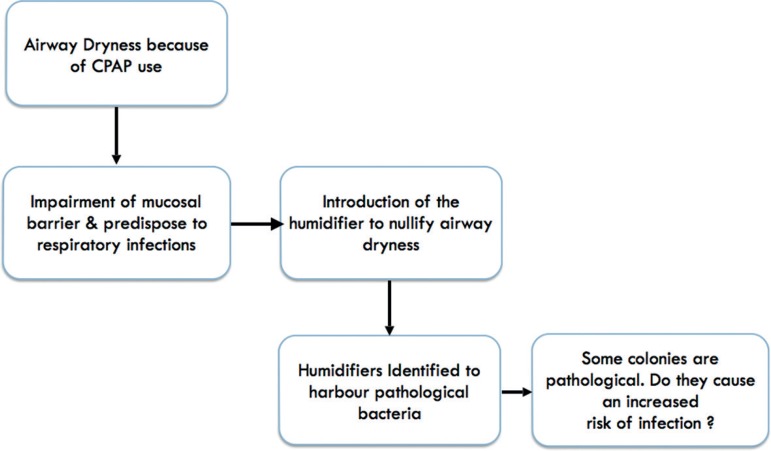
Introduction: Continuous positive airway pressure (CPAP) is the standard treatment for obstructive sleep apnoea (OSA), with limited data about the prevalence of respiratory infections and microbial colonization in these patients.
Objectives: The aim of this study was to determine if CPAP use is associated with respiratory infections and to identify the organisms that colonize or infect these patients.
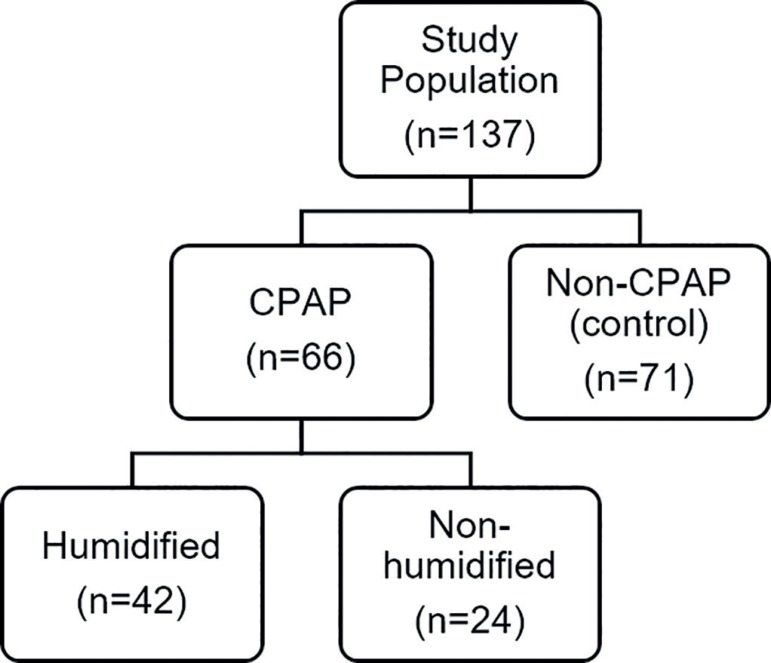
Method: A retrospective, case-controlled study in patients diagnosed with OSA was carried out. 137 patients were recruited and interviewed using a questionnaire. A nasal swab was taken from each patient. Patients using CPAP machines had swabs taken from masks and humidifiers.
Results: 66 (48.2%) patients received CPAP treatment with 60.6% of them having a heated humidifier. 78.8% were male, with the majority using a full face mask (63.6%). No significant difference was seen in the prevalence of rhinosinusitis, lower respiratory tract infections and hospital admissions for pneumonia between CPAP and non-CPAP treated patients. The presence of a humidifier did not influence the prevalence of infections. Commensal flora was predominantly cultured from nasal swabs from both patient groups. Coagulase Negative Staphylococci and Diphtheroids were the main organisms cultured from masks and humidifiers respectively.
Conclusions: This study shows that the use of CPAP, choice of mask and humidifier have no significant impact on the prevalence of infections and micro-organisms isolated. This is very reassuring to the physician prescribing CPAP therapy and users.
Keywords: Continuous positive airway pressure; Drug-related side effects and adverse reactions; Obstructive sleep apnea; Respiratory tract infections.
Conflict of interest statement
Funding/Conflicts of Interest None declared.
Figures
References
-
- Sullivan CE, Issa FG, Berthon-Jones M, Eves L. Reversal of obstructive sleep apnoea by continuous positive airway pressure applied through the nares. Lancet. 1981;1(8225):862–865. - PubMed
-
- Broström A, Strömberg A, Ulander M, Fridlund B, Mårtensson J, Svanborg E. Perceived informational needs, side-effects and their consequences on adherence - a comparison between CPAP treated patients with OSAS and healthcare personnel. Patient Educ Couns. 2009;74(2):228–235. - PubMed
-
- Haniffa M, Lasserson TJ, Smith I. Interventions to improve compliance with continuous positive airway pressure for obstructive sleep apnoea. Cochrane Database Syst Rev. 2004;(4):CD003531–CD003531. - PubMed
-
- Steinhauer K, Goroncy-Bermes P. Investigation of the hygienic safety of continuous positive airways pressure devices after reprocessing. J Hosp Infect. 2005;61(2):168–175. - PubMed
-
- Sanner BM, Fluerenbrock N, Kleiber-Imbeck A, Mueller JB, Zidek W. Effect of continuous positive airway pressure therapy on infectious complications in patients with obstructive sleep apnea syndrome. Respiration. 2001;68(5):483–487. - PubMed
LinkOut - more resources
Full Text Sources
Other Literature Sources