. 2016:1:0006.
doi: 10.1038/s41551-016-0006. Epub 2016 Dec 19.

A Transistor-like pH Nanoprobe for Tumour Detection and Image-guided Surgery

Affiliations

A Transistor-like pH Nanoprobe for Tumour Detection and Image-guided Surgery

Tian Zhao et al. Nat Biomed Eng. 2016.

Abstract

Because of profound genetic and histological differences in cancerous tissue, it is challenging to detect a broad range of malignant tumours at high resolution. Here, we report the design and performance of a fluorescent nanoprobe with transistor-like responses (transition pH = 6.9) for the detection of the deregulated pH that drives many of the invasive properties of cancer. The nanoprobe amplifies fluorescence signal in the tumour over that in the surrounding normal tissues, resulting in a discretized, binary output signal with spatial resolution smaller than 1 mm. The nanoprobe allowed us to image a broad range of tumours in mouse models using a variety of clinical cameras, and to perform real-time tumour-acidosis-guided detection and surgery of occult nodules (< 1 mm3) in mice bearing head-and-neck or breast tumours, significantly lengthening mice survivability. We also show that the pH nanoprobe can be used as a reporter in a fast, quantitative assay to screen for tumour-acidosis inhibitors. The binary delineation of pH achieved by the nanoprobe promises to improve the accuracy of cancer detection, surveillance and therapy.


Conflict of interest statement

Competing Financial Interests B.D.S. and J.G. are scientific co-founders of OncoNano Medicine, Inc.. The authors declare competing financial interests: details accompany the full-text HTML version of the paper at http://www.nature.com/natbiomedeng/

Figures

Figure 1
Figure 1. pH transistor nanoprobes achieve broad tumour detection specificity
a, Schematic of pH nanotransistor with binary off/on response at a transition pH of 6.9. At pH<6.9, nanoprobes dissociate into protonated, highly fluorescent unimers (on state); at pH>6.9, nanoprobes are silent (off state). b, PINS nanoprobes (intravenous injection 24 h prior to imaging by SPY Elite® clinical camera) demonstrate broad tumour imaging efficacy in a variety of tumour models (head and neck, breast, peritoneal metastasis, kidney, brain, pancreatic) and organ sites. Yellow arrow heads indicate the location of tumours. Additional tumour models are shown in Supplementary Fig. 5. Ex vivo quantification is available in Supplementary Fig. 6.
Figure 2
Figure 2. Comparison between PINS and other commercial NIR probes
a, Images of mice bearing HN5 head and neck tumours 24h after different probe injection. The fluorophore doses are the same for all groups. Quantification of the tumour fluorescence intensity (b) and contrast to noise ratio (c) demonstrate the superior imaging efficacy by PINS over the other imaging probes. Data are presented as mean ± s.d. (n = 3). ***P < 0.001, ****P < 0.0001, compared with other groups.
Figure 3
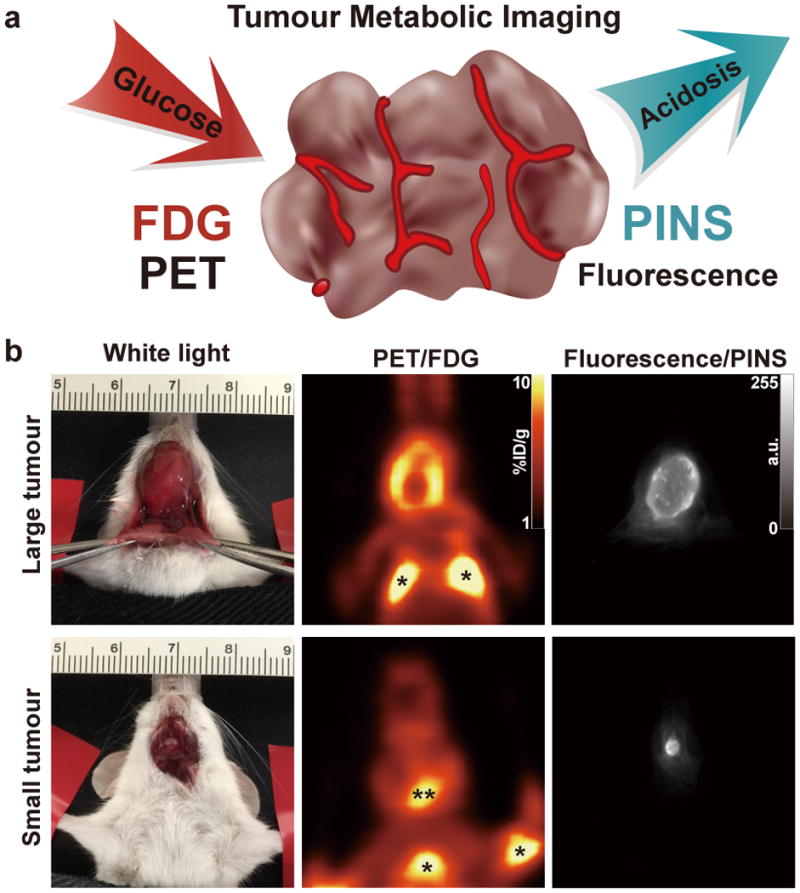
Figure 3. PINS improves cancer detection over FDG-PET
a, Schematic of tumor metabolic imaging by PET with FDG or NIR fluorescence imaging with PINS. b, SCID mice bearing large (200 mm3) or small (10 mm3) HN5 orthotopic tumours were studied. PINS imaging showed improved sensitivity and specificity of tumour detection over FDG-PET. Asterisks (*) and double asterisk (**) indicate false positive detection of brown fat and striated muscle in the PET images, respectively.
Figure 4
Figure 4. Tumour acidosis guided surgery (TAGS) in mice bearing orthotopic head and neck tumours
a, Surgical resection of primary HN5 tumours and successful detection of residual tumours by SPY Elite® camera. Visual inspection of tumour bed by eyes was not able to differentiate residual tumours from surrounding muscle tissue (top left). Tumour tissue (T) and normal tissue (N) were verified by histology. Scale bar = 1 mm (low magnification) or 100 μm (high magnification). b, As expected debulking surgery provided no survival benefit over untreated control. TAGS shows significantly improved long-term survival over white light and other control groups (****P < 0.0001). For control and debulking group n = 7; for white light group n = 15; for TAGS group n = 18. See Movies in the Supplemental Materials for real-time surgical resection of HN5 tumours.
Figure 5
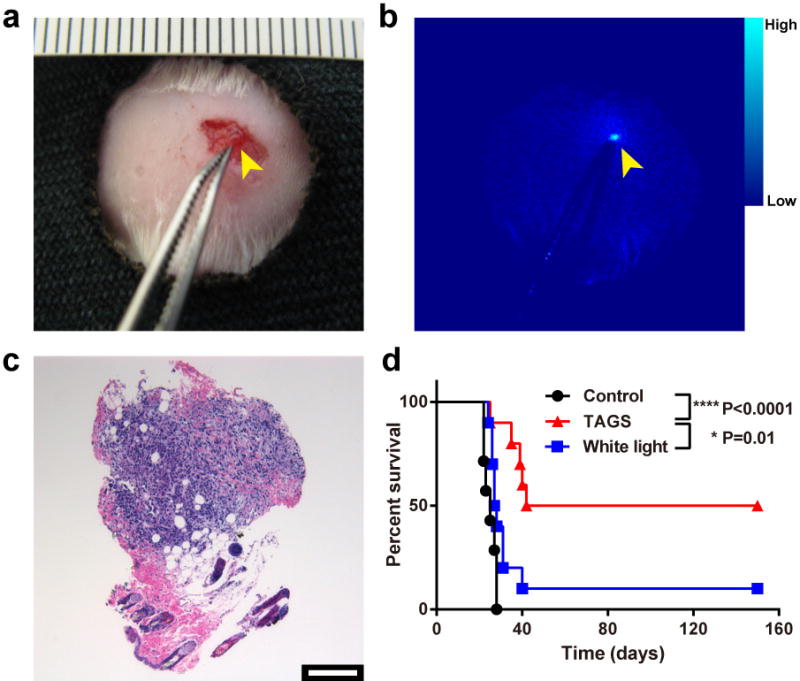
Figure 5. Tumour acidosis guided surgery in mice bearing small occult breast tumour nodules
Tumour foci (< 1 million cells) was visible under SPY camera (b) but not by visual detection (a). c, A representative histology section of a small breast tumour nodule resected during TAGS; scale bar = 200 μm. d, Kaplan-Meier curve demonstrates significantly improved long-term survival by TAGS over white light and untreated control groups. For control groups n = 7; white light and TAGS groups n = 10; *P < 0.05, ****P<0.0001. See Movies in the Supplemental Materials for real-time surgical resection of small occult breast tumours.
Figure 6
Figure 6. Evaluation of small molecular inhibitors targeting different tumour acidosis pathways by PINS
a, Chemical structures of selected small molecular inhibitors and their corresponding protein targets in parenthesis: acetazolamide (CAIX), α-cyano-4-hydroxycinnamate or CHC (MCT), cariporide (NHE1) and pantoprazole (proton pump). b, Quantification of PINS signals in HN5, A549 and 4T1 tumour-bearing mice after injection of PBS or tumour acidosis inhibitors. NIR fluorescence images are shown in Supplementary Fig. 11. Data are presented as individual data points plus mean ± s.d. (n = 3); *P < 0.05, **P < 0.01, ****P < 0.0001, NS = not significant. CAIX inhibition by acetazolamide resulted in the most efficient suppression of tumour acidosis in all three models.

References

    1. Vogelstein B, et al. Cancer genome landscapes. Science. 2013;339:1546–1558. - PMC - PubMed
    1. van Dam GM, et al. Intraoperative tumor-specific fluorescence imaging in ovarian cancer by folate receptor-alpha targeting: first in-human results. Nat Med. 2011;17:1315–1319. - PubMed
    1. Veiseh M, et al. Tumor paint: a chlorotoxin:Cy5.5 bioconjugate for intraoperative visualization of cancer foci. Cancer Res. 2007;67:6882–6888. - PubMed
    1. Ke S, et al. Near-infrared optical imaging of epidermal growth factor receptor in breast cancer xenografts. Cancer Res. 2003;63:7870–7875. - PubMed
    1. Koyama Y, et al. Spectral fluorescence molecular imaging of lung metastases targeting HER2/neu. Clin Cancer Res. 2007;13:2936–2945. - PubMed