


Lymphadenectomy for the management of endometrial cancer
- PMID: 28968482
- PMCID: PMC6485923
- DOI: 10.1002/14651858.CD007585.pub4
Lymphadenectomy for the management of endometrial cancer
Abstract
Background: This is an update of a previous Cochrane review published in Issue 1, 2010 and updated in Issue 9, 2015. The role of lymphadenectomy in surgical management of endometrial cancer remains controversial. Lymph node metastases can be found in approximately 10% of women who before surgery are thought to have cancer confined to the womb. Removal of all pelvic and para-aortic lymph nodes (lymphadenectomy) at initial surgery has been widely advocated, and pelvic and para-aortic lymphadenectomy remains part of the FIGO (International Federation of Gynaecology and Obstetrics) staging system for endometrial cancer. This recommendation is based on data from studies that suggested improvement in survival following pelvic and para-aortic lymphadenectomy. However, these studies were not randomised controlled trials (RCTs), and treatment of pelvic lymph nodes may not confer a direct therapeutic benefit, other than allocating women to poorer prognosis groups. Furthermore, the Cochrane review and meta-analysis of RCTs of routine adjuvant radiotherapy to treat possible lymph node metastases in women with early-stage endometrial cancer found no survival advantage. Surgical removal of pelvic and para-aortic lymph nodes has serious potential short-term and long-term sequelae. Therefore, it is important to investigate the clinical value of this treatment.
Objectives: To evaluate the effectiveness and safety of lymphadenectomy for the management of endometrial cancer.
Search methods: We searched the Cochrane Central Register of Controlled Trials (CENTRAL), MEDLINE and Embase to June 2009 for the original review, updated the search to June 2015 for the last updated version and further extended the search to March 2017 for this version of the review. We also searched registers of clinical trials, abstracts of scientific meetings, and reference lists of included studies, and we contacted experts in the field.
Selection criteria: RCTs and quasi-RCTs that compared lymphadenectomy versus no lymphadenectomy in adult women diagnosed with endometrial cancer.
Data collection and analysis: Two review authors independently extracted data and assessed risk of bias. Hazard ratios (HRs) for overall and progression-free survival and risk ratios (RRs) comparing adverse events in women who received lymphadenectomy versus those with no lymphadenectomy were pooled in random-effects meta-analyses. We assessed the quality of the evidence using the GRADE (Grades of Recommendation, Assessment, Development and Evaluation) approach.
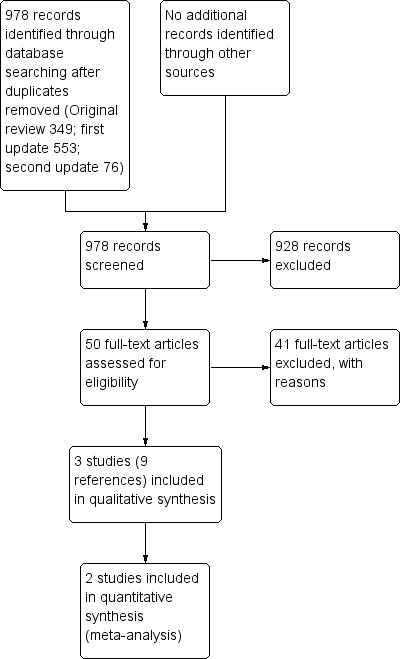
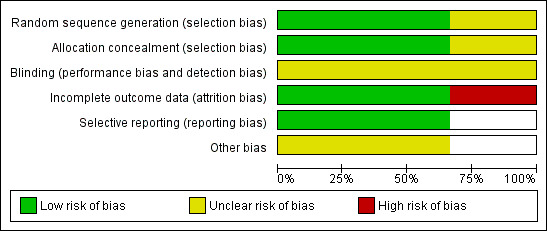
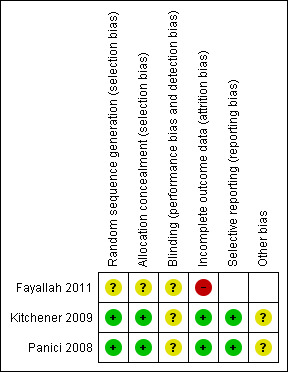
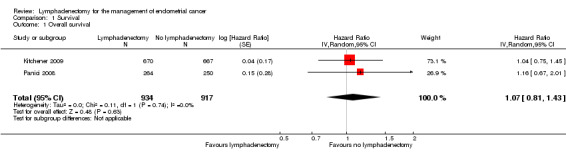
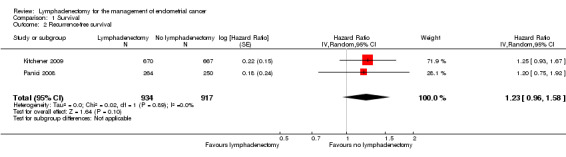
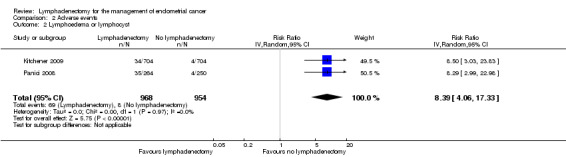
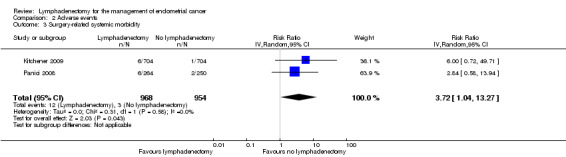
Main results: 978 unique references were identified via the search strategy. All but 50 were excluded by title and abstract screening. Three RCTs met the inclusion criteria; for one small RCT, data were insufficient for inclusion in the meta-analysis. The two RCTs included in the analysis randomly assigned 1945 women, reported HRs for survival adjusted for prognostic factors and based on 1851 women and had an overall low risk of bias, as they satisfied four of the assessment criteria. The third study had an overall unclear risk of bias, as information provided was not adequate concerning random sequence generation, allocation concealment, blinding, or completeness of outcome reporting.Results of the meta-analysis remained unchanged from the previous versions of this review and indicated no differences in overall and recurrence-free survival between women who underwent lymphadenectomy and those who did not undergo lymphadenectomy (pooled hazard ratio (HR) 1.07, 95% confidence interval (CI) 0.81 to 1.43; HR 1.23, 95% CI 0.96 to 1.58 for overall and recurrence-free survival, respectively) (1851 participants, two studies; moderate-quality evidence).We found no difference in risk of direct surgical morbidity between women who underwent lymphadenectomy and those who did not undergo lymphadenectomy. However, women who underwent lymphadenectomy had a significantly higher risk of surgery-related systemic morbidity and lymphoedema/lymphocyst formation than those who did not undergo lymphadenectomy (RR 3.72, 95% CI 1.04 to 13.27; RR 8.39, 95% CI 4.06 to 17.33 for risk of surgery-related systemic morbidity and lymphoedema/lymphocyst formation, respectively) (1922 participants, two studies; high-quality evidence).
Authors' conclusions: This review found no evidence that lymphadenectomy decreases risk of death or disease recurrence compared with no lymphadenectomy in women with presumed stage I disease. Evidence on serious adverse events suggests that women who undergo lymphadenectomy are more likely to experience surgery-related systemic morbidity or lymphoedema/lymphocyst formation. Currently, no RCT evidence shows the impact of lymphadenectomy in women with higher-stage disease and in those at high risk of disease recurrence.
Conflict of interest statement
Jonathan Frost ‐ none known Katie Webster ‐ none known Jo Morrsion ‐ none known Andrew Bryant ‐ none known
Figures

Update of
-
Lymphadenectomy for the management of endometrial cancer.Cochrane Database Syst Rev. 2015 Sep 21;2015(9):CD007585. doi: 10.1002/14651858.CD007585.pub3. Cochrane Database Syst Rev. 2015. Update in: Cochrane Database Syst Rev. 2017 Oct 02;10:CD007585. doi: 10.1002/14651858.CD007585.pub4. PMID: 26387863 Free PMC article. Updated.
References
References to studies included in this review
Fayallah 2011 {published data only}
-
- Fayallah EA, Hemida RA, Gamal AM, Abd Elhady E, Anwar KI, Nada NA, et al. Pretreatment study of P53 overexpression for selection of candidates for pelvic lymphadenectomy in clinical stage I endometrial carcinoma: a randomized‐controlled study. Archives of Gynecology and Obstetrics 2011;283(3):617‐22. - PubMed
Kitchener 2009 {published data only}
-
- Kitchener H. ASTEC ‐ A study in the treatment of endometrial cancer: a randomised trial of lymphadenectomy in the treatment of endometrial cancer. Gynecologic Oncology 2006;101(1 Suppl 1):S21‐2, Abstract 45.
-
- Kitchener HC, Redman CW, Swart AMC, Amos CL. Astec (Surgery Component): a study in the treatment of endometrial cancer: a randomised trial of lymphadenectomy in the treatment of endometrial cancer (ISRCTN 16571884): 00094. International Journal of Gynecological Cancer 2005;15:77.
Panici 2008 {published data only}
-
- Panici PB, Basile S, Maneschi F, Alberto Lissoni A, Signorelli M, Scambia G, et al. Systematic pelvic lymphadenectomy vs. no lymphadenectomy in early‐stage endometrial carcinoma: randomized clinical trial. Journal of the National Cancer Institute 2008;100(23):1707‐16. - PubMed
-
- Panici PB, Basile S, Salerno MG, Donato V, Marchetti C, Perniola G, et al. Secondary analyses from a randomized clinical trial: age as the key prognostic factor in endometrial carcinoma. American Journal of Obstetrics & Gynecology 2014;210:363e1‐363e10. - PubMed
-
- Panici PB, Frigerio L, Sardi J, Campagnutta E, Scambia G, Tateo S, et al. Feasibility and complications of systematic lymphadenectomy in endometrial cancer. preliminary results of a prospective randomized multicentric clinical trial. International Journal of Gynecological Cancer 1999;9:88‐9.
-
- Panici PB, Maneschi F, Cutillo G. Pelvic and aortic lymphadenectomy. Surgical Clinics of North America 2001;81(4):841‐58. - PubMed
-
- Panici PB, Tateo S, Mangili G, Scambia G, Garozzo G, Pelusi G, et al. Complications of lymphadenectomy in endometrial cancer. results of a prospective randomized multicentric clinical trial. International Journal of Gynecological Cancer 2004;14:6.
References to studies excluded from this review
Angoli 2013 {published data only}
-
- Angoli R, Plotti F, Cafa E, Dugo N, Caprigione S, Corrado T, et al. Quality of life in patients with endometrial cancer treated with or without systematic lymphadenectomy. European Journal of Obstetrics, Gynecology, and Reproductive Biology 2013;170:539‐43. - PubMed
Ansari 2013 {published data only}
-
- Ansari M, Ghodsi Rad MA, Hassanzadeh M, Gholami H, Yousefi Z, Dabbagh VR, et al. Sentinel node biopsy in endometrial cancer: systematic review and meta‐analysis of the literature. European Journal of Gynaecological Oncology 2013;34:387‐401. - PubMed
Babilonti 1989 {published data only}
-
- Babilonti L, Pietro G, Fianza A, Beretta P, Franchi M. Complications of pelvic lymphadenectomy in patients with endometrial adenocarcinoma. European Journal of Gynaecological Oncology 1989;10(2):131‐3. - PubMed
Barton 2009 {published data only}
-
- Barton DP, Naik R, Herod J. Efficacy of systematic pelvic lymphadenectomy in endometrial cancer (MRC ASTEC Trial): a randomized study. International Journal of Gynaecological Cancer 2009;19(8):1465. - PubMed
Bogani 2014 {published data only}
Chan 2006 {published data only}
-
- Chan JK, Cheung MK, Huh WK, Osann K, Husain A, Teng NN, et al. Therapeutic role of lymph node resection in endometrioid corpus cancer: a study of 12,333 patients. Cancer 2006;107(6):1823‐30. - PubMed
Crosbie 2012 {published data only}
-
- Crosbie EJ, Roberts C, Qian W, Swart AM, Kitchener HC, Renehan AG. Body mass index does not influence post‐treatment survival in early stage endometrial cancer: results from the MRC ASTEC trial. European Journal of Cancer 2012;48(6):853–64. - PubMed
Fujimoto 2009 {published data only}
-
- Fujimoto T, Tanaka T. Evaluation of the efficacy of systematic pelvic lymphadenectomy in endometrial cancer. Future Oncology 2009;5(4):459‐63. - PubMed
Gao 2013 {published data only}
-
- Gao M, Gao YN, Yan X, Zheng H, Jiang GQ, Wang W, et al. Evaluation of complications of different operation modes in endometrial cancer. Chinese Journal of Oncology 2013;35:932‐5. - PubMed
Havrilesky 2013 {published data only}
-
- Havrilesky LJ, Chino JP, Myers ER. How much is another randomized trial of lymph node dissection in endometrial cancer worth? A value of information analysis. Gynecologic Oncology 2013;131:140‐6. - PubMed
Hofstetter 2014 {published data only}
-
- Hofstetter G, Alektiar K, Leitao MM, Hensley ML, Soslow RA, Zivanovic O, et al. Does removal of a positive sentinel node without lymphadenectomy impact pelvic sidewall control in endometrial cancer?. Gynecologic Oncology 2014;Suppl 1:193‐4.
Huh 2008 {published data only}
-
- Huh WK, Crim A, Petro KN, Irons AE, Samples KL, Alvarez RD, et al. Specimen labelling and processing impacts pelvic lymph node yield: results of a randomized controlled trial. Gynecologic Oncology 2008;108(3 Suppl 1):S64, Abstract 143.
Kang 2009 {published data only}
-
- Kang WD, Kim CH, Cho MK, Kim JW, Kim YH, Choi HS, et al. Lymphadenectomy for low‐risk endometrial cancer based on preoperative and intraoperative assessments. International Journal of Gynecological Cancer 2009;19(4):657‐61. - PubMed
Kim 2012 {published data only}
-
- Kim HS, Suh DH, Kim MK, Chung HH, Park NH, Song YS. Systematic lymphadenectomy for survival in patients with endometrial cancer: a meta‐analysis. Japanese Journal of Clinical Oncology 2012;42(5):405‐12. - PubMed
Kitchener 2011 {published data only}
-
- Kitchener H. The effect of incision in the surgical treatment of endometrial cancer and long‐term follow‐up of a randomized trial of lymphadenectomy: results of the MRC ASTEC trial. Journal of Clinical Oncology 2011;29(Suppl):e15583.
Kitchener 2013 {published data only}
-
- Kitchener H. Lymphadenectomy for endometrial cancer. Why we still need a trial. International Journal of Gynecological Cancer 2013;23(Suppl 1):19.
Kyrgiou 2013 {published data only}
-
- Kyrgiou M, Warwick J, Swart AM, Qian W, Ghaem‐Maghami S, Kitchener H. Laparoscopic versus open hysterectomy for endometrial cancer: the ASTEC trial. Reproductive Sciences 2013:339A.
Kyrgiou 2013a {published data only}
-
- Kyrgiou M, Warwick J, Swart AM, Qian W, Ghaem‐Maghami S, Kitchener H. Laparoscopic versus open hysterectomy for endometrial cancer: the ASTEC trial. Reproductive Sciences 2013;20(3 Suppl):339A.
Lamela 2013 {published data only}
-
- Lamela EM, Jesus MV, Veronica SM, Carmen GP, Yolanda EL, Teresa RR. Complications and long‐term results after laparoscopy for stage endometrial cancer. Gynecological Surgery 2013;10(Suppl 1):S57.
Look 2004 {published data only}
-
- Look KY. Role of lymphadenectomy in management of adenocarcinoma of the endometrium. European Journal of Gynaecological Oncology 2004;25(5):545‐51. - PubMed
Mannel 1989 {published data only}
-
- Mannel RS, Berman ML, Walker JL, Disaia PJ. Initial surgical therapy in the management of clinical stage II endometrial cancer. Gynecologic Oncology 1989;32(1):105.
Mariani 2000 {published data only}
-
- Mariani A, Webb MJ, Galli L, Podratz KC. Potential therapeutic role of para‐aortic lymphadenectomy in node‐positive endometrial cancer. Gynecologic Oncology 2000;76(3):348‐56. - PubMed
Mosgaard 2013 {published data only}
-
- Mosgaard BJ, Skovlund VR, Hendel HW. Promising results using sentinel node biopsy as a substitute for radical lymphadenectomy in endometrial cancer staging. Danish Medical Journal 2013;60(7):A4665. - PubMed
Nahhas 1980 {published data only}
-
- Nahhas WA, Whitney CW, Stryker JA, Curry SL, Chung CK, Mortel R. Stage II endometrial carcinoma. Gynecologic Oncology 1980;10(3):303‐11. - PubMed
Obermair 2012 {published data only}
-
- Obermair A, Janda M, Baker J, Kondalsamy‐Chennakesavan S, Brand A, Hogg R, et al. Improved surgical safety after laparoscopic compared to open surgery for apparent early stage endometrial cancer: results from a randomised controlled trial. European Journal of Cancer 2012;48:1147‐53. - PubMed
Poll‐Franse 2012 {published data only}
-
- Poll‐Franse LV, Pijnenborg JM, Boll D, Vos MC, Berg H, Lybeert ML, et al. Health related quality of life and symptoms after pelvic lymphadenectomy or radiotherapy vs. no adjuvant regional treatment in early‐stage endometrial carcinoma: a large population‐based study. Gynecologic Oncology 2012;127:153‐60. - PubMed
Puente 2011 {published data only}
-
- Puente R, Schneider E, Carpio D, Benavides T. It's important the surgery performed in low‐risk and intermediate‐risk of endometrial cancer in relation to relapsed disease and recurrence sites?. International Journal of Gynecological Cancer 2011;21(Suppl 3 12):S1184.
Quinn 1993 {published data only}
-
- Quinn MA. Complete pelvic lymphadenectomy in 'high‐risk' endometrial carcinoma. International Journal of Gynecological Cancer 1993;3(Suppl 1):28.
Rodolakis 2012 {published data only}
-
- Rodolakis A, Thomakos N, Vlachos G, Haidopoulos D, Sarris K, Sotiropoulou M, et al. Lymphadenectomy in apparent early‐stage endometrial cancer – clinical utility and cost effectiveness. Gynecologic Oncology 2012;125(Suppl 1):S150.
Rossi 2013 {published data only}
-
- Rossi EC, Jackson A, Ivanova A, Boggess JF. Detection of sentinel nodes for endometrial cancer with robotic assisted fluorescence imaging: cervical versus hysteroscopic injection. International Journal of Gynecological Cancer 2013;23:1704‐11. - PubMed
Rossi 2014 {published data only}
-
- Rossi EC, Jackson AL, Kowalski LD, Ivanova A, Boggess JF. The sensitivity of sentinel lymph nodes identified with robotic fluorescence imaging for detecting metastatic endometrial cancer: interim results from the FIRES trial. Gynecologic Oncology 2014;133:22‐3.
Rubin 1990 {published data only}
-
- Rubin SC, Hoskins WJ, Nori D, Mychalczak B, Almadrones L, Chapman D, et al. Management of stage II endometrial adenocarcinoma. Gynecologic Oncology 1990;36(2):294. - PubMed
Salvesen 2001 {published data only}
-
- Salvesen HB. Role of lymphadenectomy in the surgery of gynecologic cancer. Tidsskr Nor Laegeforen 2001;121(10):1240‐5. - PubMed
Schulz 1986 {published data only}
-
- Schulz KD. Adjuvant treatment of endometrial carcinoma. Journal of Cancer Research & Clinical Oncology 1986;111 Suppl 1:S6.
Shan 2013 {published data only}
-
- Shan B, Ren Y, Tu X, Jiang Z, Sun M, Cheng X, et al. Sentinel lymph nodes mapping and micrometastases detection in patients with early‐stage endometrial cancer. International Journal of Gynecological Cancer 2013;23(Suppl 1):333.
Tinelli 2009 {published data only}
-
- Bijen CB, Bock GH, Mourits MJ. Total laparoscopic versus abdominal hysterectomy with lymphadenectomy for early stage endometrial cancer: a prospective randomized study: author reply. Gynecologic Oncology 2009;113(2):295‐6. - PubMed
Tong 2011 {published data only}
-
- Tong SY, Lee JM, Lee JK, Kim JW, Cho CH, Kim SM, et al. Efficacy of para‐aortic lymphadenectomy in early‐stage endometrioid uterine corpus cancer. Annals of Surgical Oncology 2011;18(5):1425‐30. - PubMed
Trovik 2013 {published data only}
-
- Trovik J, Wik E, Werner HM, Krakstad C, Helland H, Vandenput I, et al. Hormone receptor loss in endometrial carcinoma curettage predicts lymph node metastasis and poor outcome in prospective multicentre trial. European Journal of Cancer 2013;49(16):3431‐41. - PubMed
Turkler 2013 {published data only}
-
- Turkler C, Gokcu M, Ozeren M, Sanci M. Role of lymphadenectomy in disease‐free and overall survival on low risk endometrium cancer patients. International Journal of Gynecological Cancer 2013;23(Suppl 1):422. - PubMed
Watari 2014 {published data only}
-
- Watari H, Todo Y, Kang S, Odagiri T, Sakuragi N. Proposal of a concept and design of a randomized phase III trial investigating the survival effect of para‐aortic lymphadenectomy in endometrial cancer. Journal of Obstetrics and Gynaecology Research 2014;40(2):312‐6. - PubMed
Zapico 2013 {published data only}
-
- Zapico A, Pedro V, Aldina C, Irene H, Victoria M, Pedro F, et al. Sentynel lymph node biopsy and endometrial cancer. Gynecological Surgery 2013;10(Suppl 1):S53.
Additional references
Bucher 1997
-
- Bucher HC, Guyatt GH, Griffith LE, Walter SD. The results of direct and indirect treatment comparisons in meta‐analysis of randomized controlled trials. Journal of Clinical Epidemiology 1997;50:683‐91. - PubMed
Creasman 1987
-
- Creasman WT, Morrow CP, Bundy BN, Homesley HD, Graham JE, Heller PB. Surgical pathologic spread patterns of endometrial cancer. A Gynecologic Oncology Group Study. Cancer 1987; Vol. 60, issue 8 Suppl:2035‐41. - PubMed
CRS‐web [Computer program]
-
- Cochrane. CRS‐web. Cochrane, accessed prior to 8 September 2017.
Deeks 2001
-
- Deeks JJ, Altman DG, Bradburn MJ. Statistical methods for examining heterogeneity and combining results from several studies in meta‐analysis. In: Egger M, Davey Smith G, Altman DG editor(s). Systematic Reviews in Health Care: Meta‐Analysis in Context. 2nd Edition. London: BMJ Publication Group, 2001.
DerSimonian 1986
-
- DerSimonian R, Laird N. Meta‐analysis in clinical trials. Controlled Clinical Trials 1986;7:177‐88. - PubMed
Ferlay 2012
-
- Ferlay J, Soerjomataram I, Ervik M, Dikshit R, Eser S, Mathers C, et al. Cancer Incidence and Mortality Worldwide: IARC CancerBase No. 11. GLOBOCAN 2012 v1.0. Lyon: IARC Press, 2013.
GRADE Working Group 2004
Higgins 2003
Higgins 2011
-
- Higgins JPT, Green S, editor(s). Cochrane Handbook for Systematic Reviews of Interventions Version 5.1.0 (updated March 2011). The Cochrane Collaboration, 2011. Available from handbook.cochrane.org.
ISRCTN84527805
-
- ISRCTN84527805. Diagnostic accuracy of MRI, diffusion‐weighted MRI, FDGPET/CT and Fluoro‐ethyl‐choline PET/CT in the detection of lymph node metastases in surgically staged endometrial and cervical carcinoma. www.isrctn.com/search?q=ISRCTN84527805 (first received 14 December 2011); Vol. ISRCTN 84527805; UKCRN ID 10984.
Kang 2011
-
- Kang S, Yoo HJ, Hwang JH, Lim MC, Seo SS, Park SY. Sentinel lymph node biopsy in endometrial cancer: meta‐analysis of 26 studies. Gynecologic Oncology 2011;123(3):522‐7. - PubMed
Kilgore 1995
-
- Kilgore LC, Partridge EE, Alvarez RD, Austin JM, Shingleton HM, Noojin F, et al. Adenocarcinoma of the endometrium: survival comparisons of patients with and without pelvic node sampling. Gynecologic Oncology 1995; Vol. 56, issue 1:29‐33. - PubMed
Kim 1993
-
- Kim YB, Niloff JM. Endometrial carcinoma: analysis of recurrence in patients treated with a strategy minimizing lymph node sampling and radiation therapy. Obstetrics and Gynecology 1993; Vol. 82, issue 2:175‐80. - PubMed
Kitchener 2009a
-
- Kitchener H, Swart AM, Qian W, Parmar M. Lymphadenectomy in endometrial cancer ‐ Authors' reply. Lancet 2009;373(9670):1170‐1. - PubMed
Kong 2012
Langendam 2013
Meader 2014
Moher 1998
-
- Moher D, Pham D, Jones A, Cook DJ, Jadad AR, Moher M, et al. Does quality of reports of randomised trials affect estimates of intervention efficacy reported in meta‐analyses?. Lancet 1998;352:609‐13. - PubMed
NICE 2007
-
- NICE. NICE Clinical Guideline: Heavy menstrual bleeding. www.nice.org.uk/guidance/cg44 (accessed prior to 8 September 2017); Vol. CG44.
Park 2010
Parkin 2005
-
- Parkin DM, Bray F, Ferlay J, Pisani P. Global cancer statistics, 2002. CA: A Cancer Journal for Clinicians 2005;55(2):74‐108. - PubMed
Parmar 1998
-
- Parmar MK, Torri V, Stewart L. Extracting summary statistics to perform meta‐analyses of the published literature for survival endpoints. Statistics in Medicine 1998; Vol. 17, issue 24:2815‐34. [MEDLINE: ] - PubMed
Pecorelli 2009
-
- Pecorelli S. Revised FIGO staging for carcinoma of the vulva, cervix, and endometrium. International Journal of Gynecology & Obstetrics 2009;105(2):103‐4. - PubMed
Renehan 2008
-
- Renehan AG, Tyson M, Egger M, Heller RF, Zwahlen M. Body‐mass index and incidence of cancer: a systematic review and meta‐analysis of prospective observational studies. Lancet 2008;371:569‐78. - PubMed
Schulz 1995
-
- Schulz KF, Chalmers I, Hayes RJ, Altman D. Empirical evidence of bias. Dimensions of methodological quality associated with estimates of treatment effects in controlled trials. JAMA 1995;273:408‐12. - PubMed
Shepherd 1989
-
- Shepherd JH. Revised FIGO staging for gynaecological cancer. British Journal of Obstetrics and Gynaecology 1989;96(8):889‐92. [MEDLINE: ] - PubMed
Siegel 2015
-
- Siegel R, Miller K, Jemal A. Cancer Statistics, 2015. CA: A Cancer Journal for Clinicians 2015;65(1):5‐29. - PubMed
Todo 2010
-
- Todo Y, Kato H, Kaneuchi M, Watari H, Takeda M, Sakuragi N. Survival effect of para‐aortic lymphadenectomy in endometrial cancer (SEPAL study): a retrospective cohort analysis. Lancet 2010;375:1165‐72. - PubMed
Trimble 1998
-
- Trimble EL, Kosary C, Park RC. Lymph node sampling and survival in endometrial cancer. Gynecologic Oncology 1998; Vol. 71, issue 3:340‐3. - PubMed
Van Lankveld 2006
-
- Lankveld MA, Koot NC, Peeters PH, Leeuwen JS, Jurgenliemk‐Schulz IM. Compliance to surgical and radiation treatment guidelines in relation to patient outcome in early stage endometrial cancer. Journal of Evaluation in Clinical Practice 2006;12(2):196‐201. - PubMed
Wallace 2017
-
- Wallace BC, Noel‐Storr A, Marshall IJ, Cohen AM, Smalheiser NR, Thomas J. Identifying reports of randomized controlled trials (RCTs) via a hybrid machine learning and crowdsourcing approach.. Journal of the American Medical Informatics Association 2017;May 25:1‐4. [DOI: 10.1093/jamia/ocx053] - DOI - PMC - PubMed
References to other published versions of this review
Frost 2015
Publication types
MeSH terms
Grants and funding
LinkOut - more resources
Full Text Sources
Other Literature Sources
Miscellaneous
