Predictive single nucleotide polymorphism markers for acute oral mucositis in patients with nasopharyngeal carcinoma treated with radiotherapy
- PMID: 28968968
- PMCID: PMC5609900
- DOI: 10.18632/oncotarget.18450
Predictive single nucleotide polymorphism markers for acute oral mucositis in patients with nasopharyngeal carcinoma treated with radiotherapy
Abstract
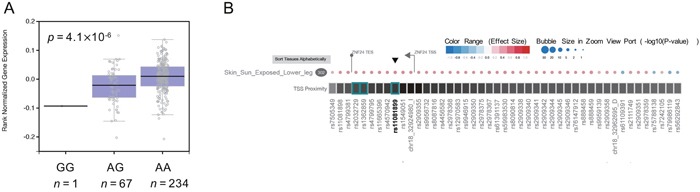
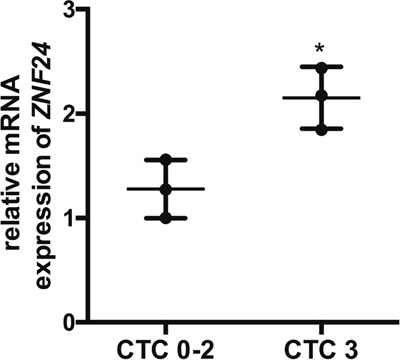
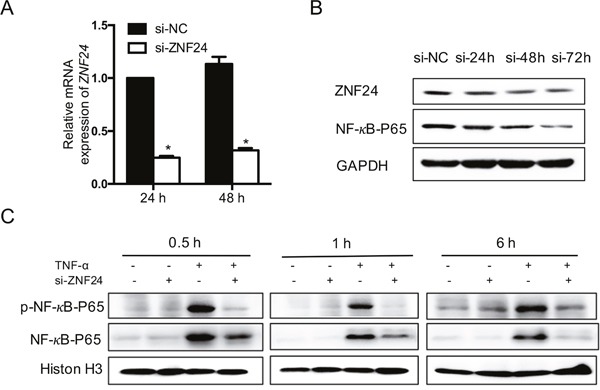
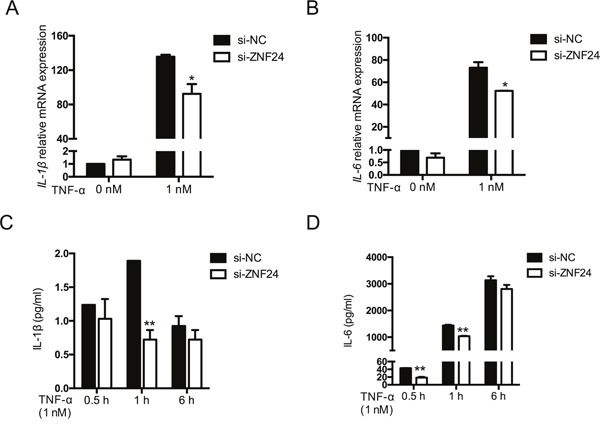
The aim of this study was to investigate the association between the susceptibility of severe oral mucositis (OM) in Chinese nasopharyngeal carcinoma (NPC) patients treated with radiotherapy and single nucleotide polymorphisms (SNPs) across the whole genome. SNPs were screened in a total of 24 patients with NPC and an additional 6 were subjected to mRNA expression analysis. Patients were subdivided into CTC 0-2 (CTC toxicity grade 0, 1, and 2) and CTC 3+ (CTC toxicity grade 3 and above) groups according to their CTC (common toxicity criteria) scores. The GTEx dataset was used to performed eQTL analyses and in-vitro functional assays were performed for eQTL-associated genes. Our data identified 7 functional SNPs associated with the development of OM. We observed that rs11081899-A, located in the 5'-UTR of the ZNF24 gene, was significantly correlated with a higher risk of severe mucositis (OR = 14.631, 95% CI = 2.61-105.46, p = 1.2 × 10⁻⁴), and positively associated with ZNF24 mRNA expression (p = 4.1 × 10⁻⁶) from GTEx dataset. In addition, high ZNF24 mRNA expression was associated with severe OM in patients with NPC (p = 0.02). Further functional assays revealed that ZNF24 knockdown reduced p65 expression and suppressed TNF-α-induced NF-κB activation and pro-inflammatory cytokines release. These findings suggested that rs11081899-A may be a genetic susceptibility factor for radiation-induced OM in patients with NPC, although its value in clinical application needs to be further verified in a large cohort. Also, we suggested that downregulation of ZNF24 may attenuate the development of mucositis by suppressing NF-κB activation.
Keywords: ZNF24; genetic polymorphism; nasopharyngeal carcinoma; oral mucositis; radiotherapy.
Conflict of interest statement
CONFLICTS OF INTEREST There are no conflicts of interest to declare.
Figures
References
-
- Chang ET, Adami HO. The enigmatic epidemiology of nasopharyngeal carcinoma. Cancer Epidemiol Biomarkers Prev. 2006;15:1765–77. - PubMed
-
- Ou X, Zhou X, Shi Q, Xing X, Yang Y, Xu T, Shen C, Wang X, He X, Kong L, Ying H, Hu C. Treatment outcomes and late toxicities of 869 patients with nasopharyngeal carcinoma treated with definitive intensity modulated radiation therapy: new insight into the value of total dose of cisplatin and radiation boost. Oncotarget. 2015;6:38381–97. doi: 10.18632/oncotarget.5420. - DOI - PMC - PubMed
-
- Zhao C, Xiao WW, Han F, Lu LX, Wu SX, Chen JZ, Lin CG, Huang SM, Deng XW, Lu TX, Cui NJ. Long-term outcome and prognostic factors of patients with nasopharyngeal carcinoma treated with intensity-modulated radiation therapy. Chin J Radiat Oncol. 2010;19:191–196.
-
- Sun X, Su S, Chen C, Han F, Zhao C, Xiao W, Deng X, Huang S, Lin C, Lu T. Long-term outcomes of intensity- modulated radiotherapy for 868 patients with nasopharyngeal carcinoma: an analysis of survival and treatment toxicities. Radiother Oncol. 2014;110:398–403. - PubMed
-
- Chua ML, Wee JT, Hui EP, Chan AT. Nasopharyngeal carcinoma. Lancet. 2016;387:1012–24. - PubMed
LinkOut - more resources
Full Text Sources
Other Literature Sources