. 2017 Dec 1;313(6):H1168-H1179.
doi: 10.1152/ajpheart.00296.2017. Epub 2017 Sep 29.

Role of myeloperoxidase in abdominal aortic aneurysm formation: mitigation by taurine

Affiliations

Role of myeloperoxidase in abdominal aortic aneurysm formation: mitigation by taurine

Ha Won Kim et al. Am J Physiol Heart Circ Physiol. .

Abstract

Oxidative stress plays a fundamental role in abdominal aortic aneurysm (AAA) formation. Activated polymorphonuclear leukocytes (or neutrophils) are associated with AAA and express myeloperoxidase (MPO), which promotes inflammation, matrix degradation, and other pathological features of AAA, including enhanced oxidative stress through generation of reactive oxygen species. Both plasma and aortic MPO levels are elevated in patients with AAA, but the role of MPO in AAA pathogenesis has, heretofore, never been investigated. Here, we show that MPO gene deletion attenuates AAA formation in two animal models: ANG II infusion in apolipoprotein E-deficient mice and elastase perfusion in C57BL/6 mice. Oral administration of taurine [1% or 4% (wt/vol) in drinking water], an amino acid known to react rapidly with MPO-generated oxidants like hypochlorous acid, also prevented AAA formation in the ANG II and elastase models as well as the CaCl2 application model of AAA formation while reducing aortic peroxidase activity and aortic protein-bound dityrosine levels, an oxidative cross link formed by MPO. Both MPO gene deletion and taurine supplementation blunted aortic macrophage accumulation, elastin fragmentation, and matrix metalloproteinase activation, key features of AAA pathogenesis. Moreover, MPO gene deletion and taurine administration significantly attenuated the induction of serum amyloid A, which promotes ANG II-induced AAAs. These data implicate MPO in AAA pathogenesis and suggest that studies exploring whether taurine can serve as a potential therapeutic for the prevention or treatment of AAA in patients merit consideration.NEW & NOTEWORTHY Neutrophils are abundant in abdominal aortic aneurysm (AAA), and myeloperoxidase (MPO), prominently expressed in neutrophils, is associated with AAA in humans. This study demonstrates that MPO gene deletion or supplementation with the natural product taurine, which can scavenge MPO-generated oxidants, can prevent AAA formation, suggesting an attractive potential therapeutic strategy for AAA.

Keywords: abdominal aortic aneurysm; angiotensin II; calcium chloride; elastase; myeloperoxidase; taurine.


Figures

Fig. 1.
Fig. 1.
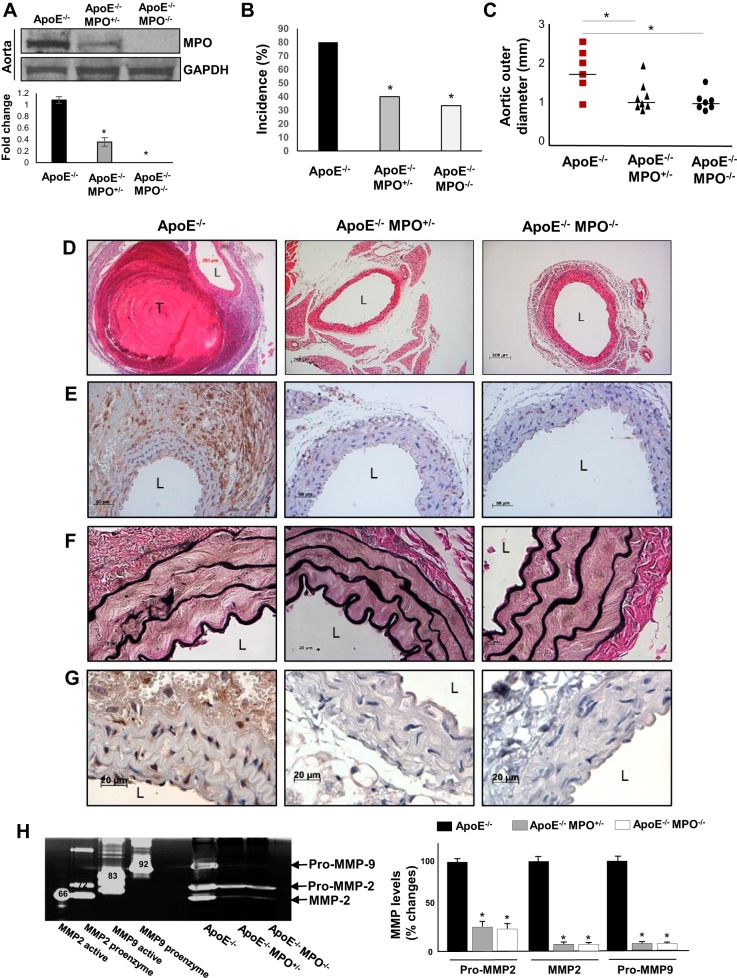
Characterization of ANG II-induced abdominal aortic aneurysms (AAA) in apolipoprotein E (ApoE)-deficient (ApoE−/−) mice versus ApoE/myeloperoxidase (MPO) double-knockout mice. A: MPO protein expression levels in ApoE−/−, ApoE−/−MPO+/−, and ApoE−/−MPO−/− mice, as examined by Western blot analysis. *P < 0.01 vs. wild-type (WT) mice (n = 3). B and C: AAA incidence (B) and mean aortic outer diameter (C) in ApoE−/−, ApoE−/−MPO+/−, and ApoE−/−MPO−/− mice infused with ANG II. *P < 0.05 vs. ApoE−/− control mice (n = 10). Representative histology demonstrated thrombus formation (D; hematoxylin and eosin staining), macrophage accumulation (E; Mac-3 staining), elastin fragmentation (F: Verhoeff van Gieson staining), and MPO immunostaining (G). L, lumen; T, intramural thrombus. H: representative zymogram (left) demonstrating aortic pro-matrix metalloproteinase (MMP)-2, MMP-2, and pro-MMP-9 levels and quantified data (right). Positive controls are shown in the left four lanes of the zymogram; bands denote molecular weights of the respective enzymes. *P < 0.05 vs. ApoE−/− control (n = 3).
Fig. 2.
Fig. 2.
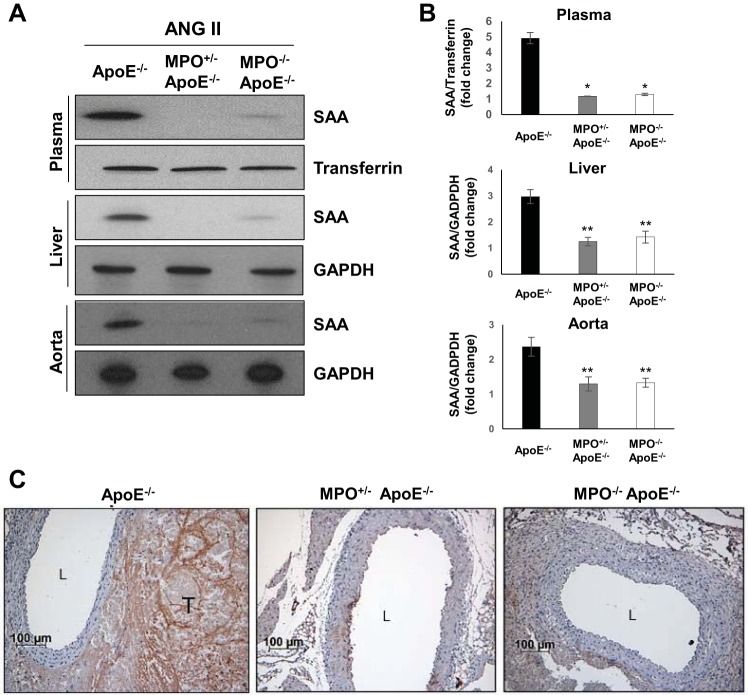
Serum amyloid A (SAA) expression levels in apolipoprotein E-deficient (ApoE−/−) mice versus ApoE/myeloperoxidase (MPO) double-knockout mice infused with ANG II. A: representative Western blot showing SAA protein expression in the plasma, liver, and aorta in ApoE−/−, ApoE−/−/MPO+/−, and ApoE−/−/MPO−/− mice infused with ANG II. Transferrin and GAPDH are shown as loading controls. B: densitometric analysis of SAA protein expression. *P < 0.01 and **P < 0.05 vs. wild-type control mice (n = 3). C: representative images of aortic SAA immunostaining in ApoE−/−, ApoE−/−/MPO+/−, and ApoE−/−/MPO−/− mice infused with ANG II. L, lumen; T, intramural thrombus.
Fig. 3.
Fig. 3.
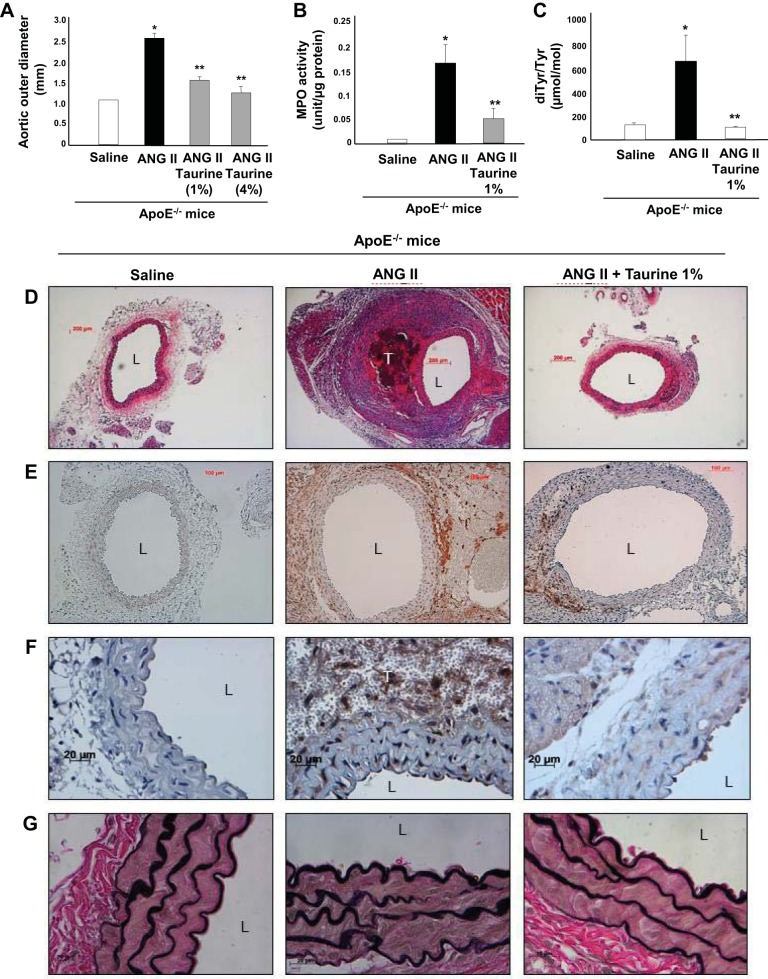
Effects of taurine supplementation on ANG II-induced abdominal aortic aneurysm formation in apolipoprotein E-deficient (ApoE−/−) mice. A−C: effects of taurine [1% or 4% (wt/vol) in drinking water] on mean outer aortic diameter (A), myeloperoxidase (MPO) activity (B), and dityrosine (diTyr) levels (C). *P < 0.05 vs. saline control; **P < 0.05 vs. ANG II (n = 12). D−G: representative histology demonstrating thrombus formation (D; hematoxylin and eosin staining), macrophage infiltration (E; Mac-3 staining), MPO accumulation (F), and elastin degradation (G; Verhoeff van Gieson staining). L, lumen; T, intramural thrombus.
Fig. 4.
Fig. 4.
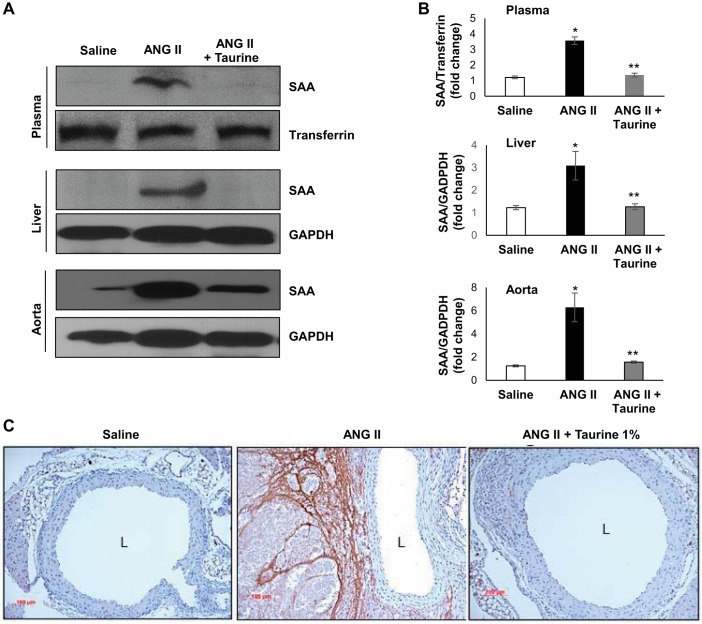
Serum amyloid A (SAA) expression levels in apolipoprotein E-deficient (ApoE−/−) mice treated with or without taurine and infused with ANG II. A: representative Western blot demonstrating effects of ANG II with and without taurine supplementation on SAA protein expression in the plasma, liver, and aorta. Transferrin and GAPDH are shown as loading controls. B: densitometric analysis of SAA protein expression. *P < 0.01 vs. saline; **P < 0.01 vs. ANG II (n = 3). C: representative images of aortic SAA immunostaining in mice treated with or without taurine supplementation. L, lumen.
Fig. 5.
Fig. 5.
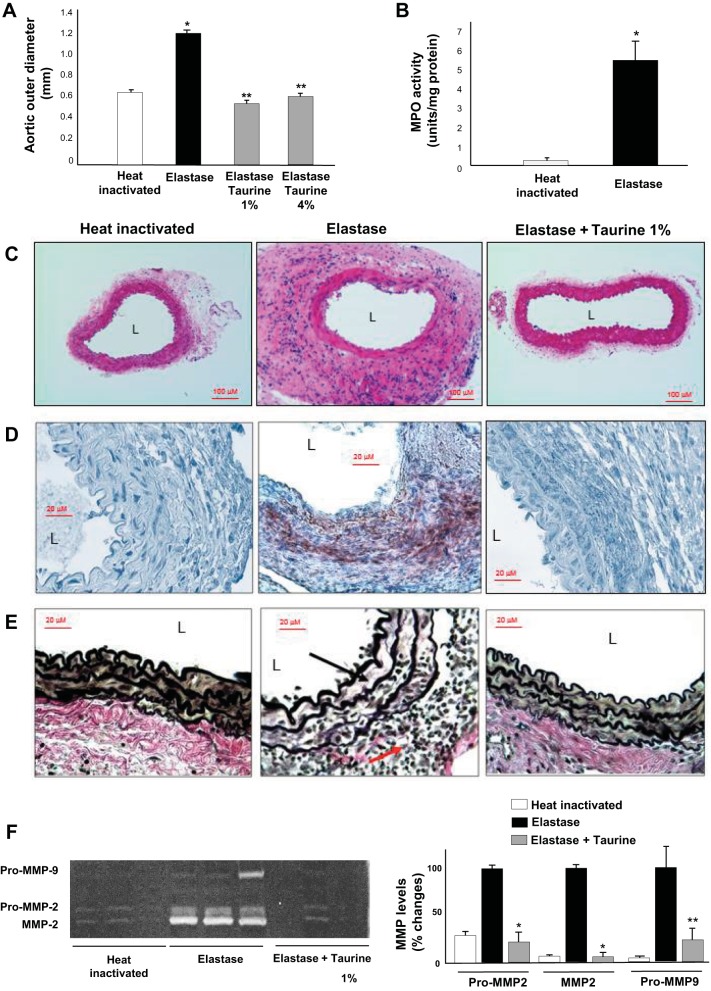
Effects of taurine supplementation on elastase-induced abdominal aortic aneurysms. A: myeloperoxidase (MPO) activity in aortic segments from mice infused with native or heat-inactivated elastase. B: mean outer aortic diameters in elastase-induced abdominal aortic aneurysm mice with or without taurine supplementation [1% or 4% (wt/vol)] in drinking water. *P < 0.05 vs. heat-inactivated control; **P < 0.05 vs. elastase (n = 8). C: representative hematoxylin and eosin staining in aortic tissues from mice infused native or heat-inactivated elastase or elastase with taurine [1% (wt/vol)] supplementation. D: representative Mac-3 macrophage immunostaining in aortic tissues. E: representative Verhoeff van Gieson elastin staining in aortic segments. Black arrow indicates elastin; red arrow indicates inflammatory cells. F: representative zymogram (left) demonstrating aortic pro-matrix metalloproteinase (MMP)-2, MMP-2, and pro-MMP-9 levels and quantified data (right). L, lumen. *P < 0.01 and **P < 0.05 vs. elastase (n = 3).
Fig. 6.
Fig. 6.
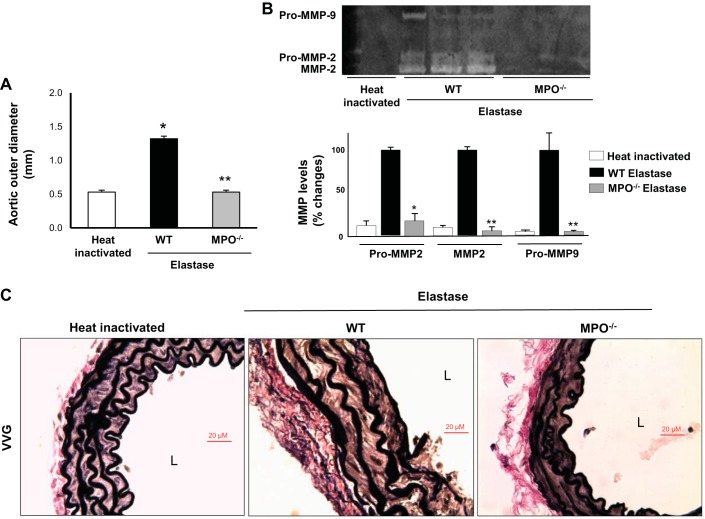
Characterization of elastase-induced abdominal aortic aneurysms in wild-type (WT) mice versus myeloperoxidase (MPO)−/− mice. A: mean outer aortic diameter after elastase infusion in WT mice and MPO−/− mice. *P < 0.05 vs. heat-inactivated control; **P < 0.05 vs. elastase-infused WT (n = 8). B: representative zymogram (top) of pro-matrix metalloproteinase (MMP)-2, MMP-2, and pro-MMP-9 levels and quantified data (bottom). *P < 0.05 and **P < 0.01 vs. elastase (n = 3). C: Verhoeff van Gieson (VVG) elastin staining in the aortas from WT mice or MPO−/− mice infused with elastase. L, lumen.
Fig. 7.
Fig. 7.
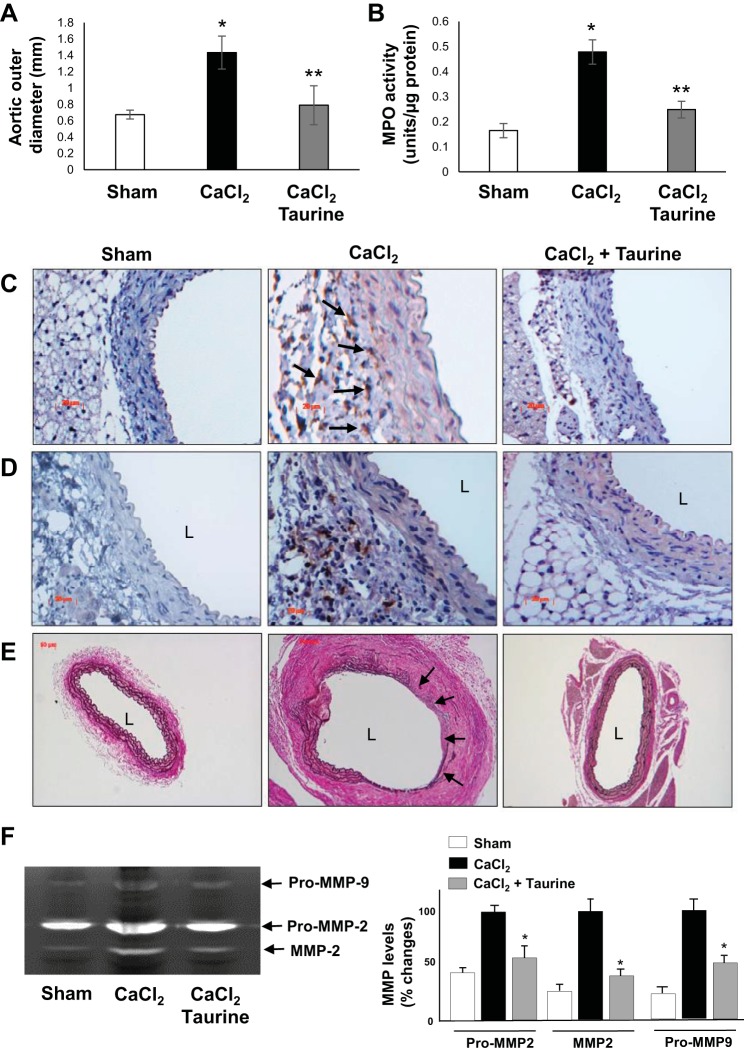
Effects of taurine on CaCl2-induced abdominal aortic aneurysms in wild-type (WT) mice. A and B: effects of taurine on mean outer aortic diameter (A) and myeloperoxidase (MPO) activity (B). *P < 0.05 vs. sham control; **P < 0.05 vs. CaCl2-treated WT mice (A: n = 10, B: n = 3). C−E: representative histology demonstrating elastin degradation (C; Verhoeff van Gieson staining), macrophage infiltration (D; Mac-3 staining), and MPO accumulation (E). Black arrows indicate macrophages (C) and elastin degradation (E). L, lumen. F: representative zymogram (left) of pro-matrix metalloproteinase (MMP)-2, MMP-2, and pro-MMP-9 levels as well as quantified data (right). *P < 0.05 vs. CaCl2 (n = 3).

References

    1. Brennan ML, Wu W, Fu X, Shen Z, Song W, Frost H, Vadseth C, Narine L, Lenkiewicz E, Borchers MT, Lusis AJ, Lee JJ, Lee NA, Abu-Soud HM, Ischiropoulos H, Hazen SL. A tale of two controversies: defining both the role of peroxidases in nitrotyrosine formation in vivo using eosinophil peroxidase and myeloperoxidase-deficient mice, and the nature of peroxidase-generated reactive nitrogen species. J Biol Chem 277: 17,415–17,427, 2002. doi:10.1074/jbc.M112400200. - DOI - PubMed
    1. Brennan ML, Penn MS, Van Lente F, Nambi V, Shishehbor MH, Aviles RJ, Goormastic M, Pepoy ML, McErlean ES, Topol EJ, Nissen SE, Hazen SL. Prognostic value of myeloperoxidase in patients with chest pain. N Engl J Med 349: 1595–1604, 2003. doi:10.1056/NEJMoa035003. - DOI - PubMed
    1. Brewster DC, Cronenwett JL, Hallett JW Jr, Johnston KW, Krupski WC, Matsumura JS; Joint Council of the American Association for Vascular Surgery and Society for Vascular Surgery . Guidelines for the treatment of abdominal aortic aneurysms. Report of a subcommittee of the joint council of the American Association for Vascular Surgery and Society for Vascular Surgery. J Vasc Surg 37: 1106–1117, 2003. doi:10.1067/mva.2003.363. - DOI - PubMed
    1. Carr AC, Hawkins CL, Thomas SR, Stocker R, Frei B. Relative reactivities of N-chloramines and hypochlorous acid with human plasma constituents. Free Radic Biol Med 30: 526–536, 2001. doi:10.1016/S0891-5849(00)00495-0. - DOI - PubMed
    1. Eliason JL, Hannawa KK, Ailawadi G, Sinha I, Ford JW, Deogracias MP, Roelofs KJ, Woodrum DT, Ennis TL, Henke PK, Stanley JC, Thompson RW, Upchurch GR Jr. Neutrophil depletion inhibits experimental abdominal aortic aneurysm formation. Circulation 112: 232–240, 2005. doi:10.1161/CIRCULATIONAHA.104.517391. - DOI - PubMed

MeSH terms