


The SLC2A14 gene, encoding the novel glucose/dehydroascorbate transporter GLUT14, is associated with inflammatory bowel disease
- PMID: 28971850
- PMCID: PMC5698836
- DOI: 10.3945/ajcn.116.147603
The SLC2A14 gene, encoding the novel glucose/dehydroascorbate transporter GLUT14, is associated with inflammatory bowel disease
Abstract
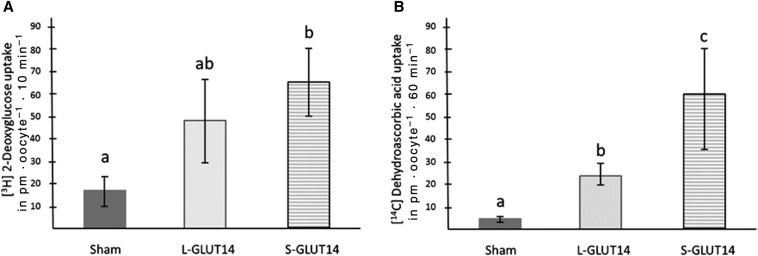
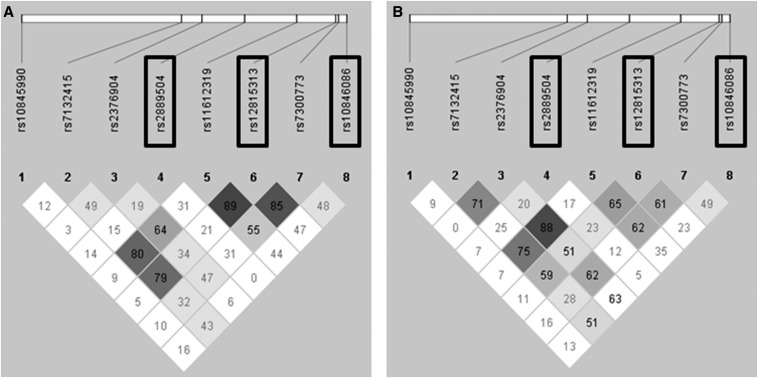
Background: Variations in intestinal antioxidant membrane transporters are implicated in the initiation and progression of inflammatory bowel disease (IBD). Facilitated glucose transporter member 14 (GLUT14), encoded by the solute carrier family 2 member 14 (SLC2A14) gene, is a putative transporter for dehydroascorbic acid and glucose. Although information on the gene is limited, shorter and longer GLUT14 isoforms have been identified. We hypothesized that GLUT14 mediates glucose and dehydroascorbic acid uptake. If this function could be validated, then genetic variations may associate with IBD.Objective: This study aimed to determine the substrate(s) for the GLUT14 protein and interrogated genetic associations of SLC2A14 with IBD.Design: The uptake of radiolabeled substrates into Xenopus laevis oocytes expressing the 2 GLUT14 isoforms was assessed. Examination of gene-targeted genetic association in the Manitoba Inflammatory Bowel Disease Cohort Study was conducted through the genotyping of single nucleotide polymorphisms (SNPs) representing linkage blocks of the SLC2A14 gene.Results: Both GLUT14 isoforms mediated the uptake of dehydroascorbic acid and glucose into X. laevis oocytes. Three alleles in the SLC2A14 gene associated independently with IBD. The odds of having ulcerative colitis (UC) or Crohn disease (CD) were elevated in carriers of the SLC2A14 SNP rs2889504-T allele (OR: 3.60; 95% CI: 1.95, 6.64 and OR: 4.68; 95% CI: 2.78, 8.50, respectively). Similarly, the SNP rs10846086-G allele was associated with an increased risk of both UC and CD (OR: 2.91; 95% CI: 1.49, 5.68 and OR: 3.00; 95% CI: 1.55, 5.78, respectively). Moreover, the SNP rs12815313-T allele associated with increased susceptibility to CD and UC (OR: 2.12; 95% CI: 1.33, 3.36 and OR: 1.61; 95% CI: 1.01, 2.57, respectively).Conclusion: These findings strengthen the hypothesis that genetically determined local dysregulation of dietary vitamin C or antioxidants transport contributes to IBD development. These transporter proteins are targetable by dietary interventions, opening the avenue to a precision intervention for patients of specific genotypes with IBD. This trial was registered at clinicaltrials.gov as NCT03262649.
Keywords: SLC2A14; antioxidants; genetic association; inflammatory bowel disease; vitamin C.
© 2017 American Society for Nutrition.
Figures
Comment in
-
Why might the finding of a new genetic association with inflammatory bowel disease be of potential value in disease control?Am J Clin Nutr. 2017 Dec;106(6):1335-1336. doi: 10.3945/ajcn.117.169623. Epub 2017 Nov 8. Am J Clin Nutr. 2017. PMID: 29117969 Free PMC article. No abstract available.
References
-
- Green C, Elliott L, Beaudoin C, Bernstein CN. A population-based ecologic study of inflammatory bowel disease: searching for etiologic clues. Am J Epidemiol 2006;164:615–23. - PubMed
-
- Hong SN, Park C, Park SJ, Lee CK, Ye BD, Kim YS, Lee S, Chae J, Kim JI, Kim YH. Deep resequencing of 131 Crohn’s disease associated genes in pooled DNA confirmed three reported variants and identified eight novel variants. Gut 2016;65:788–96. - PubMed
-
- Ng SC, Bernstein CN, Vatn MH, Lakatos PL, Loftus EV Jr., Tysk C, O’Morain C, Moum B, Colombel JF. Geographical variability and environmental risk factors in inflammatory bowel disease. Gut 2013;62:630–49. - PubMed
-
- Nørgård BM, Larsen PV, Fedder J, De Silva PS, Larsen MD, Friedman S. Live birth and adverse birth outcomes in women with ulcerative colitis and Crohn’s disease receiving assisted reproduction: a 20-year nationwide cohort study. Gut 2016;65:767–76. - PubMed
-
- Canadian Digestive Health Foundation. Statistics [Internet]. [cited 2017 Aug 8]. Available from: http://www.cdhf.ca/en/statistics.
MeSH terms
Substances
Associated data
LinkOut - more resources
Full Text Sources
Other Literature Sources
Medical
Molecular Biology Databases
