


Zika beyond the Americas: Travelers as sentinels of Zika virus transmission. A GeoSentinel analysis, 2012 to 2016
- PMID: 28973011
- PMCID: PMC5626466
- DOI: 10.1371/journal.pone.0185689
Zika beyond the Americas: Travelers as sentinels of Zika virus transmission. A GeoSentinel analysis, 2012 to 2016
Abstract
Background: Zika virus (ZIKV) was first isolated in Africa; decades later, caused large outbreaks in the Pacific, and is considered endemic in Asia. We aim to describe ZIKV disease epidemiology outside the Americas, the importance of travelers as sentinels of disease transmission, and discrepancies in travel advisories from major international health organizations.
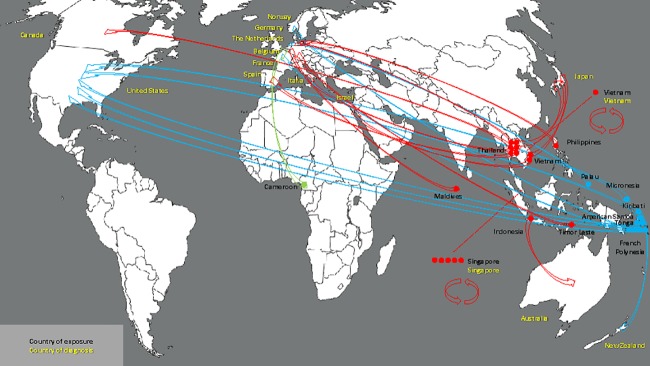
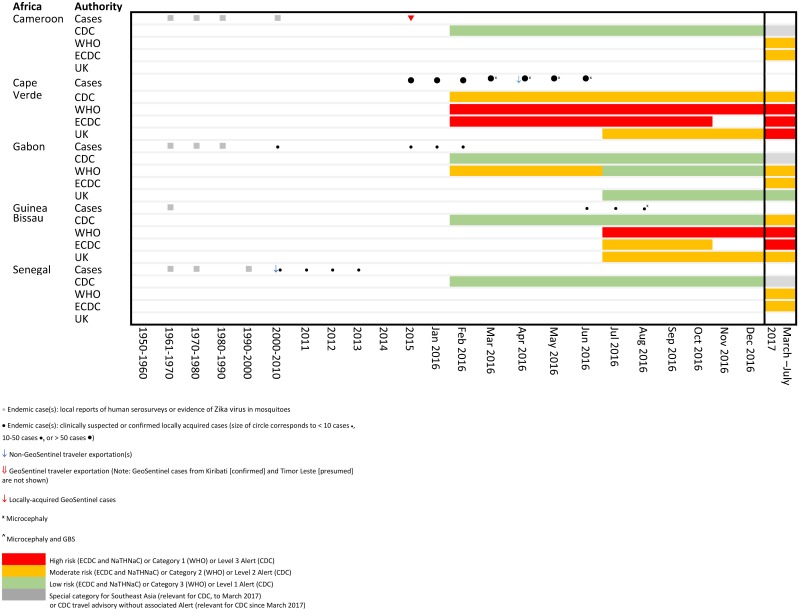
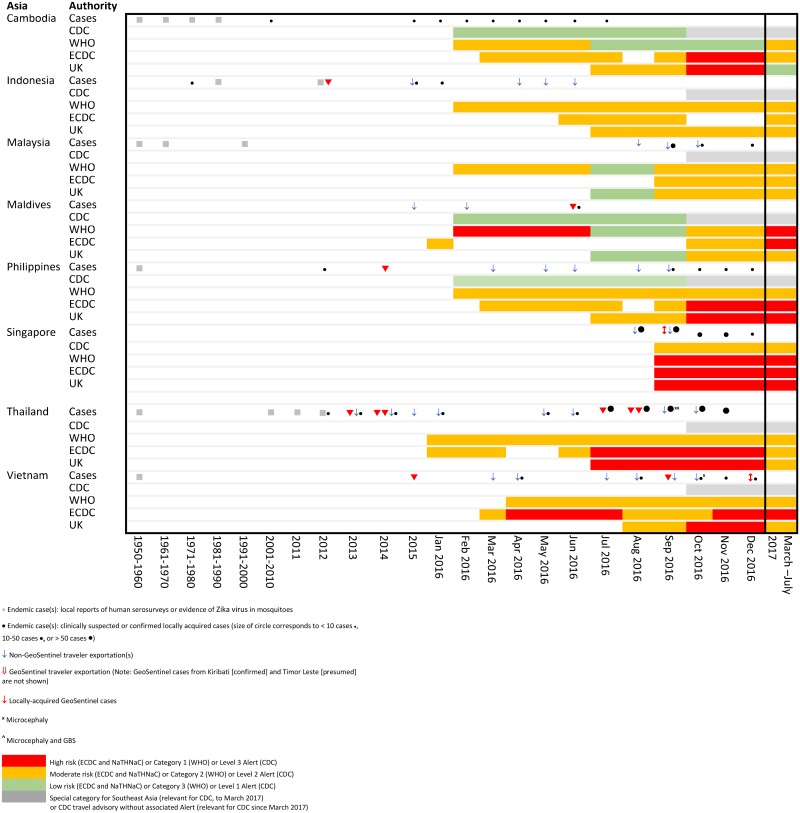
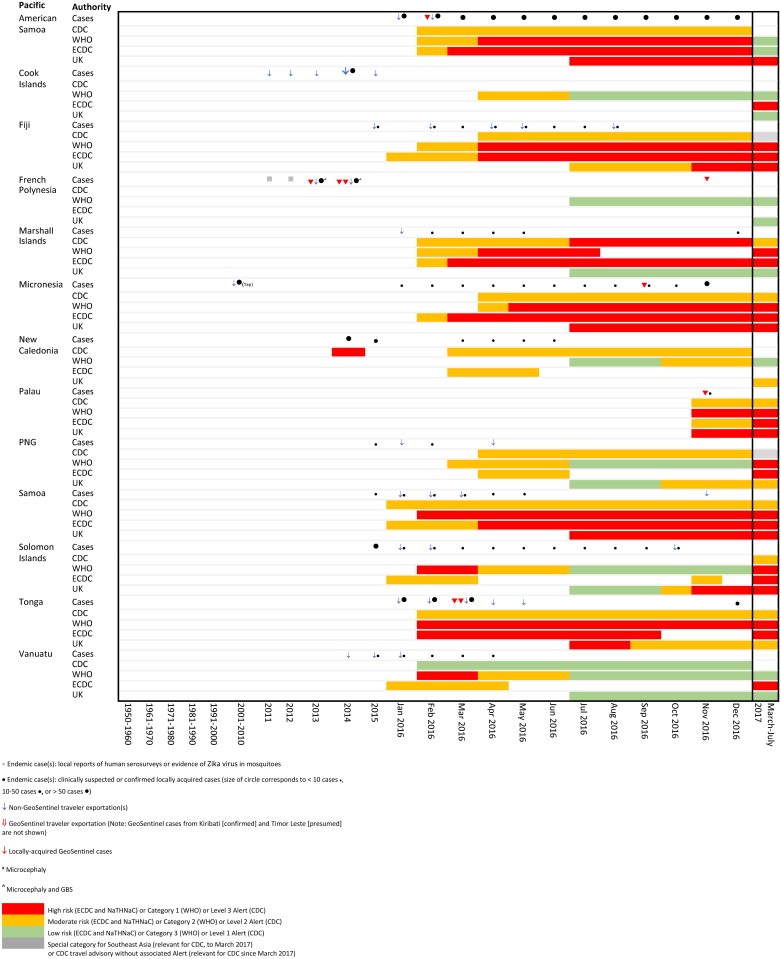
Methods and findings: This descriptive analysis using GeoSentinel Surveillance Network records involves sixty-four travel and tropical medicine clinics in 29 countries. Ill returned travelers with a confirmed or probable diagnosis of ZIKV disease acquired in Africa, Asia and the Pacific seen between 1 January 2012 and 31 December 2016 are included, and the frequencies of demographic, trip, and diagnostic characteristics described. ZIKV was acquired in Asia (18), the Pacific (10) and Africa (1). For five countries (Indonesia, Philippines, Thailand, Vietnam, Cameroon), GeoSentinel patients were sentinel markers of recent Zika activity. Additionally, the first confirmed ZIKV infection acquired in Kiribati was reported to GeoSentinel (2015), and a probable case was reported from Timor Leste (April 2016), representing the only case known to date. Review of Zika situation updates from major international health authorities for country risk classifications shows heterogeneity in ZIKV country travel advisories.
Conclusions: Travelers are integral to the global spread of ZIKV, serving as sentinel markers of disease activity. Although GeoSentinel data are collected by specialized clinics and do not capture all imported cases, we show that surveillance of imported infections by returned travelers augments local surveillance system data regarding ZIKV epidemiology and can assist with risk categorization by international authorities. However, travel advisories are variable due to risk uncertainties.
Conflict of interest statement
Figures
References
-
- WHO: Fifth meeting of the Emergency Committee under the International Health Regulations (2005) regarding microcephaly, other neurological disorders and Zika virus [cited 2016 30 Nov]. http://www.who.int/mediacentre/news/statements/2016/zika-fifth-ec/en/.
-
- Hamer DH, Barbre KA, Chen LH, Grobusch MP, Schlagenhauf P, Goorhuis A, et al. Travel-Associated Zika Virus Disease Acquired in the Americas Through February 2016: A GeoSentinel Analysis. Annals of internal medicine. 2016;November 22 . - PubMed
-
- Petersen LR, Jamieson DJ, Powers AM, Honein MA. Zika Virus. The New England journal of medicine. 2016;374(16):1552–63. doi: 10.1056/NEJMra1602113 . - DOI - PubMed
-
- Dick GW, Kitchen SF, Haddow AJ. Zika virus. I. Isolations and serological specificity. Transactions of the Royal Society of Tropical Medicine and Hygiene. 1952;46(5):509–20. . - PubMed
-
- Hayes EB. Zika virus outside Africa. Emerging infectious diseases. 2009;15(9):1347–50. doi: 10.3201/eid1509.090442 . - DOI - PMC - PubMed
MeSH terms
Grants and funding
LinkOut - more resources
Full Text Sources
Other Literature Sources
Medical
Miscellaneous
