


Protein purification and analysis: next generation Western blotting techniques
- PMID: 28974114
- PMCID: PMC6810642
- DOI: 10.1080/14789450.2017.1388167
Protein purification and analysis: next generation Western blotting techniques
Abstract
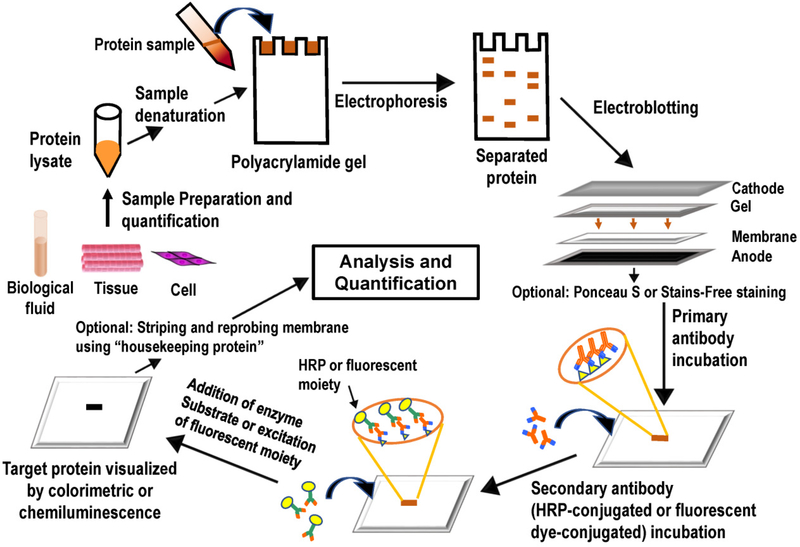
Western blotting is one of the most commonly used techniques in molecular biology and proteomics. Since western blotting is a multistep protocol, variations and errors can occur at any step reducing the reliability and reproducibility of this technique. Recent reports suggest that a few key steps, such as the sample preparation method, the amount and source of primary antibody used, as well as the normalization method utilized, are critical for reproducible western blot results. Areas covered: In this review, improvements in different areas of western blotting, including protein transfer and antibody validation, are summarized. The review discusses the most advanced western blotting techniques available and highlights the relationship between next generation western blotting techniques and its clinical relevance. Expert commentary: Over the last decade significant improvements have been made in creating more sensitive, automated, and advanced techniques by optimizing various aspects of the western blot protocol. New methods such as single cell-resolution western blot, capillary electrophoresis, DigiWest, automated microfluid western blotting and microchip electrophoresis have all been developed to reduce potential problems associated with the western blotting technique. Innovative developments in instrumentation and increased sensitivity for western blots offer novel possibilities for increasing the clinical implications of western blot.
Keywords: Immunoblot; Western blotting; Western blotting techniques; next generation Western blotting; protein purification; protein sample preparation.
Conflict of interest statement
Declaration of interest
A.V. Gomes has received funding from the U.S. National Institutes of Health and the American Heart Association and acted as a beta tester of Bio Rad imagers and analysis software. The authors have no other relevant affiliations or financial involvement with any organization or entity with a financial interest in or financial conflict with the subject matter or materials discussed in the manuscript apart from those disclosed.
Figures
References
-
- He M, Herr AE. Polyacrylamide gel photopatterning enables automated protein immunoblotting in a two-dimensional microdevice. J Am Chem Soc, 2010;132(8), 2512–2513. - PubMed
Publication types
MeSH terms
Substances
Grants and funding
LinkOut - more resources
Full Text Sources
Other Literature Sources
