


Plasma Concentrations of Per- and Polyfluoroalkyl Substances at Baseline and Associations with Glycemic Indicators and Diabetes Incidence among High-Risk Adults in the Diabetes Prevention Program Trial
- PMID: 28974480
- PMCID: PMC5933403
- DOI: 10.1289/EHP1612
Plasma Concentrations of Per- and Polyfluoroalkyl Substances at Baseline and Associations with Glycemic Indicators and Diabetes Incidence among High-Risk Adults in the Diabetes Prevention Program Trial
Abstract
Background: Several per- and polyfluoroalkyl substances (PFAS) are ubiquitous anthropogenic pollutants almost universally detected in humans. Experimental evidence indicates that PFAS alter glucose metabolism and insulin secretion. However, epidemiological studies have yielded inconsistent results.
Objective: We sought to examine associations between plasma PFAS concentrations, glycemic indicators, and diabetes incidence among high-risk adults.
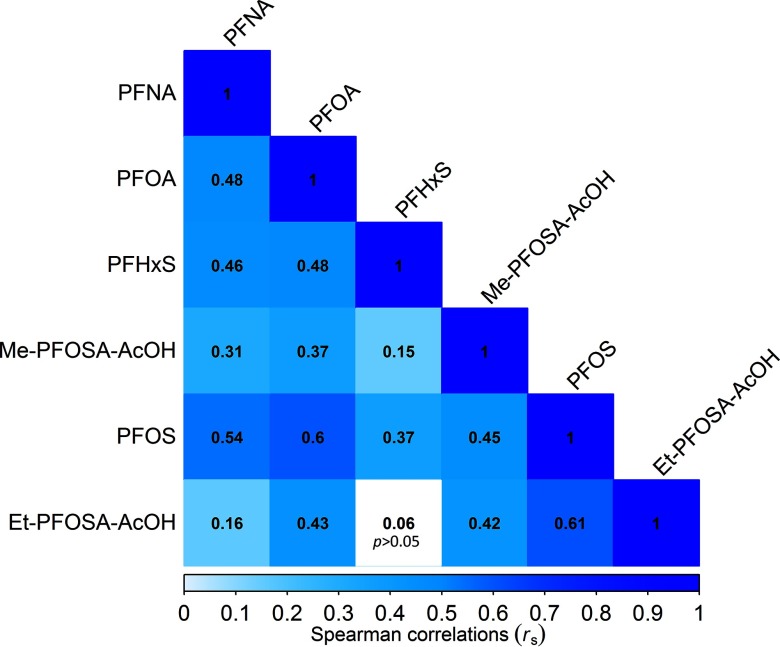
Methods: Within the Diabetes Prevention Program (DPP), a trial for the prevention of type 2 diabetes among high-risk individuals, we quantified baseline plasma concentrations of nine PFAS among 957 participants randomized to a lifestyle intervention or placebo. We evaluated adjusted associations for plasma PFAS concentrations with diabetes incidence and key glycemic indicators measured at baseline and annually over up to 4.6 y.
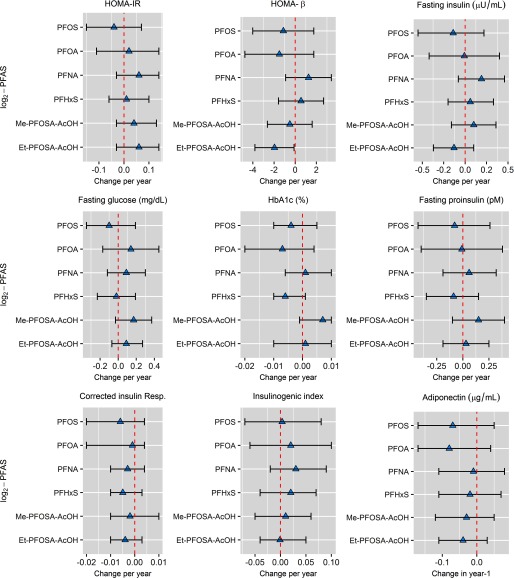
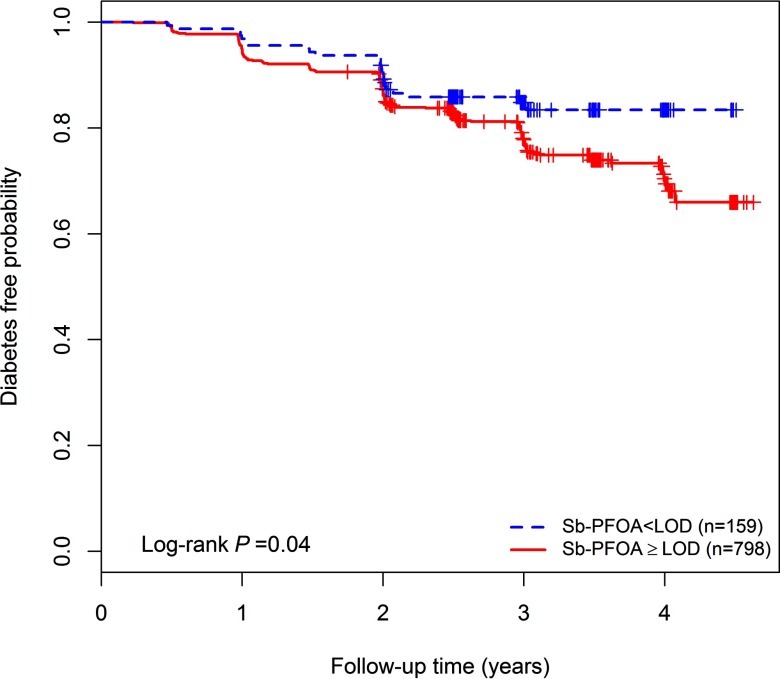
Results: Plasma PFAS concentrations were similar to those reported in the U.S. population in 1999-2000. At baseline, in cross-sectional analysis, a doubling in plasma perfluorooctanesulfonic acid (PFOS) and perfluorooctanoic acid (PFOA) concentrations was associated with higher homeostatic model assessment of insulin resistance (HOMA-IR) [βPFOS=0.39; 95% confidence interval (CI): 0.13, 0.66; βPFOA=0.64; 95% CI: 0.34, 0.94], β-cell function (HOMA-β) (βPFOS=9.62; 95% CI: 1.55, 17.70; βPFOA=15.93; 95% CI: 6.78, 25.08), fasting proinsulin (βPFOS=1.37 pM; 95% CI: 0.50, 2.25; βPFOA=1.71 pM; 95% CI: 0.72, 2.71), and glycated hemoglobin (HbA1c) (βPFOS=0.03%; 95% CI: 0.002, 0.07; βPFOA=0.04%; 95% CI: 0.001, 0.07). There was no strong evidence of associations between plasma PFAS concentrations and diabetes incidence or prospective changes in glycemic indicators during the follow-up period.
Conclusions: At baseline, several PFAS were cross-sectionally associated with small differences in markers of insulin secretion and β-cell function. However, there was limited evidence suggesting that PFAS concentrations are associated with diabetes incidence or changes in glycemic indicators during the follow-up period. https://doi.org/10.1289/EHP1612.
Figures
References
-
- Beesoon S, Webster GM, Shoeib M, Harner T, Benskin JP, Martin JW. 2011. Isomer profiles of perfluorochemicals in matched maternal, cord, and house dust samples: manufacturing sources and transplacental transfer. Environ Health Perspect 119(11):1659–1664, PMID: 21757419, 10.1289/ehp.1003265. - DOI - PMC - PubMed
-
- Benskin JP, De Silva AO, Martin JW. 2010. Isomer profiling of perfluorinated substances as a tool for source tracking: A review of early findings and future applications. In: Reviews of Environmental Contamination and Toxicology, Vol. 208. de Voogt P, ed. New York:Springer, 111–160. - PubMed
Publication types
MeSH terms
Substances
Grants and funding
LinkOut - more resources
Full Text Sources
Other Literature Sources
Medical
Miscellaneous