Recent Updates on Acquired Hepatocerebral Degeneration
- PMID: 28975044
- PMCID: PMC5623760
- DOI: 10.7916/D8TB1K44
Recent Updates on Acquired Hepatocerebral Degeneration
Abstract
Background: Acquired hepatocerebral degeneration (AHD) refers to a chronic neurological syndrome in patients with advanced hepatobiliary diseases. This comprehensive review focuses on the pathomechanism and neuroimaging findings in AHD.
Methods: A PubMed search was performed using the terms "acquired hepatocerebral degeneration," "chronic hepatocerebral degeneration," "Non-Wilsonian hepatocerebral degeneration," "cirrhosis-related parkinsonism," and "manganese and liver disease."
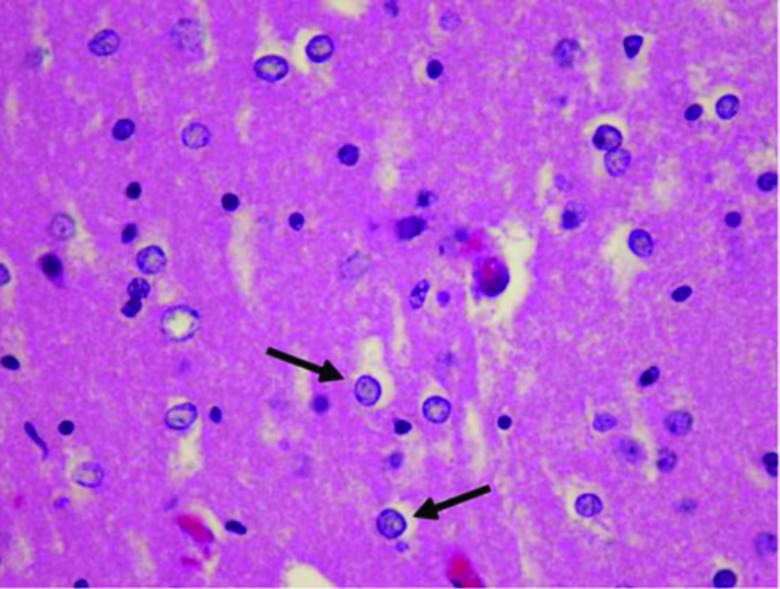
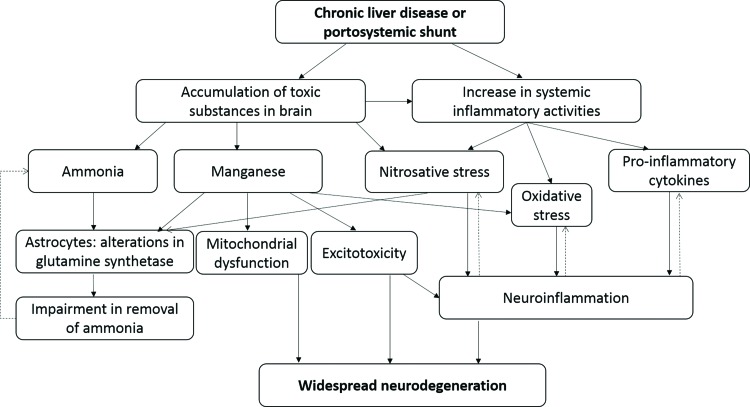
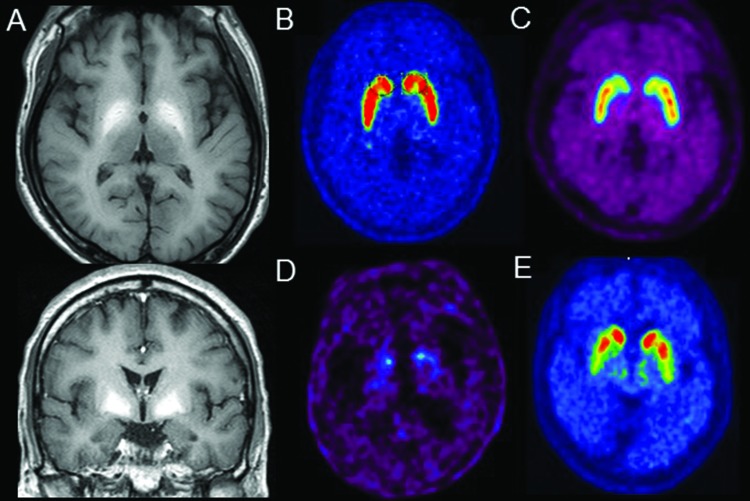
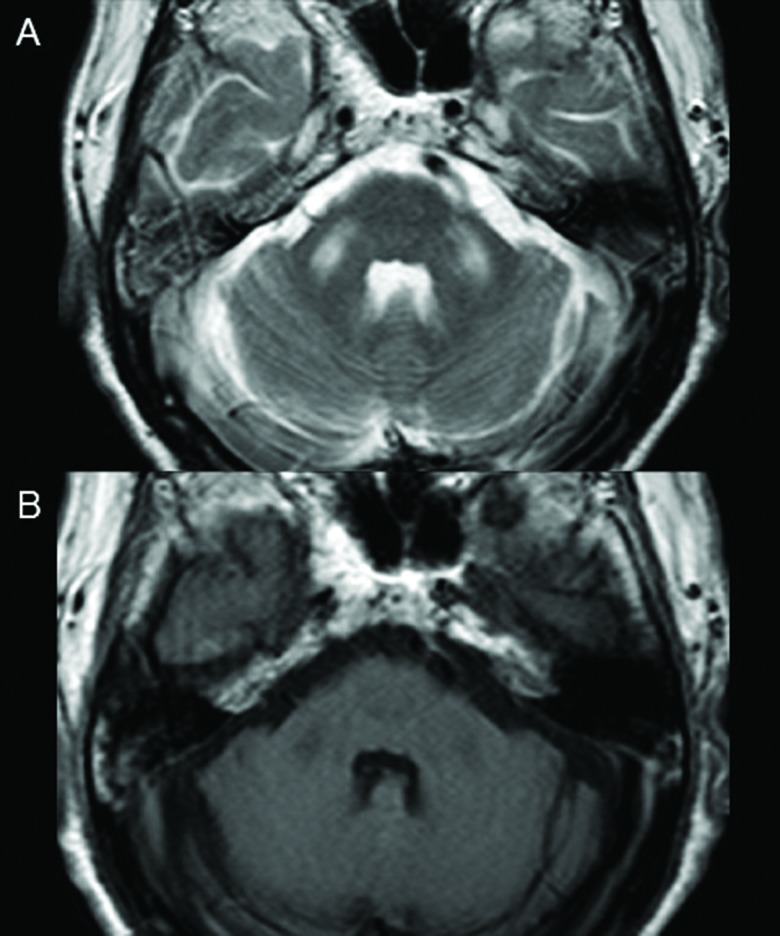
Results: Multiple mechanisms involving the accumulation of toxic substances such as ammonia or manganese and neuroinflammation may lead to widespread neurodegeneration in AHD. Clinical characteristics include movement disorders, mainly parkinsonism and ataxia-plus syndrome, as well as cognitive impairment with psychiatric features. Neuroimaging studies of AHD with parkinsonism show hyperintensity in the bilateral globus pallidus on T1-weighted magnetic resonance images, whereas molecular imaging of the presynaptic dopaminergic system shows variable findings. Ataxia-plus syndrome in AHD may demonstrate high-signal lesions in the middle cerebellar peduncles on T2-weighted images.
Discussion: Future studies are needed to elucidate the exact pathomechanism and neuroimaging findings of this heterogeneous syndrome.
Keywords: Acquired hepatocerebral degeneration; dopamine transporter imaging; liver cirrhosis; manganese; neuroinflammation; parkinsonism.
Conflict of interest statement
Funding: This study was supported by a grant from Research year of Inje University in 20150606. Conflicts of interest: The authors report no conflict of interest. Ethics Statement: All patients that appear on video have provided written informed consent; authorization for the videotaping and publication of the videotape was provided.
Figures
References
-
- Victor M, Adams RD, Cole M. The acquired (non-Wilsonian) type of chronic hepatocerebral degeneration. Medicine (Baltimore) 1965;44:345–396. doi: http://dx.doi.org/10.1097/00005792-196509000-00001. - DOI - PubMed
-
- Pinarbasi B, Kalymakoglu S, Matur Z, Akyuz F, Demir K, Besisik F, et al. Are acquired hepatocerebral degeneration and hepatic myelopathy reversible? J Clin Gastroenterol. 2009;43:176–181. doi: http://dx.doi.org/10.1097/MCG.0b013e318150d399. - DOI - PubMed
-
- Fernandez-Rodriguez R, Contreras A, de Villoria JG, Grandas F. Acquired hepatocerebral degeneration: clinical characteristics and MRI findings. Eur J Neurol. 2010;17:1463–1470. doi: http://dx.doi.org/10.1111/j.1468-1331.2010.03076.x. - DOI - PubMed
-
- Qavi AH, Hammad S, Rana AI, Salih M, Shah NH, Dar FS, et al. Reversal of acquired hepatocerebral degeneration with living donor liver transplantation. Liver Transpl. 2016;22:125–129. doi: http://dx.doi.org/10.1002/lt.24306. - DOI - PubMed
-
- Burkhard PR, Delavelle J, Du Pasquier R, Spahr L. Chronic parkinsonism associated with cirrhosis: a distinct subset of acquired hepatocerebral degeneration. Arch Neurol. 2003;60:521–528. doi: http://dx.doi.org/10.1001/archneur.60.4.521. - DOI - PubMed
Publication types
MeSH terms
LinkOut - more resources
Full Text Sources
Medical