


Effects of FOXO3 Polymorphisms on Survival to Extreme Longevity in Four Centenarian Studies
- PMID: 28977569
- PMCID: PMC6175020
- DOI: 10.1093/gerona/glx124
Effects of FOXO3 Polymorphisms on Survival to Extreme Longevity in Four Centenarian Studies
Abstract
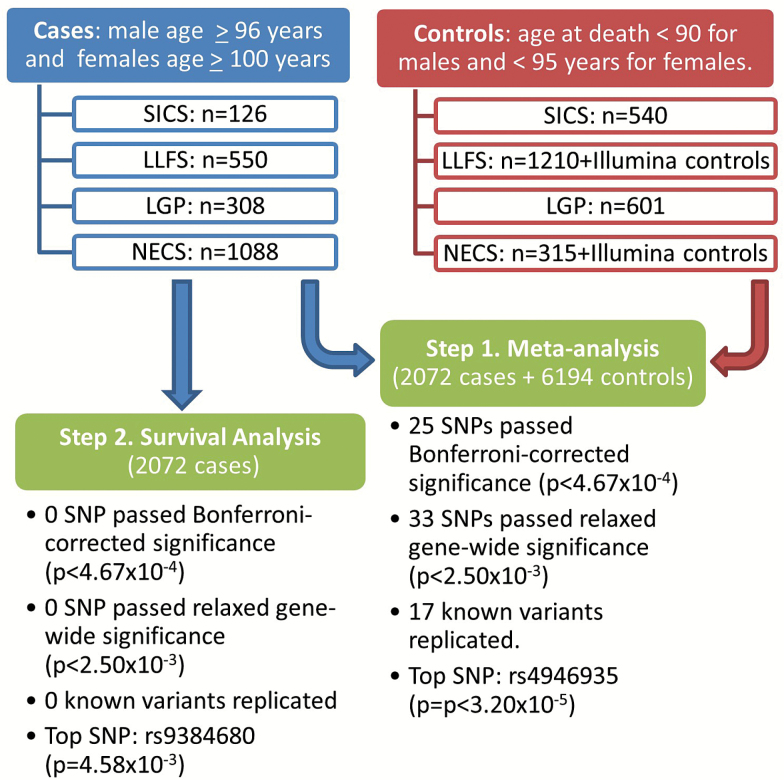
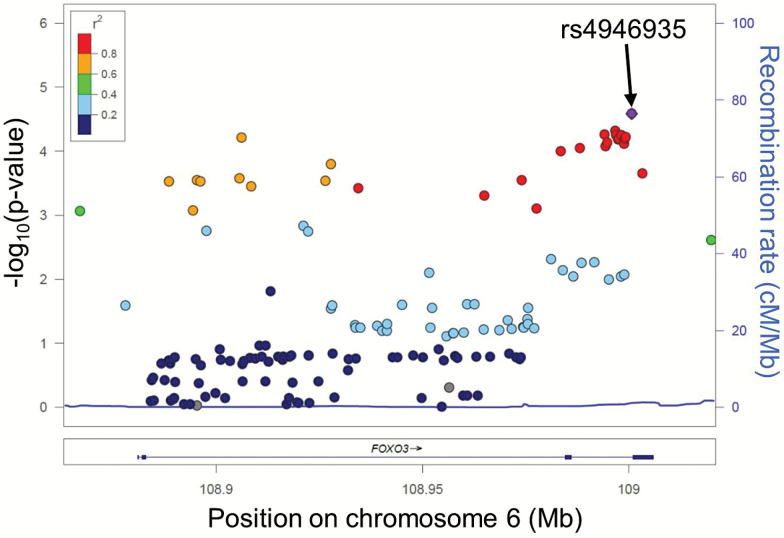
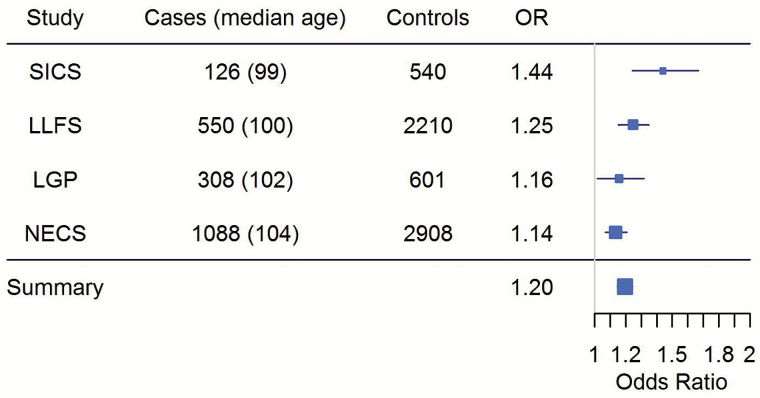
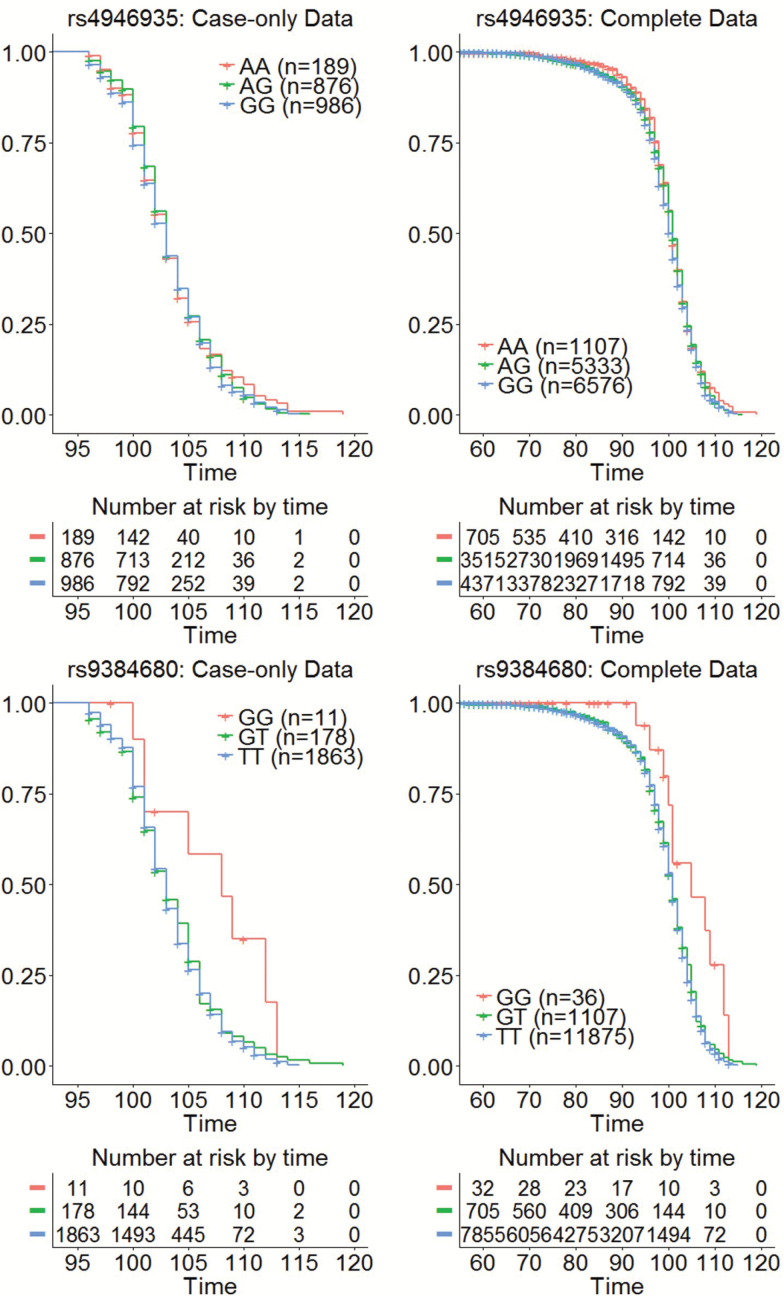
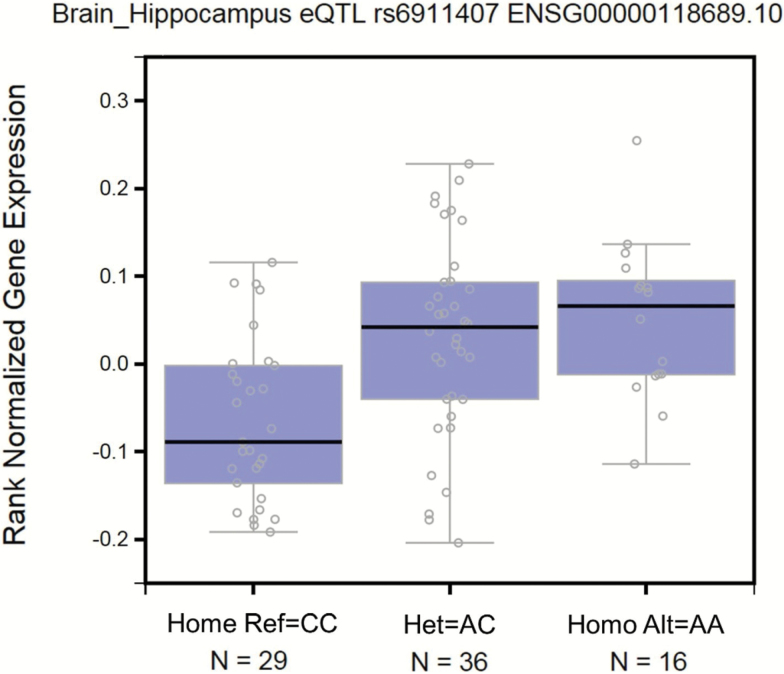
Previous studies note specific FOXO3 single-nucleotide polymorphisms (SNPs) associated with human longevity. However, it is not clear if these SNPs influence mortality risk beyond the oldest 1 percentile of survival. Using data from four longevity studies (total n = 8,266, age range 96-119 years for cases), we tested gene-wide association between 107 SNPs and survival to at least the oldest 1 percentile of survival for the 1900 birth cohort (≥96, white males; ≥100 white females). This analysis replicated 17 previously published variants, several of which are significant expression quantitative trait loci of FOXO3; rs6911407 and rs2253310 have the most significant effect on FOXO3 expressions in brain tissue. We then performed a survival analysis to determine if any of these 107 SNPs impact upon mortality risk beyond the oldest 1 percentile. While none of the 17 published variants was significantly associated with mortality risk beyond this extreme age, an uncommon homozygote genotype of rs9384680 exhibited the strongest association with mortality risk (p = 2.68E-04) in only 11 females, a heretofore unreported association. These analyses replicate the previous association of common variants of FOXO3 with older age but these common variants do not modify risk for mortality at ages beyond the oldest 1 percentile age of survival.
Figures
References
-
- Kenyon C, Chang J, Gensch E, Rudner A, Tabtiang R. A C. elegans mutant that lives twice as long as wild type. Nature. 1993;366:461–464. doi:10.1038/366461a0 - PubMed
-
- Clancy DJ, Gems D, Harshman LG, et al. . Extension of life-span by loss of CHICO, a drosophila insulin receptor substrate protein. Science. 2001;292:104–106. doi:10.1126/science.1057991 - PubMed
-
- Bartke A. Impact of reduced insulin-like growth factor-1/insulin signaling on aging in mammals: novel findings. Aging Cell. 2008;7:285–290. doi:10.1111/j.1474-9726.2008.00387.x - PubMed
Publication types
MeSH terms
Substances
Grants and funding
LinkOut - more resources
Full Text Sources
Other Literature Sources
Research Materials
