. 2017 Jun 21;8(40):67254-67268.
doi: 10.18632/oncotarget.18595. eCollection 2017 Sep 15.

Hyperthermia and associated changes in membrane fluidity potentiate P2X7 activation to promote tumor cell death

Affiliations

Hyperthermia and associated changes in membrane fluidity potentiate P2X7 activation to promote tumor cell death

Paola de Andrade Mello et al. Oncotarget. .

Abstract

Extracellular ATP (eATP) accumulation within the tumor microenvironment (TME) has the potential to activate purinergic signaling. The eATP evoked signaling effects bolster antitumor immune responses while exerting direct cytotoxicity on tumor cells and vascular endothelial cells, mediated at least in part through P2X7 receptors. Approaches to augment purinergic signaling in TME e.g. by ectonucleotidase CD39 blockade, and/or boosting P2X7 functional responses, might be used as immunomodulatory therapies in cancer treatment. In this study, we delineated the translatable strategy of hyperthermia to demonstrate impacts on P2X7 responsiveness to eATP. Hyperthermia (40°C) was noted to enhance eATP-mediated cytotoxicity on MCA38 colon cancer cells. Increased membrane fluidity induced by hyperthermia boosted P2X7 functionality, potentiating pore opening and modulating downstream AKT/PRAS40/mTOR signaling events. When combined with cisplatin or mitomycin C, hyperthermia and eATP together markedly potentiate cancer cell death. Our data indicate that clinically tolerable hyperthermia with modulated P2X7-purinergic signaling will boost efficacy of conventional cancer treatments.

Keywords: cancer therapy; colon cancer; hyperthermia; membrane fluidity; purinergic signaling.


Conflict of interest statement

CONFLICTS OF INTEREST The authors declare no competing or financial interests.

Figures
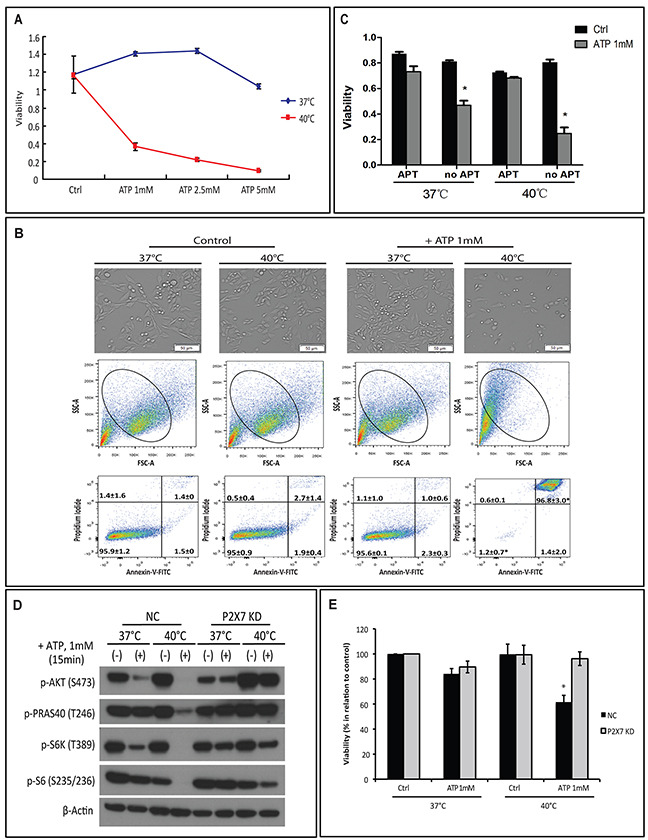
Figure 1
Figure 1. Hyperthermia potentiates ATP cytotoxicity in a P2X7-dependent manner
(A-B) MCA38 wild type (WT) cells were treated with exogenous ATP at indicated concentrations and temperatures for 15 min. Cells treated with media served as control (Ctrl). Cell viability was determined using CCK-8 (A) and images of live cells were captured by Celigo (upper) and cell apoptosis/necrosis was evaluated by FACS (middle and bottom) (B). (C) Cells were left untreated or pre-treated with 2.5 μg/ml of APT102 (soluble ectonucleotidase CD39) for 30 min before exposed to ATP 1 mM for 30 min at indicated temperatures. Cell viability was measured 24 hr later. (D-E) MCA38 P2X7 KD (P2X7-deficient) and NC (negative control) cells were treated with ATP (1 mM for 15 min) at 37°C or 40°C. AKT/PRAS40/mTOR signaling pathway was analyzed by Western blotting (D) and cell viability was evaluated after 24 hr (E). *p < 0.05 as compared to control (one-way ANOVA, followed by Tukey pos-test). Bars, 50 μM.
Figure 2
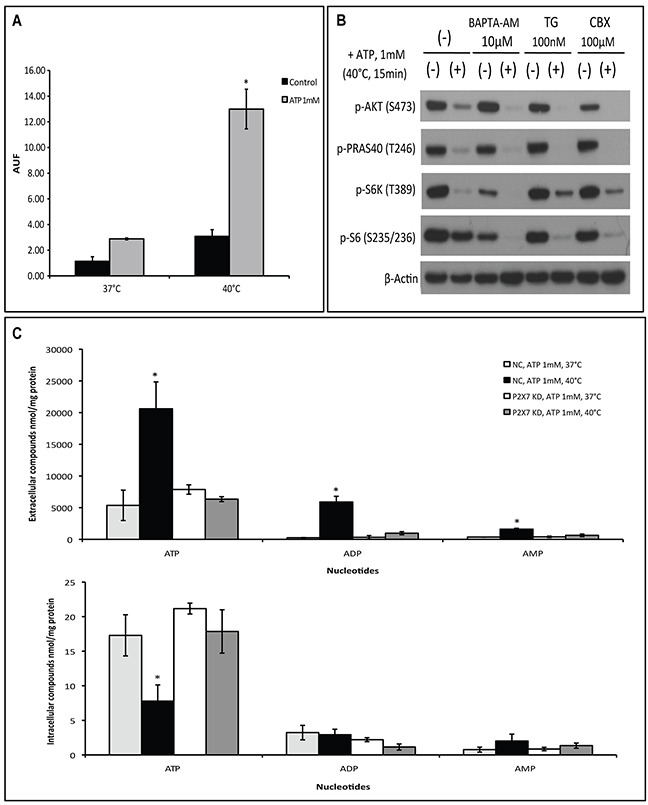
Figure 2. Hyperthermia increases ATP-tumor killing activity by enhancing P2X7 pore formation independently of Ca2+ influx and pannexin/connexin interaction
(A) P2X7 functionality upon ATP/hyperthermia treatment measured by etidium bromide (EtBr) uptake. Cells were left untreated or treated with ATP (1 mM) for 15 min at 37°C or 40°C, followed by whole cell fluorescence measurement (AUF), as described in Material and Methods. (B) Cells were pre-incubated with BAPTA-AM, thapsigargin (TG) or Carbenoxolone (CBX) prior to heat-ATP pulse treatment, followed by western blot analysis of AKT/PRAS40/mTOR signaling pathway. Cells treated with media served as control. (C) NC (negative control) and P2X7 KD (P2X7-deficient) cells were exposed to ATP for 15 min at 37°C or 40°C and extracellular and intracellular adenine nucleotide levels were determined by HPLC. *p < 0.05 in contrast to control (one-way ANOVA, followed by Tukey pos-test, mean ± SD).
Figure 3
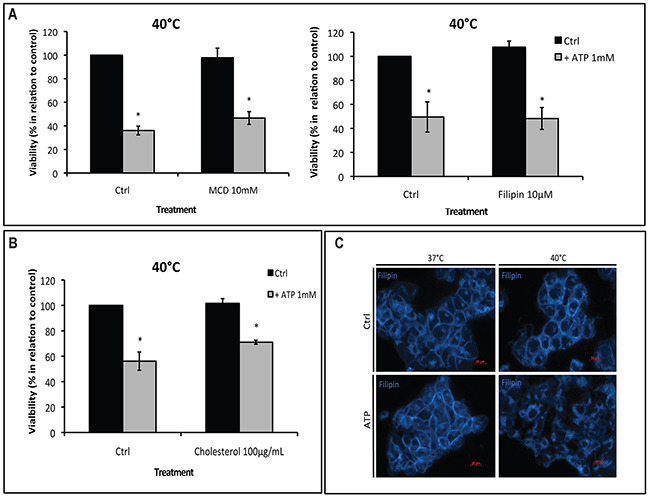
Figure 3. Hyperthermia-increased P2X7 functionality is independent of lipid rafts
(A-B) MCA38 cells were treated with methyl β-cyclodextrin (MCD) (left) or filipin (right) (A) or cholesterol (B), before being pulse treated with ATP (1 mM) for 15 min at 40°C. 24 hr later, cell viability was evaluated. Cells treated with media served as control (Ctrl). (C) Cholesterol staining with filipin showing cholesterol rearrangement at the plasma membrane after treatment with hyperthermia and ATP. *p < 0.05 in contrast with control (two-way ANOVA, followed by Bonferroni pos-test, mean ± SD). Bars, 20 μM.
Figure 4
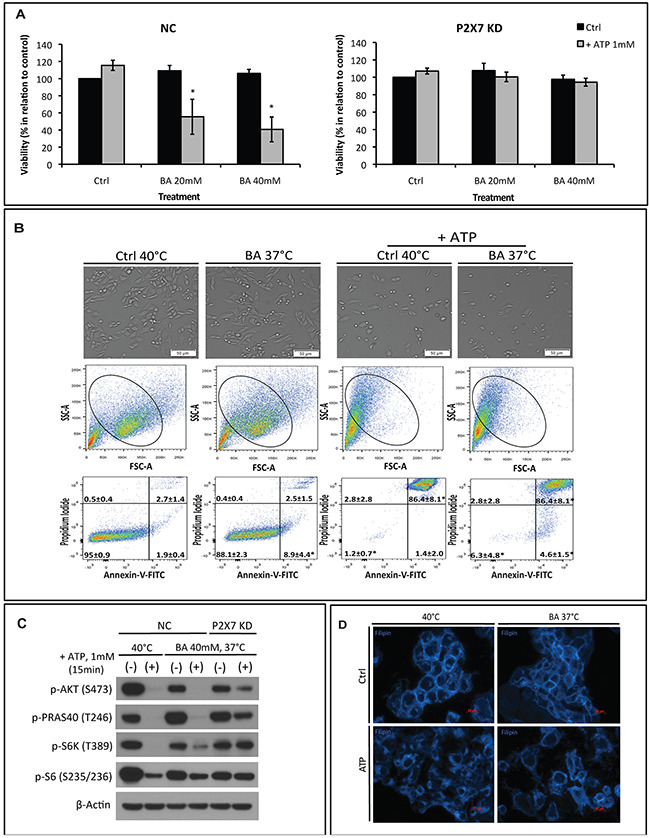
Figure 4. The membrane fluidizer benzyl alcohol (BA) acts similarly as hyperthermia leading to P2X7 hyperactivation at 37°C
NC (negative control) or P2X7 KD (P2X7-deficient) cells were exposed to BA alone or together with ATP for 15 min at 37°C (in order to mimic the heat effect per se) or 40°C. Cells treated with media served as control (Ctrl). (A) Cell viability and (B) images of live cells (upper panel) and FACS analyses of NC cells (middle and bottom panels) were determined. (C) Western blot analysis of AKT/PRAS40/mTOR pathway components was performed immediately after treatment. (D) Re-organization of cholesterol-rich microdomains in co-treated NC cells was visualized using filipin. *p < 0.05 when compared to control (two-way ANOVA, followed by Bonferroni pos-test, mean ± SD). Bars, 50 μM (B) and 20 μM (D).
Figure 5
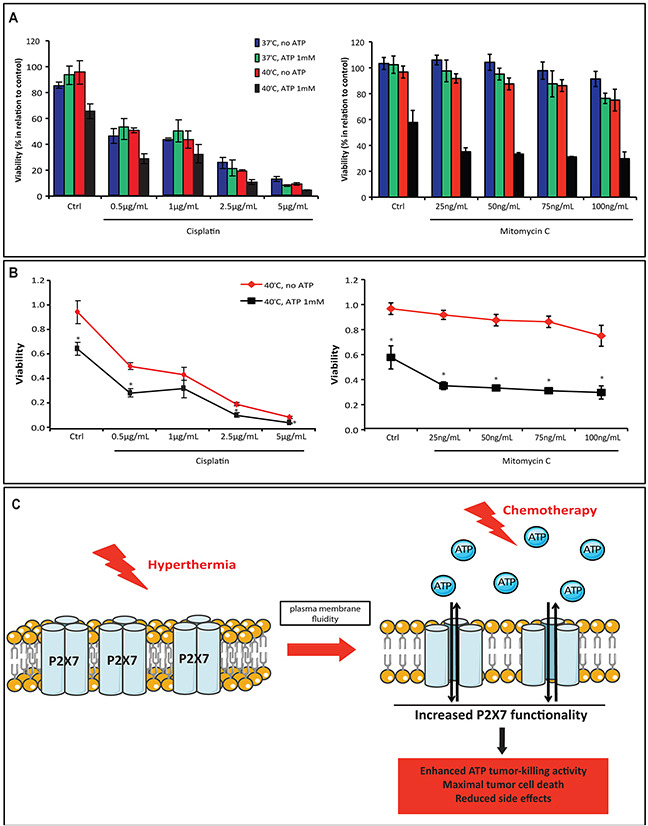
Figure 5. Combination of hyperthermia and ATP with chemotherapy drugs enhances the therapeutic efficacy
(A-B) MCA38 WT cells were left untreated or treated with cisplatin or mitomycin C at the indicated concentrations overnight prior to ATP pulse treatment (ATP 1 mM, 15 min). Cell viability was evaluated after 24 hr. Overall response (A) and drug dose response curve at 40°C (B) were analyzed. (C) Schematic illustration showing the use of hyperthermia with ATP as a new approach to elicit maximal tumor cell death in association with traditional chemotherapy. Hyperthermia, by promoting plasma membrane fluidity, increases P2X7 sensitivity to ATP and therefore enhances ATP tumor-killing activity. The combination of hyperthermia, ATP and conventional chemotherapy would consequently elicit maximal tumor cell death while circumventing side effects of high dose of cytotoxic drugs. *p < 0.05 when compared cells treated with ATP to cells without ATP treatment (two-way ANOVA, followed by Bonferroni pos-test, mean ± SD).

References

    1. Roger S, Jelassi B, Couillin I, Pelegrin P, Besson P, Jiang LH. Understanding the roles of the P2X7 receptor in solid tumour progression and therapeutic perspectives. Biochim Biophys Acta. 2015;1848:2584–602. - PubMed
    1. Mathew R, Karantza-Wadsworth V, White E. Role of autophagy in cancer. Nat Rev Cancer. 2007;7:961–7. - PMC - PubMed
    1. Pellegatti P, Raffaghello L, Bianchi G, Piccardi F, Pistoia V, Di Virgilio F. Increased level of extracellular ATP at tumor sites: in vivo imaging with plasma membrane luciferase. PLoS One. 2008;3:e2599. - PMC - PubMed
    1. Bian S, Sun X, Bai A, Zhang C, Li L, Enjyoji K, Junger WG, Robson SC, Wu Y. P2X7 integrates PI3K/AKT and AMPK-PRAS40-mTOR signaling pathways to mediate tumor cell death. PLoS One. 2013;8:e60184. - PMC - PubMed
    1. Feng L, Tapper EB, Sun X, Gehring M, Robson SC, Wu Y. In: Frontiers in Anti-Cancer Drug Discovery. Atta-ur-Rahman, Iqbal Choudhary M, editors. Bentham Science Publishers; Beijing, China: 2014. Purinegic Modulation and CD39/ENTPD1 in Cancer; pp. 229–292.