


MiR-203a-3p suppresses cell proliferation and metastasis through inhibiting LASP1 in nasopharyngeal carcinoma
- PMID: 28982387
- PMCID: PMC5629759
- DOI: 10.1186/s13046-017-0604-3
MiR-203a-3p suppresses cell proliferation and metastasis through inhibiting LASP1 in nasopharyngeal carcinoma
Abstract
Background: miR-203a-3p was reported as a tumor suppressor and disregulated in many malignancies including nasopharyngeal carcinoma (NPC). However, its function in tumor growth and metastasis in NPC has rarely been reported.
Methods: The expression level of miR-203a-3p in human NPC tissues and cell lines was detected via real-time PCR (RT-PCR). Cell proliferation, migration and invasion were assessed in vitro by MTT, colony formation and transwell assay, respectively. The function of miR-203a-3p in vivo was detected through NPC xenograft tumor growth and lung metastatic mice model. Dual-luciferase reporter assay was used to identify the direct target of miR-203a-3p.
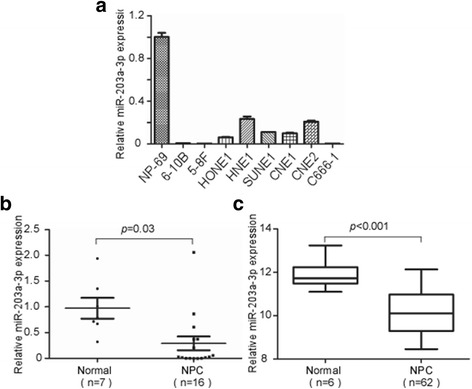
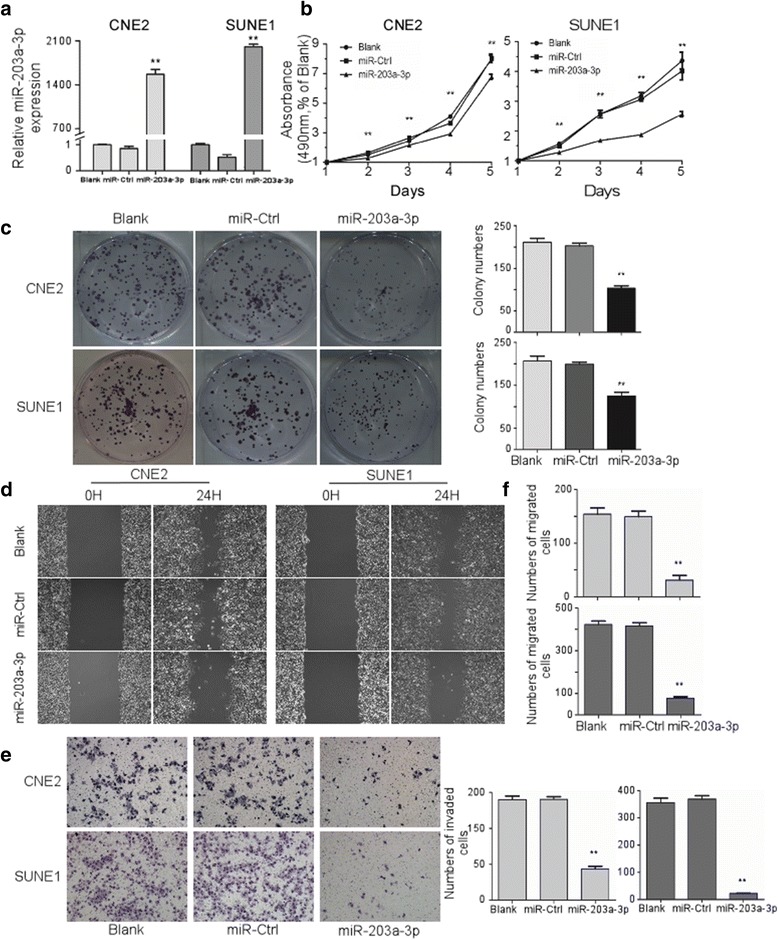
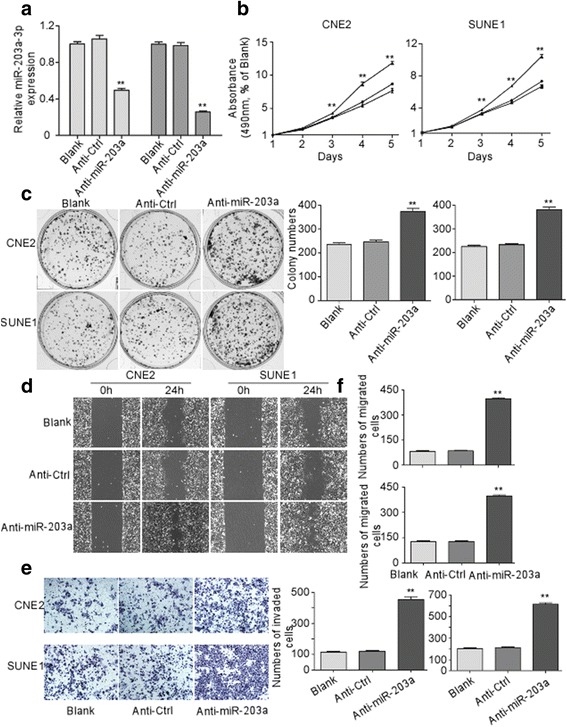
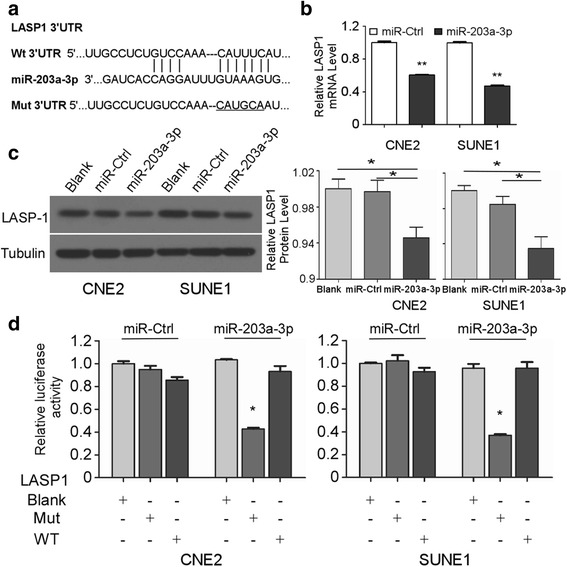
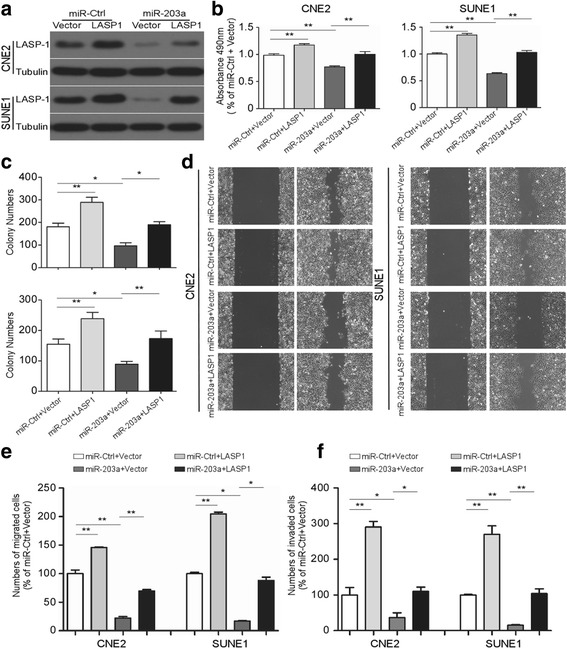
Results: The expression of miR-203a-3p was decreased in NPC tissues and cell lines in comparison with normal nasopharyngeal tissues and cell line. Ectopic expression of miR-203a-3p inhibited while inhibiting miR-203a-3p expression increased NPC cell proliferation, migration and invasion in vitro. MR-203a-3p overexpression suppressed xenograft tumor growth and lung metastasis in vivo. LASP1 was identified as a direct target of miR-203a-3p, which was confirmed by real-time PCR and western blotting assay. Ectopic expression of LASP1 partially reversed miR-203a-3p-mediated inhibition on proliferation, migration and invasion in NPC cells.
Conclusion: Collectively, miR-203a-3p suppresses tumor growth and metastasis through targeting LASP1 in NPC. The newly identified miR-203a-3p/LASP1 pathway provides further insights into the initiation and progression of NPC, which may represent a novel therapeutic target for NPC.
Keywords: LASP1; Nasopharyngeal carcinoma; Proliferation; metastasis; miR-203a-3p.
Conflict of interest statement
Ethics approval and consent to participate
All procedures performed in studies involving human participants were in accordance with the ethical standards of the Ethics Committee of the Institutional Ethical Review Board of Jiangsu Cancer Hospital. All patients studied signed an informed consent for participation. All animal procedures and care were conducted in accordance with institutional guidelines and in compliance with national and international laws and policies.
Competing interests
The authors declare that they have no competing interests.
Publisher’s Note
Springer Nature remains neutral with regard to jurisdictional claims in published maps and institutional affiliations.
Figures

References
-
- Lai SZ, Li WF, Chen L, Luo W, Chen YY, Liu LZ, et al. How does intensity-modulated radiotherapy versus conventional two-dimensional radiotherapy influence the treatment results in nasopharyngeal carcinoma patients? Int J Radiat Oncol Biol Phys. 2011;80:661–668. doi: 10.1016/j.ijrobp.2010.03.024. - DOI - PubMed
-
- Guo Q, Pan J, Zong J, Zheng W, Zhang C, Tang L, et al. Suggestions for lymph node classification of UICC/AJCC staging system: a retrospective study based on 1197 nasopharyngeal carcinoma patients treated with intensity-modulated radiation therapy. Medicine (Baltimore) 2015;94:e808. doi: 10.1097/MD.0000000000000808. - DOI - PMC - PubMed
MeSH terms
Substances
LinkOut - more resources
Full Text Sources
Other Literature Sources
Miscellaneous
