


Limitations of using feline coronavirus spike protein gene mutations to diagnose feline infectious peritonitis
- PMID: 28982390
- PMCID: PMC5629788
- DOI: 10.1186/s13567-017-0467-9
Limitations of using feline coronavirus spike protein gene mutations to diagnose feline infectious peritonitis
Abstract
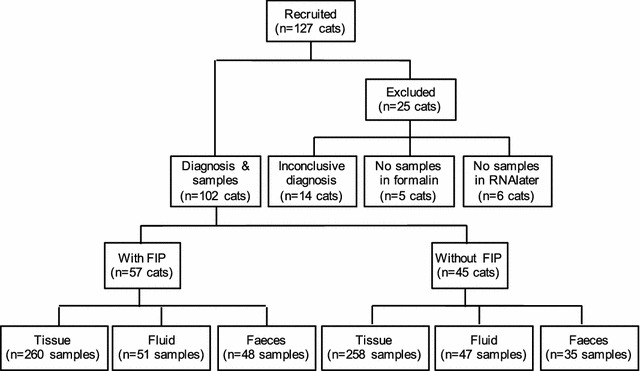
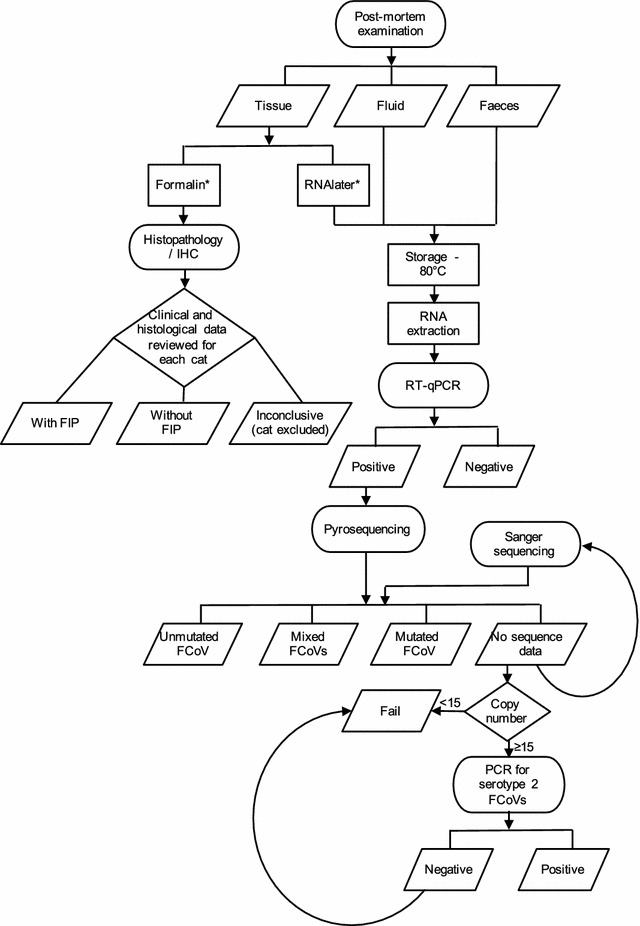
Feline infectious peritonitis (FIP) is a fatal disease of cats, and a sequela of systemic feline coronavirus (FCoV) infection. Mutations in the viral spike (S) gene have been associated with FCoVs found in tissues from cats with FIP, but not FCoVs found in faeces from healthy cats, and are implicated in monocyte/macrophage tropism and systemic spread. This study was designed to determine whether S gene mutation analysis can reliably diagnose FIP. Cats were categorised as with FIP (n = 57) or without FIP (n = 45) based on gross post-mortem and histopathological examination including immunohistochemistry for FCoV antigen. RNA was purified from available tissue, fluid and faeces. Reverse-transcriptase quantitative-PCR (RT-qPCR) was performed on all samples using FCoV-specific primers, followed by sequencing of a section of the S gene on RT-qPCR positive samples. Samples were available from a total of 102 cats. Tissue, fluid, and faecal samples from cats with FIP were more likely to be FCoV RT-qPCR-positive (90.4, 78.4 and 64.6% respectively) than those from cats without FIP (7.8, 2.1 and 20% respectively). Identification of S gene mutated FCoVs as an additional step to the detection of FCoV alone, only moderately increased specificity for tissue samples (from 92.6 to 94.6%) but specificity was unchanged for fluid samples (97.9%) for FIP diagnosis; however, sensitivity was markedly decreased for tissue (from 89.8 to 80.9%) and fluid samples (from 78.4 to 60%) for FIP diagnosis. These findings demonstrate that S gene mutation analysis in FCoVs does not substantially improve the ability to diagnose FIP as compared to detection of FCoV alone.
Figures
References
Publication types
MeSH terms
Substances
LinkOut - more resources
Full Text Sources
Other Literature Sources
Miscellaneous
