


The chromosome 6q22.33 region is associated with age at diagnosis of type 1 diabetes and disease risk in those diagnosed under 5 years of age
- PMID: 28983737
- PMCID: PMC5719131
- DOI: 10.1007/s00125-017-4440-y
The chromosome 6q22.33 region is associated with age at diagnosis of type 1 diabetes and disease risk in those diagnosed under 5 years of age
Abstract
Aims/hypothesis: The genetic risk of type 1 diabetes has been extensively studied. However, the genetic determinants of age at diagnosis (AAD) of type 1 diabetes remain relatively unexplained. Identification of AAD genes and pathways could provide insight into the earliest events in the disease process.
Methods: Using ImmunoChip data from 15,696 cases, we aimed to identify regions in the genome associated with AAD.
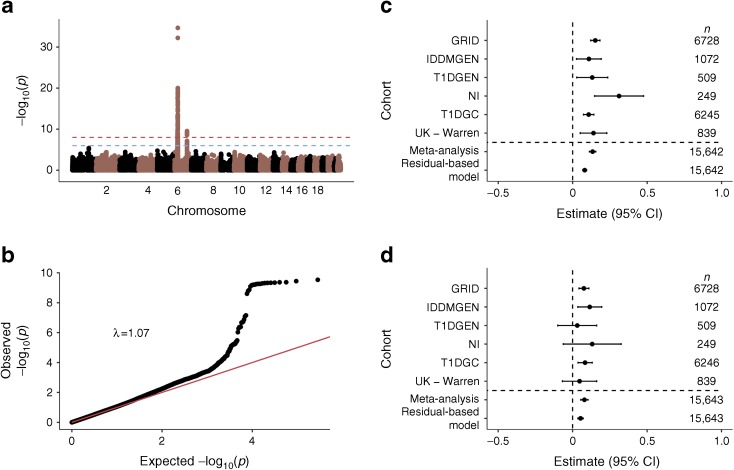
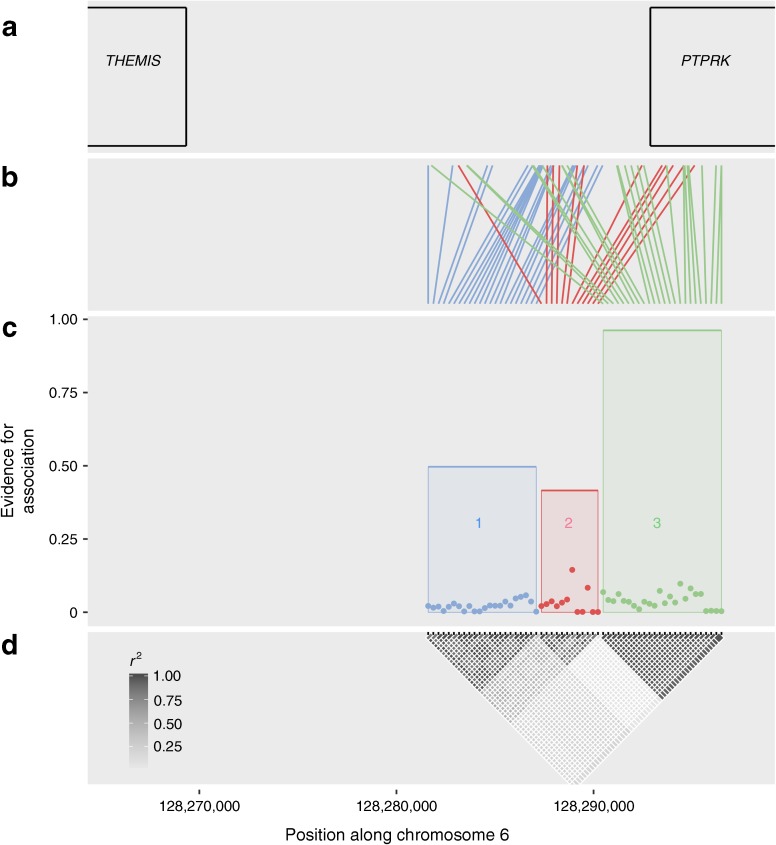
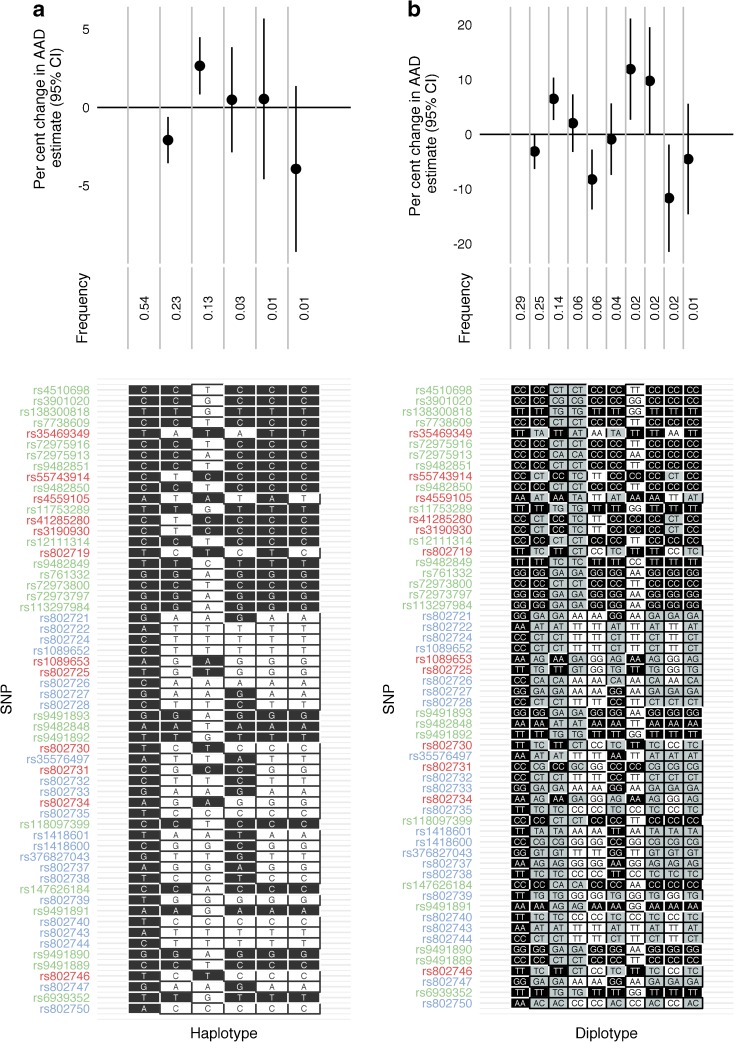
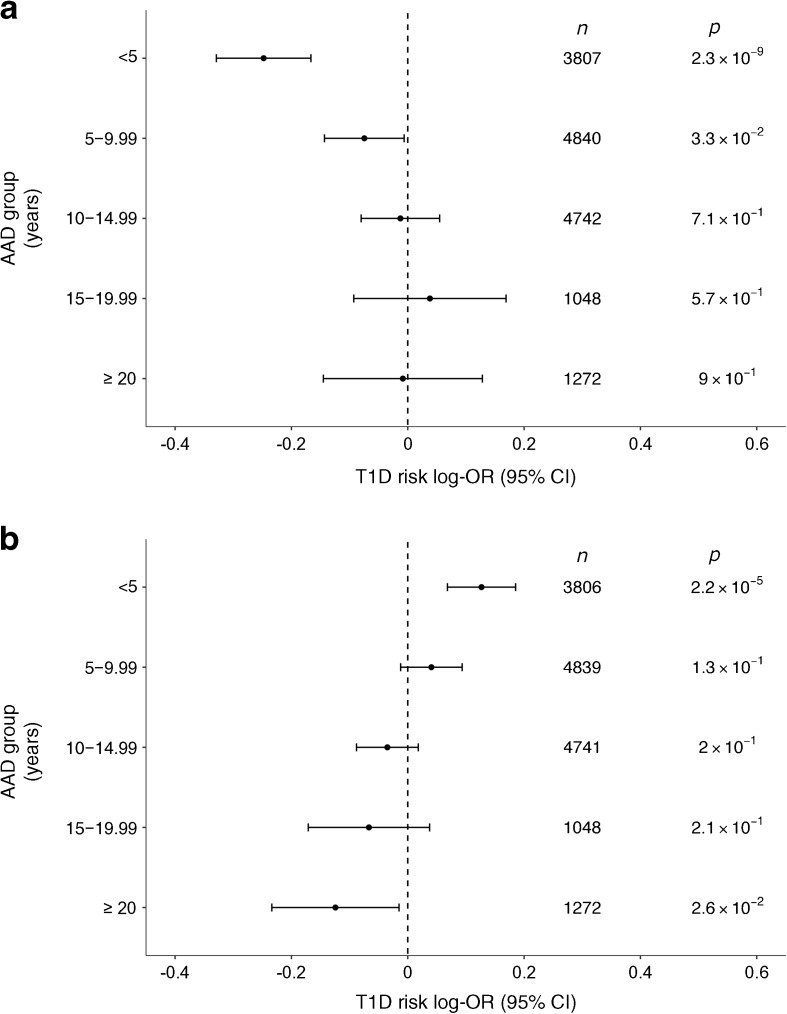
Results: Two regions were convincingly associated with AAD (p < 5 × 10⁻⁸): the MHC on 6p21, and 6q22.33. Fine-mapping of 6q22.33 identified two AAD-associated haplotypes in the region nearest to the genes encoding protein tyrosine phosphatase receptor kappa (PTPRK) and thymocyte-expressed molecule involved in selection (THEMIS). We examined the susceptibility to type 1 diabetes at these SNPs by performing a meta-analysis including 19,510 control participants. Although these SNPs were not associated with type 1 diabetes overall (p > 0.001), the SNP most associated with AAD, rs72975913, was associated with susceptibility to type 1 diabetes in those individuals diagnosed at less than 5 years old (p = 2.3 × 10⁻⁹).
Conclusion/interpretation: PTPRK and its neighbour THEMIS are required for early development of the thymus, which we can assume influences the initiation of autoimmunity. Non-HLA genes may only be detectable as risk factors for the disease in individuals diagnosed under the age 5 years because, after that period of immune development, their role in disease susceptibility has become redundant.
Keywords: Age at diagnosis; Early diagnosis; Genetic risk; Type 1 diabetes.
Conflict of interest statement
Data availability
The data analysed during the current study are available from the corresponding author on reasonable request.
Funding
CW is funded by the Wellcome Trust (WT107881) and the Medical Research Council (MC_UP_1302/5). LB was supported by the Alan Turing Institute under the EPSRC grant EP/N510129/1.
Duality of interest
The authors declare that there is no duality of interest associated with this manuscript.
Contribution statement
JRJI carried out statistical analyses, wrote the manuscript and approved the final version. NMW helped with acquisition of the data and preparation of the data for analysis, revised the article critically and approved the final version of the manuscript. CW provided assistance implementing GUESSFM, input into the design of the study, provided code to carry out the haplotype analysis, and revised the article critically and approved the final version of the manuscript. LB provided statistical support throughout the project to JRJI and support with interpretation of data, revised the article critically and approved the final version. JAT directed research, provided biological expertise, helped with data acquisition and study design, revised the article critically and approved the final version of the manuscript. JAT is the guarantor of this work.
Figures
References
MeSH terms
Grants and funding
LinkOut - more resources
Full Text Sources
Other Literature Sources
Medical
Research Materials
