


A systematic analysis of FDA-approved anticancer drugs
- PMID: 28984210
- PMCID: PMC5629554
- DOI: 10.1186/s12918-017-0464-7
A systematic analysis of FDA-approved anticancer drugs
Abstract
Background: The discovery of novel anticancer drugs is critical for the pharmaceutical research and development, and patient treatment. Repurposing existing drugs that may have unanticipated effects as potential candidates is one way to meet this important goal. Systematic investigation of efficient anticancer drugs could provide valuable insights into trends in the discovery of anticancer drugs, which may contribute to the systematic discovery of new anticancer drugs.
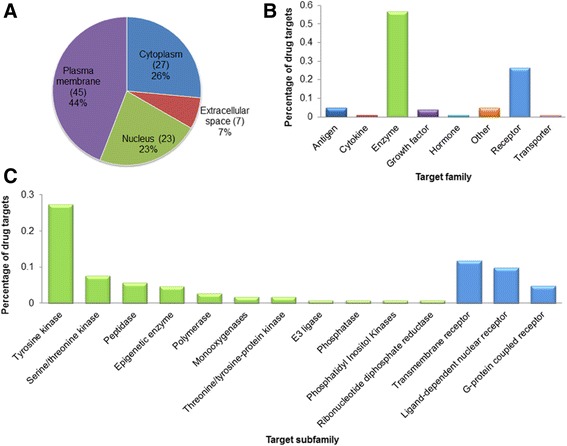
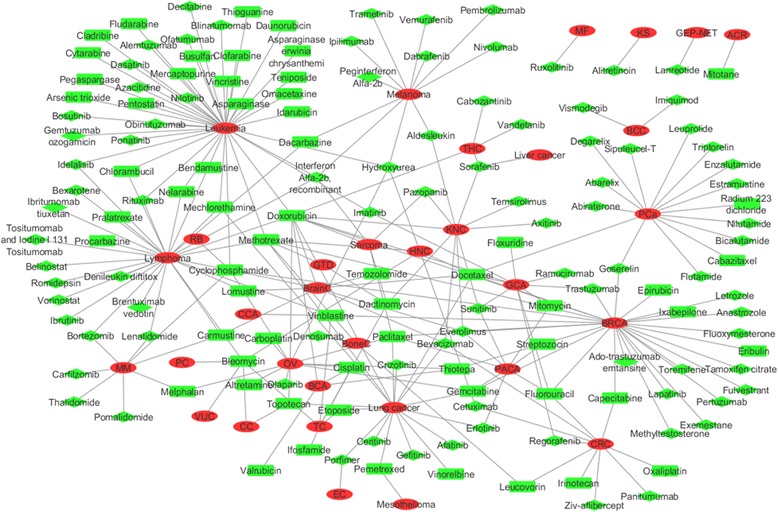
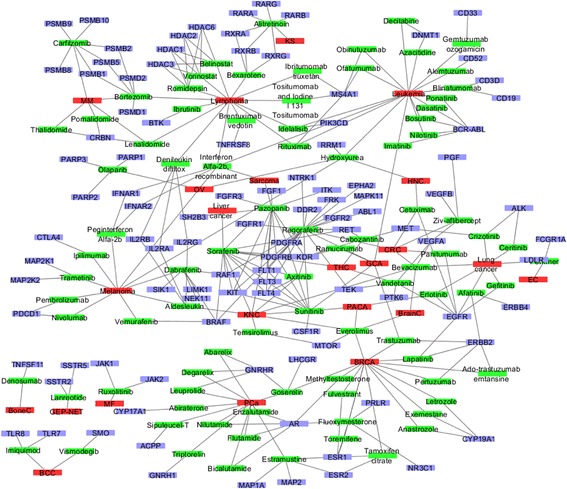
Results: In this study, we collected and analyzed 150 anticancer drugs approved by the US Food and Drug Administration (FDA). Based on drug mechanism of action, these agents are divided into two groups: 61 cytotoxic-based drugs and 89 target-based drugs. We found that in the recent years, the proportion of targeted agents tended to be increasing, and the targeted drugs tended to be delivered as signal drugs. For 89 target-based drugs, we collected 102 effect-mediating drug targets in the human genome and found that most targets located on the plasma membrane and most of them belonged to the enzyme, especially tyrosine kinase. From above 150 drugs, we built a drug-cancer network, which contained 183 nodes (150 drugs and 33 cancer types) and 248 drug-cancer associations. The network indicated that the cytotoxic drugs tended to be used to treat more cancer types than targeted drugs. From 89 targeted drugs, we built a cancer-drug-target network, which contained 214 nodes (23 cancer types, 89 drugs, and 102 targets) and 313 edges (118 drug-cancer associations and 195 drug-target associations). Starting from the network, we discovered 133 novel drug-cancer associations among 52 drugs and 16 cancer types by applying the common target-based approach. Most novel drug-cancer associations (116, 87%) are supported by at least one clinical trial study.
Conclusions: In this study, we provided a comprehensive data source, including anticancer drugs and their targets and performed a detailed analysis in term of historical tendency and networks. Its application to identify novel drug-cancer associations demonstrated that the data collected in this study is promising to serve as a fundamental for anticancer drug repurposing and development.
Keywords: Anticancer drugs; Cancer-drug-target network; Drug repurposing; Drug-cancer network.
Conflict of interest statement
Ethics approval and consent to participate
Not applicable.
Consent for publication
Not applicable.
Competing interests
The authors declare that they have no competing interests.
Publisher’s Note
Springer Nature remains neutral with regard to jurisdictional claims in published maps and institutional affiliations.
Figures


References
-
- Paul SM, Mytelka DS, Dunwiddie CT, Persinger CC, Munos BH, Lindborg SR, Schacht AL. How to improve R&D productivity: the pharmaceutical industry's grand challenge. Nat Rev Drug Discov. 2010;9(3):203–214. - PubMed
MeSH terms
Substances
LinkOut - more resources
Full Text Sources
Other Literature Sources
