


The association between diabetes/hyperglycemia and the prognosis of cervical cancer patients: A systematic review and meta-analysis
- PMID: 28984757
- PMCID: PMC5737993
- DOI: 10.1097/MD.0000000000007981
The association between diabetes/hyperglycemia and the prognosis of cervical cancer patients: A systematic review and meta-analysis
Abstract
Background: The predictive roles of diabetes in the prognosis of many types of cancer have been well studied, but its role in predicting the prognosis of cervical cancer is still controversial. The aim of the study is to evaluate the association between diabetes/hyperglycemia and the prognosis of cervical cancer.
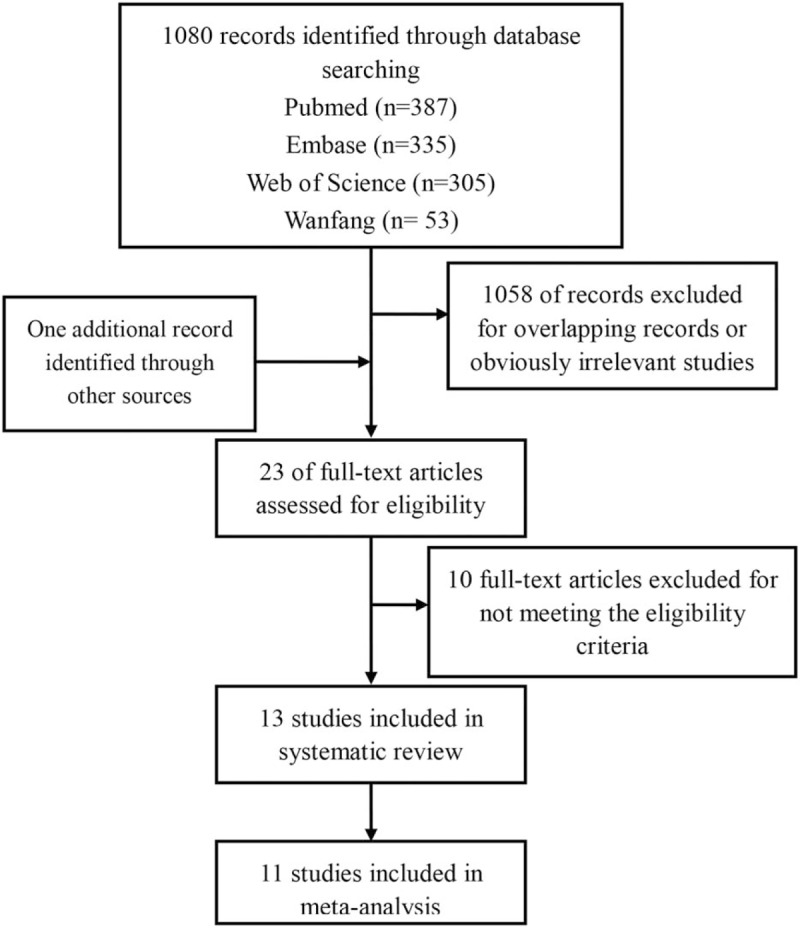
Methods: We conducted a systematic review for peer-reviewed studies indexed in PubMed, Embase, Web of Science, and Wanfang published before December 2016. Hazard ratios (HRs) with 95% confidence intervals (95% CIs) were pooled in the meta-analysis.
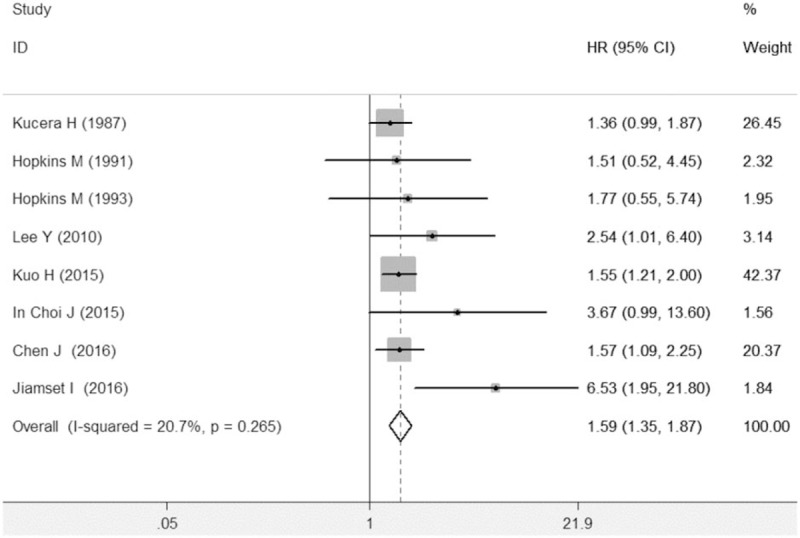
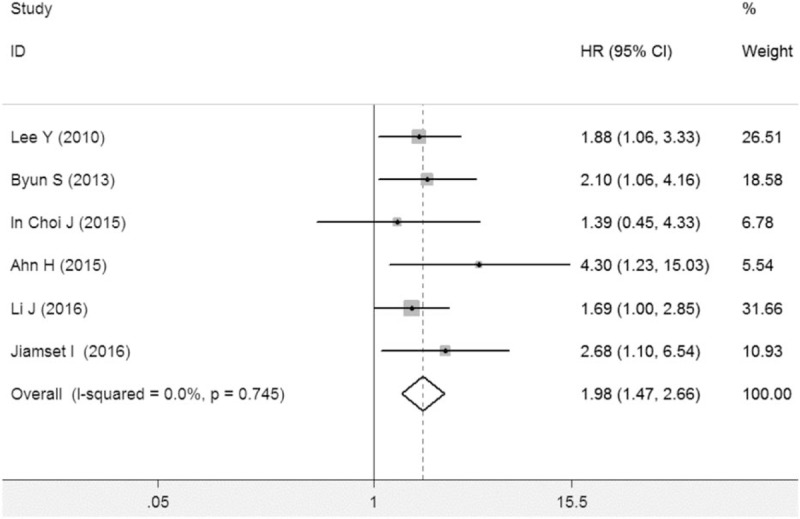
Results: This systematic review identified 13 studies with a total of 11,091 cervical cancer patients, of which 11 studies were included in the meta-analysis. The study indicated that diabetes was related to poorer overall survival (HR = 1.59, 95% CI: 1.35-1.87, P < .001) and poorer recurrence-free survival (HR = 1.98, 95% CI: 1.47-2.66, P < .001) in cervical cancer patients. The meta-analysis of adjusted HRs also indicated that diabetes was independently associated with poor overall survival (HR = 1.69, 95% CI: 1.38-2.05, P < .001) and poor recurrence-free survival (HR = 1.98, 95% CI: 1.47-2.66, P < .001) in cervical cancer patients. Sensitivity analysis and subgroup analyses showed similar results. No significant heterogeneity was observed for the included studies.
Conclusions: The meta-analysis suggests that diabetes is an important predictive factor for cervical cancer prognosis, and it is linked to poorer survival of cervical cancer patients. Diabetes can serve as a useful index in the prognostic evaluation for patients with cervical cancer.
Conflict of interest statement
The authors have no funding and conflicts of interest to disclose.
Figures
References
-
- Forouzanfar MH, Foreman KJ, Delossantos AM, et al. Breast and cervical cancer in 187 countries between 1980 and 2010: a systematic analysis. Lancet 2011;378:1461–84. - PubMed
-
- Dueñas-González A, Campbell S. Global strategies for the treatment of early-stage and advanced cervical cancer. Curr Opin Obstet Gynecol 2016;28:11–7. - PubMed
-
- Lapresa M, Parma G, Portuesi R, et al. Neoadjuvant chemotherapy in cervical cancer: an update. Expert Rev Anticancer Ther 2015;15:1171–81. - PubMed
Publication types
MeSH terms
LinkOut - more resources
Full Text Sources
Other Literature Sources
Medical
