


Outcomes and changes in code status of patients with acute myeloid leukemia undergoing induction chemotherapy who were transferred to the intensive care unit
- PMID: 28985622
- PMCID: PMC5682208
- DOI: 10.1016/j.leukres.2017.09.017
Outcomes and changes in code status of patients with acute myeloid leukemia undergoing induction chemotherapy who were transferred to the intensive care unit
Abstract
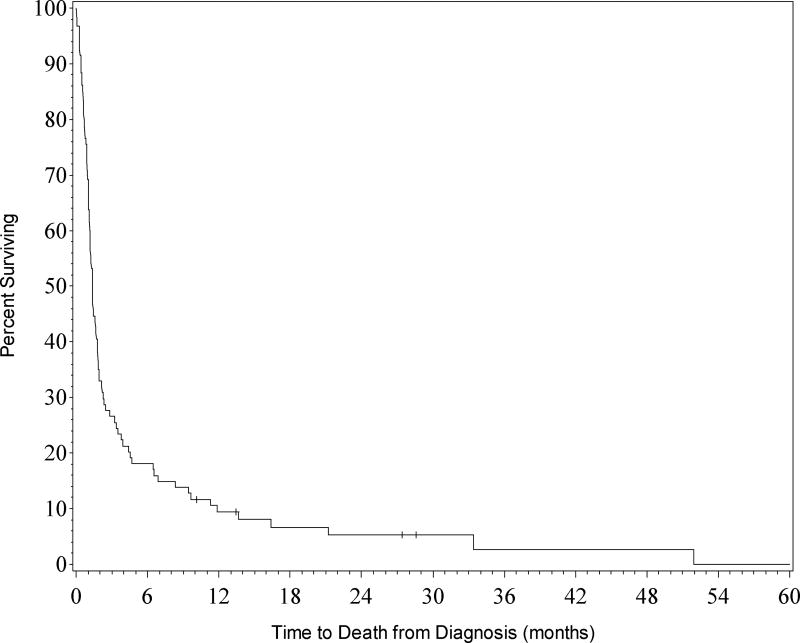
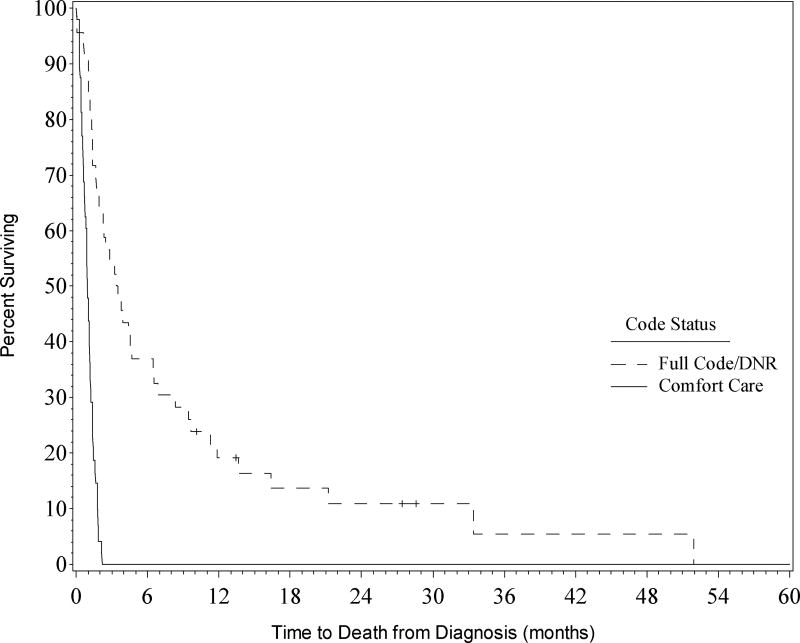
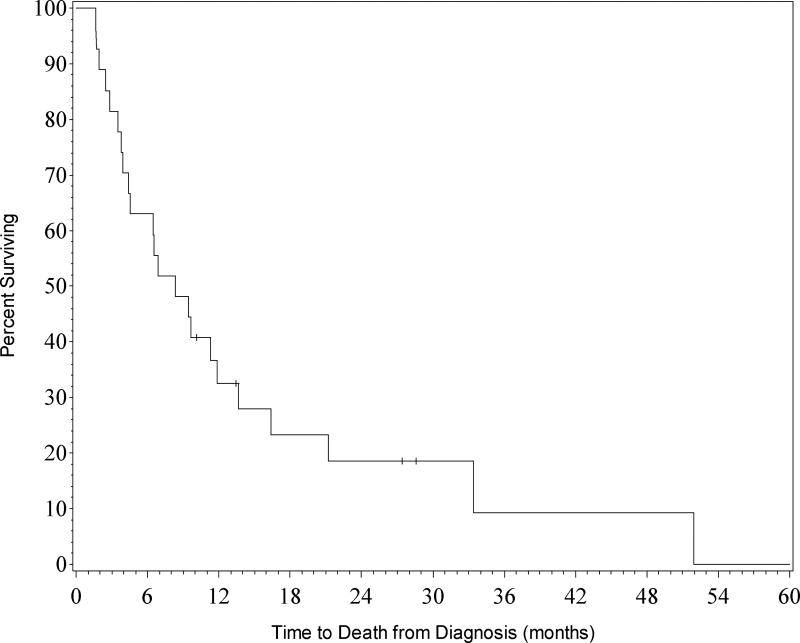
Patients with Acute Myeloid Leukemia (AML) have compromised marrow function and chemotherapy causes further suppression. As a result complications are frequent, and patients may require admission to the intensive care unit (ICU). How codes status changes when these events occur and how those changes influence outcome are largely unknown. Outcomes for adult patients with AML, undergoing induction chemotherapy, and transferred to the ICU between January 2000 and December 2013 were analyzed. 94 patients were included. Median survival was 1.3 months. At 3 and 6 months overall survival (OS) was 27% and 18% respectively. Respiratory failure was the most common reason for transfer to ICU (88%), with 63% requiring mechanical ventilation at transfer. Other reasons included: cardiac arrest (18%), septic shock (17%), hypotension (9%), and acute renal failure (9%). The most frequent interventions were mechanical ventilation in 85%, vasopressors in 62%, and hemodialysis in 30%. Following transfer 55 patients (58%) had a change in code status. Overall, 46 patients (49%) changed from Full Code (FC) to Comfort Care (CC), 7 (7%) from FC to Do Not Resuscitate (DNR), and 2 (2%) from DNR to CC. For the entire cohort, ICU mortality (IM) was 61% and hospital mortality (HM) was 71%. For FC or DNR patients, IM was 30% and HM was 41%. For CC patients, IM was 90% and HM was 100%. Overall, 27 patients (29%) survived to discharge. Of those discharged, 22 (81%) were alive at 3 months and 17 (63%) were alive at 6 months. In conclusion, patients that required ICU admission during induction chemotherapy have a poor prognosis. Code status changed during the ICU stay for the majority of patients and always to a less aggressive status.
Keywords: Acute myeloid leukemia; Code status; ICU.
Copyright © 2017 Elsevier Ltd. All rights reserved.
Figures
Comment in
-
Early preemptive ICU admission for newly diagnosed high-risk acute myeloid leukemia patients.Leuk Res. 2018 May;68:29-31. doi: 10.1016/j.leukres.2018.02.015. Epub 2018 Feb 28. Leuk Res. 2018. PMID: 29522988 No abstract available.
References
-
- Deschler B, Lubbert M. Acute myeloid leukemia: epidemiology and etiology. Cancer. 2006;107:2099–107. - PubMed
-
- Yates JW, Wallace HJ, Jr, Ellison RR, Holland JF. Cytosine arabinoside (NSC-63878) and daunorubicin (NSC-83142) therapy in acute nonlymphocytic leukemia. Cancer chemotherapy reports Part 1. 1973;57:485–8. - PubMed
-
- Lengline E, Raffoux E, Lemiale V, Darmon M, Canet E, Boissel N, et al. Intensive care unit management of patients with newly diagnosed acute myeloid leukemia with no organ failure. Leuk Lymphoma. 2012;53:1352–9. - PubMed
-
- Jackson K, Mollee P, Morris K, Butler J, Jackson D, Kruger P, et al. Outcomes and prognostic factors for patients with acute myeloid leukemia admitted to the intensive care unit. Leuk Lymphoma. 2014;55:97–104. - PubMed
Publication types
MeSH terms
Grants and funding
LinkOut - more resources
Full Text Sources
Other Literature Sources
Medical
Research Materials
