


Therapeutic approaches to target alpha-synuclein pathology
- PMID: 28987463
- PMCID: PMC6541231
- DOI: 10.1016/j.expneurol.2017.10.003
Therapeutic approaches to target alpha-synuclein pathology
Abstract
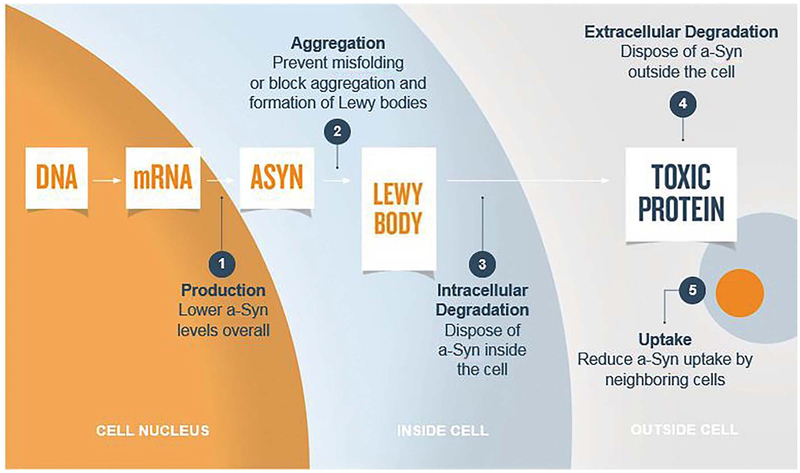
Starting two decades ago with the discoveries of genetic links between alpha-synuclein and Parkinson's disease risk and the identification of aggregated alpha-synuclein as the main protein constituent of Lewy pathology, alpha-synuclein has emerged as the major therapeutic target in Parkinson's disease and related synucleinopathies. Following the suggestion that alpha-synuclein pathology gradually spreads through the nervous system following a stereotypic pattern and the discovery that aggregated forms of alpha-synuclein can propagate pathology from one cell to another, and thereby probably aggravate existing deficits as well as generate additional symptoms, the idea that alpha-synuclein is a viable therapeutic target gained further support. In this review we describe current challenges and possibilities with alpha-synuclein as a therapeutic target. We briefly highlight gaps in the knowledge of the role of alpha-synuclein in disease, and propose that a deeper understanding of the pathobiology of alpha-synuclein can lead to improved therapeutic strategies. We describe several treatment approaches that are currently being tested in advanced animal experiments or already are in clinical trials. We have divided them into approaches that reduce alpha-synuclein production; inhibit alpha-synuclein aggregation inside cells; promote its degradation either inside or outside cells; and reduce its uptake by neighbouring cells following release from already affected neurons. Finally, we briefly discuss challenges related to the clinical testing of alpha-synuclein therapies, for example difficulties in monitoring target engagement and the need for relatively large trials of long duration. We conclude that alpha-synuclein remains one of the most compelling therapeutic targets for Parkinson's disease, and related synucleinopathies, and that the multitude of approaches being tested provides hope for the future.
Keywords: Alpha-synuclein; Biomarker; Clinical Trial; Dementia with Lewy bodies; Immunotherapy; Multiple system atrophy; Parkinson's disease; Protein aggregation; Therapy.
Copyright © 2017. Published by Elsevier Inc.
Conflict of interest statement
Conflicts of interest
PB has received commercial support as a consultant from Renovo Neural, Inc., Roche, Teva, Lundbeck, AbbVie, NeuroDerm, Cellular Dynamics International Inc and Axial Biotherapeutics. Additionally, he has received commercial support for grants/research from Renovo, Teva and Lundbeck. PB has ownership interests in Acousort AB and Parkcell AB. JHK has received commercial support as a consultant and/or a research grant from Cellular Dynamics International Inc.; BrainEver, NeuroDerm, NsGene, and AbbVie.
Figures
References
-
- Affris Company Website, 2017. AFFiRiS Announces Top Line Results of First-in-Human Clinical Study Using AFFITOPE® PD03A, confirming immunogenicity and safety profile in Parkinson’s disease patients www.affris.comnewsaffris-announces-top-line-results-of-first-in-human-cl....
-
- Alzforum, 2017. α-Synuclein antibodies enter phase 2, sans biomarker http://www.alzforum.org/news/conference-coverage/synuclein-antibodies-en....
-
- Beach TG, White CL, Hladik CL, Sabbagh MN, Connor DJ, Shill HA, Sue LI, Sasse J, Bachalakuri J, Henry-Watson J, Akiyama H, Adler CH, Arizona Parkinson’s Disease Consortium, 2009. Olfactory bulb alpha-synucleinopathy has high specificity and sensitivity for Lewy body disorders. Acta Neuropathol 117, 169–174. 10.1007/s00401-008-0450-7. - DOI - PMC - PubMed
Publication types
MeSH terms
Substances
Grants and funding
LinkOut - more resources
Full Text Sources
Other Literature Sources
Medical
