Review
. 2018 Jan 19;430(2):217-237.
doi: 10.1016/j.jmb.2017.09.019. Epub 2017 Oct 5.

How Inflammasomes Inform Adaptive Immunity

Affiliations
Review

How Inflammasomes Inform Adaptive Immunity

Charles L Evavold et al. J Mol Biol. .

Abstract

An immune response consists of a finely orchestrated interplay between initial recognition of potential microbial threats by the innate immune system and subsequent licensed adaptive immune neutralization. The initial recognition integrates environmental cues derived from pathogen-associated molecular patterns and cell-intrinsic damage-associated molecular patterns to contextualize the insult and inform a tailored adaptive response via T and B lymphocytes. While there are much data to support the role of transcriptional responses downstream of pattern recognition receptors in informing the adaptive immune response, markedly less attention has been paid to the role of post-translational responses to pathogen-associated molecular pattern and damage-associated molecular pattern recognition by the innate immune system, and how this may influence adaptive immunity. A well-characterized post-translational consequence of pattern recognition receptor signaling is the assembly of a multimeric signaling platform, termed the inflammasome, by members of the nucleotide-binding oligomerization domain (Nod), leucine-rich repeat-containing receptors (NLRs), and pyrin and HIN domain (PYHIN) families. Inflammasomes assemble in response to cytosolic perturbations, such as mitochondrial dysfunction and aberrant ion fluxes in the case of the canonical NLRP3 inflammasome or the presence of bacterial lipopolysaccharides in the case of the non-canonical inflammasome. Assembly of the inflammasome allows for the cleavage and activation of inflammatory caspases. These activated inflammatory caspases in turn cleave pro-form inflammatory cytokines into their mature bioactive species and lead to unconventional protein secretion and lytic cell death. In this review, we discuss evidence for inflammasome-mediated instruction and contextualization of infectious and sterile agents to the adaptive immune system.

Keywords: SMOC; TLR; adaptive immunity; inflammasomes; innate immunity.


Figures

Figure 1
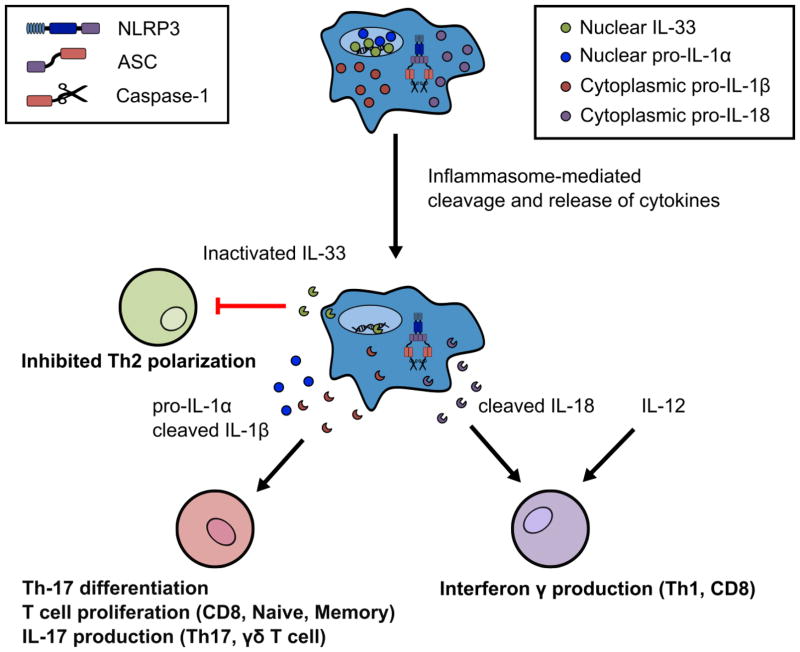
Figure 1. Inflammasome-dependent cleavage and release of IL-1 family member cytokines that influence T cell immunity
Inflammasome activation leads to the cleavage of some IL-1 family members including IL-1β, IL-18, and IL-33. Cleavage of IL-33 by active caspase-1 leads to inactivation of this Th2 skewing cytokine, thus providing a mechanism that inflammasome activity may impinge on Th2 adaptive immune responses. In contrast, cleavage of IL-1β and IL-18 by active caspase-1 results in bioactive cytokines. IL-1β, in addition to pro-IL-1α, can enforce Th-17 stable differentiation and induce T cell proliferation. IL-1β can also cause IL-17 production and secretion from human Th17 cells and murine γδ T cells that may exacerbate autoimmune inflammation. Cleaved IL-18 in conjunction with the cytokine IL-12 enhances IFN-γ from Th1 and CD8 T cells.
Figure 2
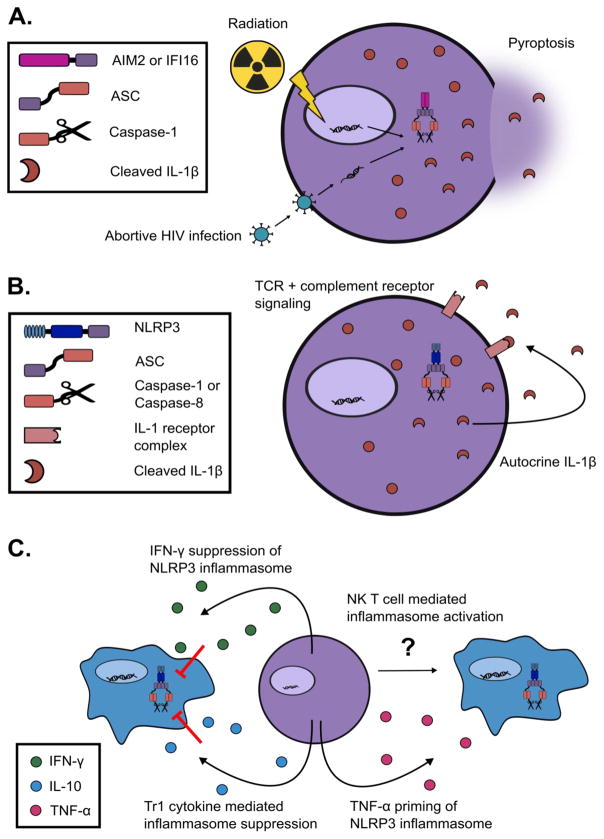
Figure 2. T cell regulation of cell-intrinsic and extrinsic inflammasomes
A. DNA sensing pathways activate after abortive HIV infection and radiation therapy, which causes assembly of the IFI16 and AIM2 inflammasomes respectively in T cells. Abortive HIV infection proceeds to pyroptosis in human lymphoid derived CD4 T cells, but not in blood CD4 T cells. These cells have high levels of pro-IL-1β prior to infection, thus are able to release cleaved IL-1β after inflammasome assembly. Radiation therapy induces DNA damage that results in AIM2 inflammasome assembly and pyroptotic cell death in many cell types including T cells in mice. B. TCR signaling likely upregulates pro-IL-1β and NLRP3, and intracellular complement receptor signaling results in ROS production and inflammasome assembly. T cell intrinsic ASC is required for Th17-mediated pathology in EAE. These T cells might release cleaved IL-1β downstream of ATP sensing from other necrotic cells, and this IL-1β may provide autocrine signaling promoting pathogenic Th17 cell survival. C. T cells capable of secreting IFN-γ may inhibit NLRP3 inflammasome signaling. Tr1 cells secrete IL-10 and other suppressive cytokines. These cytokines have been shown to inhibit the assembly of the NLRP3 inflammasome. NK T cells can induce IL-1β release from monocytes by an ill-defined mechanism. NK T cells can also release TNF-α that can serve as a priming signal for the NLRP3 inflammasome.

References

    1. Brubaker SW, Bonham KS, Zanoni I, Kagan JC. Innate immune pattern recognition: a cell biological perspective. Annu Rev Immunol. 2015;33:257–290. doi: 10.1146/annurev-immunol-032414-112240. - DOI - PMC - PubMed
    1. Kawai T, Akira S. The role of pattern-recognition receptors in innate immunity: update on Toll-like receptors. Nat Immunol. 2010;11:373–384. doi: 10.1038/ni.1863. - DOI - PubMed
    1. Iwasaki A, Medzhitov R. Control of adaptive immunity by the innate immune system. Nat Immunol. 2015;16:343–353. doi: 10.1038/ni.3123. - DOI - PMC - PubMed
    1. Banchereau J, Steinman RM. Dendritic cells and the control of immunity. Nature. 1998;392:245–252. doi: 10.1038/32588. - DOI - PubMed
    1. Cella M, Engering A, Pinet V, Pieters J, Lanzavecchia A. Inflammatory stimuli induce accumulation of MHC class II complexes on dendritic cells. Nature. 1997;388:782–787. doi: 10.1038/42030. - DOI - PubMed