


Postaxial limb hypoplasia (PALH): the classification, clinical features, and related developmental biology
- PMID: 28990185
- PMCID: PMC5730483
- DOI: 10.1111/nyas.13440
Postaxial limb hypoplasia (PALH): the classification, clinical features, and related developmental biology
Abstract
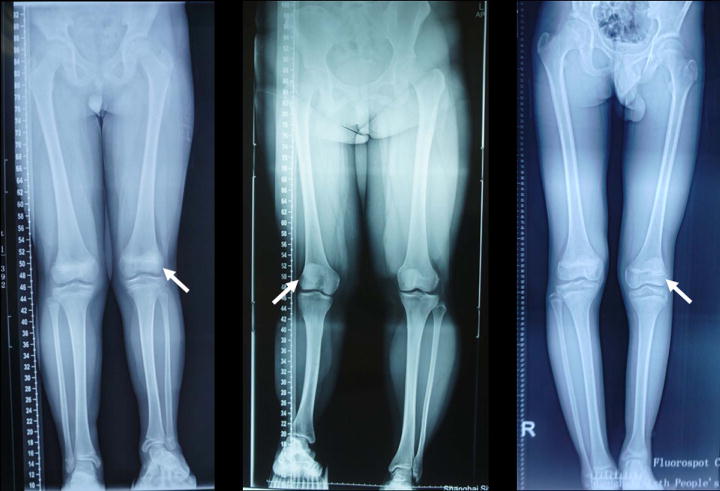
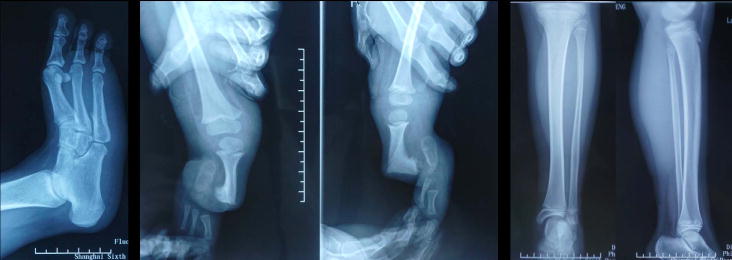
Postaxial limb hypoplasia (PALH) is a group of nonhereditary diseases with congenital lower limb deficiency affecting the fibular ray, including fibular hemimelia, proximal femoral focal deficiency, and tarsal coalition. The etiology and the developmental biology of the anomaly are still not fully understood. Here, we review the previous classification systems, present the clinical features, and discuss the developmental biology of PALH.
Keywords: Wnt signaling; fibular hemimelia; postaxial hypoplasia; proximal femoral focal deficiency; skeletal development; tarsal coalition.
© 2017 New York Academy of Sciences.
Conflict of interest statement
The authors declare no competing interests.
Figures
References
-
- Stevens PM, Arms D. Postaxial hypoplasia of the lower extremity. J Pediatr Orthop. 2000;20(2):166–72. - PubMed
-
- Coventry MB, Johnson EW., Jr Congenital absence of the fibula. J Bone Joint Surg Am. 1952;34 A(4):941–55. - PubMed
-
- Oberc A, Sulko J. Fibular hemimelia - diagnostic management, principles, and results of treatment. J Pediatr Orthop B. 2013;22(5):450–6. - PubMed
-
- Bryant DD, 3rd, Epps CH., Jr Proximal femoral focal deficiency: evaluation and management. Orthopedics. 1991;14(7):775–84. - PubMed
Publication types
MeSH terms
Grants and funding
LinkOut - more resources
Full Text Sources
Other Literature Sources
Molecular Biology Databases
